Showing posts with label CPD. Show all posts

Saturday, 18 January 2020

Out of control

Pink frilly orchids
Rio de Janeiro Botanical Gardens, April 2019
Everything is briefly but totally out of control. My email Inbox, which I try to keep below about 40 items maximum, is at 73 and counting. I haven't sat at my desk for nearly a week, and when I have it's been to try and set up the new laptop with everything I need in the configuration that I need it. And now that I have most of a day to address the situation I have developed toothache that has kept me awake most of the night, and, separately, a possible lost filling (it's hard to tell, it's at the back and I can't see it very well, or even know what I'm looking for).

Those are my current home-based woes, then. In addition, at work I rashly volunteered to deliver a development session to the department of my fellow Dietitians all about technologies for Type 1 diabetes, and because I was going to base it on the talk I gave recently to the students I didn't think it would take that long to write. And it hasn't taken that long, but what I didn't consider is that my reduction in hours has left me with almost no time outside clinics, and three weeks time is actually only a few hours of available working hours. So I've had to do a bit of that at home too.

[The payment for the session I delivered in November has still not come through, although at last I have completed the relevant forms, and not been required to attend for an interview to determine whether I am legally able to work in the UK. Then they queried the forms because I hadn't completed the 'emergency contact' section for a session that has already been delivered. I should be paid by the end of this month.]

And now I've started writing this blog I realise that it is actually much more important to address the accumulation in my Inbox - I've already phoned the dentist for an emergency appointment, and the new laptop is doing all the email and browsing nicely. Transferring the pictures has been problematic and I haven't started on any of the other files or programmes yet, although I have dipped a toe in Microsoft's free cloud-based Office Suite and OpenDrive in order to try and do the presentation for work. It all takes so much time.

I should have a bit more free time on Saturday when I'm not at the dentist or cleaning the toilet or making vegan brownies because some Buddhists are coming over for a team meeting. I still haven't finished the presentation for the Dietitians and I'm supposed to be delivering it on Tuesday, and Sunday is reserved for another Buddhist event where the brownies will be finished. There's been lots of Buddhism this week - on Monday evening I went to the first meeting of my Study Group, which is displacing my Monday badminton for the next three months.

And it's now Saturday and the dentist has given me some antibiotics and booked me in for the filling in a month and the toilet is cleaned and the Buddhists loved the brownies and I'm about to get stuck in and finish the presentation for the Dietitians and deal with some more of the email and then a bit of ironing and housework. But first, I'll just publish this.

So, a little bit out of control. But in a very good way.

Yellow and pink orchid close up

Friday, 30 November 2018

Study day - Diabetes technologies

Purple allium flowers
Adhisthana, June 2018
The study day I recently attended was a good one, including many interesting and relevant presentations. It was organised by the Association of UK Dietitians (BDA) Diabetes Specialist Group, and focussed on diabetes technologies as well as some of the usual business when Diabetes Specialist Dietitians get together - whingeing about nurses and other colleagues, comparing notes on difficult patients, who has been asked the most ridiculous 'what can I eat' question, whining that the lunch provided is a bit carb-heavy while demolishing all the crisps and three puddings etc etc. A bonus for me was that two previous colleagues were also there and it was lovely to catch up with them, and there was also a Dietitian from a nearby Trust whose previous Team Leader is my new Team Leader. So we had a good exchange of views on that situation, too.

After the AGM, the presentations started with someone from Diabetes UK updating us on what they've been up to in the way of nutritional news. This included information and new videos about 'Diabulimia', which is a term often used (but just as often criticised) describing the practice of someone with Type 1 Diabetes withholding insulin in order to lose weight.

Then a doctor ran through all the current technologies available at the moment, including insulin pumps, CGM systems, Flash GM systems, sensor-augmented pumps, closed loop and artificial pancreas systems, and something called Diaport which delivers insulin into the peritoneal cavity. There wasn't really anything new here for me, but it was nice to appreciate that my knowledge is way ahead of many Dietitians who don't come into contact with these technologies in their usual work setting.

Quite a few Diabetes Dietitians are working at national policy level with Diabetes UK and the All Party Parliamentary Group on Diabetes. This year the old evidence-based nutrition guidelines from 2011 were updated with a new document, which has shifted away from nutrients (recommended proportions of protein, fat and carbohydrate in the diet) in favour of real foods. The overarching recommendations haven't changed: the first line treatment of Type 2 Diabetes should be weight loss of 5%, a Mediterranean style of eating, education and exercise. For Type 1 Diabetes it is still about matching insulin to carbohydrate intake to regulate blood glucose levels. The advice about prevention of cardiovascular disease is now aligned with the NICE guideline, and progress has been made on the thorny question of fat - is it in fact irrelevant, or should we still advise restriction? The conclusion is now that the quantity of fat is less important than the type of fat, and whatever level of fat we choose to eat it should be more unsaturated than saturated.

The 'James Lind Alliance Research Priorities' were also new to me - the ten highest priority research topics in various clinical areas, including diabetes. Not that it makes any difference to my workload, but interesting to see what questions are thought to be most important at this time. A couple of the priorities relate to diet, and one is the old chestnut about the role of fat, protein and carbohydrate in the diet for Type 2 Diabetes, and what the evidence tells us we should specifically be advising people to eat. This has been addressed by the finest minds in the UK Dietetic profession, and the answer is that we have no idea. Another question that still remains unanswered is what we would initially advise someone with Type 2 Diabetes who is not overweight.

Those same fine minds have also come up with a policy statement about low carbohydrate diets (defined as between 50g and 130g carbohydrate per day) in the management of Type 2 Diabetes. It was published in the week following the study day, and it's handy to be able to see a summary of the available evidence even if that evidence is scanty. Essentially, we can say that in the time frame of 12 months, adopting a low carbohydrate diet is as good as any other approach to improving blood glucose levels, and it probably works because restricting carb tends to result in a reduction in total energy intake and therefore weight loss. We don't have any evidence beyond 12 months because it seems to be quite a difficult diet to sustain.

The next presentation was all about trying to be more prescriptive about how to manage exercise with Type 1 diabetes. I have written about this before (June 2016), and said at that time that it's one of the most difficult aspects of diabetes. A Dietitian from Birmingham Children's Hospital has worked on this for a while, and come up with a spreadsheet that allows you to enter six parameters: what kind of exercise; what intensity; the duration; how long since your last insulin bolus; whether you want to reduce your insulin or increase your carb intake; and whether you use an insulin pen or a pump. It then comes up with its best guess (based on published evidence) on how to manage blood glucose, food and insulin before, during and after the activity. You can print that recommendation for the patient to try, but it may need adjusting subsequently.

The most interesting presentation was from a Dietitian involved with the DiRECT trial, which has attracted the largest amount of research funding that Diabetes UK has ever awarded. The trial is intended to follow up an earlier 'Proof of Concept' trial that suggested that Type 2 Diabetes could be reversed with rapid weight loss, and this time they want to try and find out how it works, how much weight loss is needed, how long does reversal last, who might benefit the most from this approach and whether it can be achieved in primary care. Weight loss is achieved through Total Diet Replacement for 12 to 20 weeks (the Cambridge Weight Plan meal replacement products) with weekly or fortnightly review, followed by structured food reintroduction with fortnightly review, and there is also support in increasing physical activity. Monthly monitoring and support is provided to stabilise weight and prevent weight regain for two years.


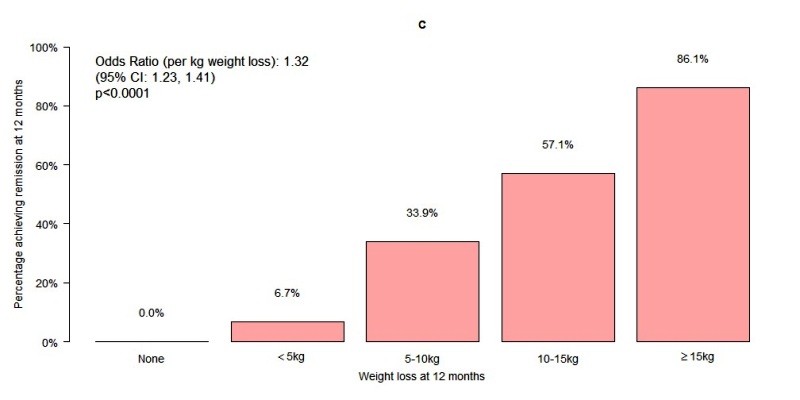
There were relatively few participants (n=157) and the trial is not yet finished, but early results are impressive. Of the cohort who managed to lose 15kg or more, irrespective of their starting weight, 86% achieved remission from their diabetes at 12 months, defined as normalised blood glucose results (there are ongoing discussions about the definition of remission). Results were better for younger participants, lower starting HbA1c results and when the duration of diabetes was shorter. Unfortunately this exactly defines the people I don't see - in secondary care we generally see people who have had Type 2 Diabetes for some time and whose medication regimes are escalating and/or who are starting to get complications.

The last presentation of the day was from the doctor who leads the Diabetes service at the hospital we visited over the summer, talking about interpreting the data that we are starting to see coming from all these technological wonder-gadgets. One key point: we often advise a minimum of 4 blood glucose tests a day, but the evidence suggests this can generally only get people down to an HbA1c of about 69mmol/mol (8.5%). The target is often 53mmol/mol (7%) which would take at least 8 fingerprick tests a day, and for anything lower than this you're looking at micro-management using a CGM and pump or artificial pancreas system.

It was an interesting and informative day, but I continue to remind myself that despite the worth of the ideas being presented, there is in reality a negligible chance of making any changes to the service we offer, given that nothing has changed even after the whole team's visit to London.

Wednesday, 24 May 2017

Matters arising

Cornflower bud
April 2017
After the parking episode described recently, I think I have not written about my other parking issue, because parking is one of the least interesting and most discussed issues of modern times. Outside my garage there is a white line to indicate that parking is not permitted across the entrance. As we have seen when it was removed by the re-surfacing works this line served a useful purpose, but it was only just long enough, and cars parked legally would slightly obstruct the garage entrance, but not enough to stop me getting in and out. I wrote about this briefly in a previous post, and eventually did contact the council's white line department to ask if it could be lengthened, to which they said 'No'. However, after the re-surfacing work the line was re-painted at the longer length that I had been asking for. So that's interesting. Or, more accurately, it isn't. Enough with the parking already.

I went to a local meeting. Some money has been allocated to be spent on improvements to the park at the end of my road, and the council thought they'd ask the locals what they would like. There was already a prototype group to ask, because the Friends of the Park had been convened when the park was threatened with being taken over by cars, caravans and motor homes during the National Bowling championships in the summer. It was a good meeting, and surprisingly good humoured and constructive. The main problem seemed to be the newly installed skate park, which is very popular and attracting swarms of local 'yoof', but is also attracting their litter despite the many litter bins in the vicinity.

The yoof in attendance were polite and well-spoken and made good points. There were also representatives from the bowling club, the tennis club, local dog-walkers, parents and runners who are the main constituency of park users, as well as all the candidates for the local election taking place a couple of days later. It looks as though the most likely purchases may be outdoor gym equipment (but there is a separate pot of money that may fund this anyway) or a refurbishment of the under-used tennis/cricket pavilion to make it more usable for e.g. a cafe. My previous local councillor who I can no longer vote for was there, and I took the opportunity to thank him and express my regret that he would no longer be representing me.

Work news: I delivered the 'short carb counting course' pilot. Prizes are available for anyone who can come up with a better name - my best shot at the moment is Candi, which stands for Carbs and Insulin. This comprised four hours about carb counting extracted from our usual four days about Type 1 Diabetes, to deliver to people who can't spare four days and maybe don't have Type 1 Diabetes. We had five attendees and I think it went well. I have yet to look at the feedback sheets.

We also had a small meeting attended by our business manager, two doctors, three nurses and me. It was supposed to discuss the future of the insulin pump service, which is set to expand by about 10% every year. As usual the meeting was utterly pointless and did not result in any useful discussion or conclusions, but it was quite a nice social event within the department. We are having a follow-up meeting with just three of us, which may be more constructive. All I actually want from the meetings is to understand how our service is funded and managed. It doesn't seem much to ask, but so far I have failed to achieve even this small advance.

Two CPD courses for me last week as well - the first about Clinical Audit presented by one enthusiastic and knowledgeable man and one girl whose presentation style was simply to read out loud the text written on each Powerpoint slide. I tried to be constructive in my feedback, but she was terrible. I discovered quite a lot about Clinical Audit, including the fact that what I planned for evaluation of the short carb counting course isn't Clinical Audit at all, it's Service Evaluation. The other course was a compulsory three-year update on DESMOND, the Type 2 patient education product. Also very interesting, and delivered in the same rooms of the same hotel as the first big Techshare conference that I helped to launch and run in the 1990's.

Much leisure activity to report - the music group continues, with the prospect of me being the sole baritone saxophonist at the July concert because my fellow saxophonist has a previous engagement. There are significant exposed baritone solos in the pieces we are playing, and I am not at all confident of successful delivery, seeing as how I'm really not very good at playing the beast even though it is enormous fun.

I also spent a whole day with the Buddhists at our usual venue - a nearby village hall - and the weather was lovely and we did some meditation, some chanting, some discussion and another 'puja' ritual. I still don't think I'll be joining in with the rituals any time soon, but for the first time I really felt that I had made progress with the meditation. It's been so gradual that it's hard to detect, but it feels easier to do and in my everyday life I am employing some of the positive behaviours that it's supposed to promote, and and feeling better for it.

The LTRP took a step forward with the rebuild of the airing cupboard, which looks lovely and needs only to be painted. While they were here the carpenter and his mate were kind enough to carry my filing cabinet upstairs to the new office, about which I am disproportionately excited. I also went back for a second meeting with the woman from the alternative kitchen supplier who has very strong views on her products and doesn't mind sharing them, and who speaks very loudly. I am trying not to be too influenced by these factors and to focus on the content rather than the style of delivery.

Tuesday, 22 November 2016

A good week for puddings

Large jar with yogurt, berries and ganache
Leamington Food and Drink Festival, September 2016
In the time since that lovely, warm holiday the memory of lovely, warm days has faded and I have taken to wearing socks in bed to avoid waking up in the middle of the night because my feet are cold. The drive home from the airport was dreadful. I thought that because it was around midnight, the traffic would be kind and I would be speeding back home on a deserted motorway. The Powers That Be evidently knew of this plan, because they chose to close the motorway. They also chose to close my alternative route, and it all meant I got home considerably later than planned, although on the positive side I did get to hear lots more of my audiobook. And I think I drove through Surbiton, but I can't be sure.

I am Cold! I am Itchy! but the good news is that the frozen shoulder is almost recovered, with just an odd twinge now and then to remind me. Badminton has resumed with quite a lot of matches as well as the club nights, and an abundance of work events.

The first thing I did on Monday morning after the holiday was to attend a course to introduce ten of us to a shortened version of our four-day carbohydrate counting course for people with Type 1 Diabetes. The course has been created by one of the diabetes technology companies in association with experienced Dietitians, and is designed to be delivered in 3 hours. I have some reservations about the whole thing but we may try a pilot event if we think there is demand. Lunch was available as well.

Badminton club #1 in the evening. Monday puddings = 1. I remained in control of the pudding situation.

Tuesday: day off. Man from Dampco turned up promptly at 8 a.m. just as I was coming in from photographing the car parked outside my garage. 8 a.m! This was because he actually lives 50 yards from me, and he was very helpful and didn't even require payment. Essentially the plaster is wet because it has been compromised by being wet, and although I have dealt with the cause of the wetness the plaster needs to be stripped and replaced before it will behave itself properly. Further chit-chat revealed that his father founded the company, he hopes to pass it on to his nephews, and I offered to buy him a drink if I saw him in the pub. This seems unlikely because I hardly ever go to the pub any more.

Photographing the car outside was because I'm thinking of contacting the Council about the white line demarcating the entrance to my garage, which doesn't quite extend to the full width. A car parked legally can obstruct my access to quite a large degree, although so far I've managed to get around it. A car parked only slightly illegally would properly stop me driving in or out, so I have to make the decision whether to start the process of trying to get it rectified, or just to live with it.

I was also expecting my first HelloFresh delivery on Tuesday, courtesy of Mr M and Lola II. This comprises three boxed meals in the form of measured ingredients and recipes. I had been putting it off for a month because of holidays and not being at home, and I probably should have put it off for longer because last week was particularly full of other people giving me lunch and badminton in the evening (so no evening meal). But when the doorbell rang it was actually Man from the Planning Department making a site visit following the request for planning permission for the kitchen extension. They pay a bit more attention because it is a Conservation Area, but all of the the proposed alterations are at the back and not visible from the street so there shouldn't be a problem. Apparently my neighbours have already been contacted in case they want to object and there's even one of those notices attached to the lamp post with cable ties. I was astonished when someone at badminton mentioned that they'd seen the notice in the local paper too. I had no idea that anyone ever read those notices.

Badminton match in the evening (lost 7-2). Tuesday puddings = 0. I do not keep puddings in the house.

Wednesday was an ordinary day at work without any badminton or puddings. But Thursday was another study day, this time at the Diabetes Education Network conference. I had high hopes but it was most disappointing. There were presentations from the people who created various programmes (DAFNE, DESMOND and X-PERT) about how they had audited their education to prove that it is effective and meets NICE guidelines, but this is neither interesting, novel nor enlightening. One presentation even showed us all the teams around the country who had won awards for delivering the most courses, or getting the best results for their patients, which was simply a waste of my time. The team that developed the course that we deliver to our Type 1 customers spent most of their session finding out from all those present how we had improved upon their course, and didn't give us anything useful in return.

The only worthwhile session was one from a most controversial Dietitian who believes that saturated fat is good for you. She avoided that particular topic but still irritated me by, for example, focussing on how many grammes of glucose are in the whole of the bloodstream of a non-diabetic person as if that were important. The only reason the session was worthwhile is because I may be able to find a ready-made comparison of the pros and cons of various diets in Type 2 Diabetes without having to construct it myself. However, despite the disappointing content of the conference, the puddings at this particular venue were something else.

Badminton club #2 in the evening. Thursday puddings = 4. They were amazing.

On Friday I had an unusual morning in that every slot in my clinic was full, and all but one of them turned up. This was the day that the lunch for our ex-colleague was scheduled, and luckily she was collected to make sure she came, and many people made the effort to turn up. Speeches were delivered, flowers and a card and presents were handed over and it all seemed to go very well. The only thing that made me laugh was when a colleague told me that during the event the departing nurse whispered that she felt "a bit of a fraud accepting all these presents, because I'm coming back to work soon."

Friday puddings = 0 although there were chocolate biscuits. And cheese. Lots of cheese.

Despite having a number of Very Important Tasks to complete, on Saturday I managed to stay in bed for a considerable proportion of the day before I dragged myself into the garden to pay a bit of attention to the lawn and the shelves in the garage. On Sunday I didn't even wake up until 10 a.m. and was similarly unproductive for most of the day. I did manage to make the second of the HelloFresh meals - I divide the portions for two into three and it's still plenty. But because I try to have only breakfast and lunch on badminton days, the ingredients have to hang around for quite a long time unless I cook it all and freeze the portions. All the meals so far have been tasty, but I don't think I can manage a regular delivery.

Close up of pink-tinged mushrooms
Borough Market, May 2016

Sunday, 26 June 2016

Exercise and Type 1 Diabetes: part 2

A gull standing on a sign indicating No Gulls
A picture I found on the Interwebs that amused me
In part 1 I tried to set out the problem of exercising with Type 1 Diabetes (T1D) - in brief, keeping blood glucose levels within reasonable bounds while hormones stimulated by activity are doing their best to frustrate your efforts. Here is part 2, which contains a few things that might help to manage the situation.

Managing blood glucose and insulin


Let’s start with the basic theory. Usually, with low or moderate intensity exercise and some active insulin on board, blood glucose will fall steadily and relatively predictably, and insulin will work more effectively. In order to avoid a hypo then, you would need either to reduce your mealtime insulin at the meal beforehand, or consume carbohydrate during the activity, or both. It is estimated that between 30g and 60g of carbohydrate is needed per hour to fuel moderate exercise.

So you could measure your blood glucose level before and after your activity and see how much it drops – say, from 11 to 6 mmol/L over 30 minutes fast walking 2 hours after a meal containing 60g carbohydrate for which you took half your usual dose of rapid insulin. If on another occasion your blood glucose was only 8 mmol/L before the same activity in the same circumstances, you could predict that carbohydrate would probably be needed to prevent a hypo.

To be able to reduce your rapid insulin dose at the previous meal, the activity needs to be planned or anticipated. Often activity is not planned, in which case there is no option but to eat or drink carbohydrate, unless your blood glucose happens to be high anyway. You can see that this makes it much more difficult to lose weight by exercising than for someone without diabetes. So another tactic that was suggested to help weight loss was to do the activity when insulin levels are at their lowest, usually first thing in the morning, although clearly this also requires an element of planning. But I can’t see how that would work if blood glucose is also at its lowest, because that’s just asking for a hypo, so maybe you’d have to reduce your overnight background insulin so that fasting blood glucose levels are a bit higher than usual. I’m not a fan of messing with background insulin on a day-to-day basis, which I will outline later on in this huge essay.

Blood glucose doesn’t always drop with exercise. If the activity is anaerobic (sprint, weight lifting, resistance exercise at the gym) then blood glucose tends to rise because those other hormones (especially adrenaline) stimulate the release of glucose and increase insulin resistance. In this situation extra insulin may be needed to take blood glucose levels down rather than extra carbohydrate to prevent hypos. A stressful or competitive situation like a football match where adrenaline is a factor may have a different impact on blood glucose compared with regular football training, and may need a different insulin dosing strategy.

This effect can be used to your advantage. If blood glucose before an exercise session is between 4 and 7 mmol/L, then starting with anaerobic or high intensity/stressful exercise may raise blood glucose enough to allow you to carry out some aerobic exercise without the need for insulin or carbohydrate adjustment ahead of time.

So we can start to imagine types and duration of activity and the likelihood of blood glucose rising and falling so that insulin and carbohydrate can be managed before and during exercise. Then comes the aftermath.

There are two effects of exercise on blood glucose after the activity is completed. The first is that glycogen stores in muscles and the liver have been depleted and need to be restocked, which makes blood glucose drop in the hours following the exercise. The other is that activity makes muscles more sensitive to insulin (less resistant) particularly in the period between 7 and 11 hours after exercise – the stress hormones released during activity induce insulin resistance for about 7 hours afterwards. For exercise in the afternoon or evening, this period of greatest hypo potential occurs during the night. Exercising first thing in the morning means the period of maximum hypo risk occurs during the day rather than overnight, which may be helpful.

Ways to manage this hypo risk after exercise include taking carbs on board immediately after exercising, and/or reducing the amount of insulin given for subsequent meals and corrections by about 50%, and possibly also reducing overnight basal insulin (but see below). Another option uses adrenaline to raise blood glucose levels by incorporating a 10-second sprint at maximum exertion level at the end of the period of exercise.

Blood glucose monitoring is the key to managing the amount of carb/insulin to maintain good control after exercise. Some experimentation is likely to be needed, while bearing in mind the poor reproducibility mentioned earlier. Perfection is unlikely to be achieved.

Background insulin adjustment


So far, all the insulin adjustment has been with the rapid insulin that works with carbohydrates that are eaten or drunk. But it is possible to adjust the background (basal) insulin too, and it was at this point that our practice and the recommendations within the study day diverged.

Background insulin works over long periods – from 12 to 72 hours depending on the type. Reducing the long-acting insulin will reduce the hypo risk overnight, so the advice on the course included routinely reducing this insulin both before and particularly after exercise. Doing this will certainly reduce the hypo risk, but on the other hand calculations of rapid insulin will be thrown out of kilter if background insulin is being adjusted day to day, especially if you exercise some days but not others. We didn’t reach any consensus on this point, so I suppose I’d have to look in the research literature to see if there’s anything relevant there.

I can, however, see the point of a basal adjustment for a short continuous period of daily exercise like an activity holiday – skiing, watersports or walking holidays being the most common examples. And I had not considered the pros and cons of different background insulins before – the newer, very long lasting insulins being less flexible if background insulin is to be adjusted. It’s also true that adopting a more active lifestyle will probably reduce the need for total background (and rapid) insulin, but injecting different amounts of long-acting insulin on a daily basis might be problematic.

What about insulin pumps?


So far all the discussion has been based on multiple daily injections of rapid-acting and long-acting insulin. Pumps are a bit different, because they only use rapid-acting insulin, and basal rates can be adjusted hour by hour. So with a pump there’s no problem about reducing background insulin as well as rapid mealtime insulin to avoid the need for extra carbs or to reduce the risk of hypos. This raises the chances of better control as well as being an advantage if weight loss is one of the aims of doing the activity. Reducing insulin is usually preferable to increasing carbohydrate for the ‘ordinary’ person. Proper athletes will want the carbohydrate, though.

The reduction suggested on the course was to set a temporary basal rate (TBR) of 50% for an hour before and up to an hour after aerobic exercise. If extra insulin is needed for anaerobic exercise, the course recommended raising the basal rate by only 10% starting 30 minutes before and lasting until 60 minutes after the activity. The TBR might be reduced again by 10% in that crucial period 7 to 12 hours after the exercise. There are more complicated formulae for calculating TBRs but I will leave those to the serious competitors.

The main downside to a pump is that it needs to be attached to you, and most types are not waterproof. So the pump would need to be disconnected completely for contact sports or watersports, which is really only safe to do for an hour or so. Some pumps can’t be disconnected temporarily, like the tubeless pumps which are actually attached to the skin. This type is usually waterproof for bathing or swimming up to an hour or so, although it clearly wouldn’t be suitable for scuba diving, and might be dislodged in a rugby scrum or during martial arts.

For situations where the pump has to be disconnected for longer than an hour, competitive athletes sometimes connect up with the pump from time to time to give themselves a quick bolus, or revert to the use of basal and bolus injections from a pen to maintain insulin levels on those occasions. When the pump is reconnected then there may be a need for a correction, which could take one of several forms. You could increase the basal rate by 50% for up to an hour, or give 50% of a correction bolus, or even work out how much basal insulin was missed and bolus half this amount. Then, of course, be a bit more rigorous about monitoring and correcting blood glucose levels.

What else?


There are a whole lot more factors that affect management of T1D with exercise, some of which I haven’t mentioned up to now because they are routine, like the need for fluids. Dehydration not only affects athletic performance but can make the blood glucose level appear higher than it really is.

Heat and cold also affect the uptake of insulin from the injection site as they do at any time. The location of the injection site matters because if you’ve injected near a muscle that will be used for the exercise (usually leg or buttock/lower back) then the insulin will reach your bloodstream faster than if you injected in a non-exercising part of the body.

Keen exercisers may use Continuous Glucose Monitoring (CGM) either standalone or in conjunction with an insulin pump. The main point to highlight with CGM is that there is a delay between the readings they give for the glucose in interstitial fluid and the level of blood glucose, which may not matter if you’re in an office and it’s coming up to lunchtime, but may be critical if you’re just reaching the summit of a mountain.

Carb intake: it has been established that the requirement for carbohydrate during moderate intensity exercise is around 1g per kg body weight per hour, i.e. for a 70kg person that would be around 70g per hour. It has also been established that the gut can only absorb dietary carbohydrates at the rate of 60g per hour, so there is no point trying to increase intake beyond this as it will just cause gastro-intestinal discomfort. The difference is made up by the use of stored glucose and fat as fuel.

All foods are not equal, but the question of which carbs to have at what time was not covered in the course. Of course hypos associated with exercise have to be treated with fast-acting carbohydrate as at any other time, and it would make sense to have slow-acting carbohydrate to sustain any prolonged period of activity. Beyond that, I suppose it has to be trial and error with plenty of blood glucose monitoring to find out which foods before, during and after exercise have the best effect on blood glucose levels. Aside from diabetes, the prevailing view is that a mixture of protein and carbohydrate such as cereal+milk, yogurt or meat/cheese sandwich is a good idea post-exercise to replenish glycogen stores and supply material for muscle regeneration and repair.

The overall message I took away from the study day was that exercising with Type 1 Diabetes is very, very complicated if you want to do anything more exciting than up to an hour of moderate intensity exercise in a regular controlled environment like road cycling, a run around the park or an hour in the gym. Competitive athletes need much more insight into their own physiology, but it is possible to compete at the highest level, and one of the diabetes pharmaceutical companies sponsors competitive cycling with the Team Novo Nordisk.

I have had a couple of patients asking me questions about serious exercise, and we have very quickly reached the limits of my knowledge. I don't see that changing much as a result of this course, but perhaps over time I will absorb more on this subject alongside my greater experience in diabetes as a whole.

Wednesday, 22 June 2016

Exercise and Type 1 Diabetes: part 1

London skyline including the London Eye and Big Ben
View from the conference centre, May 2016
The recent study day I attended was about exercise and Type 1 diabetes (T1D), which is a truly difficult topic to write about, and even more difficult to manage.

Many hormones are involved in keeping blood glucose levels stable with exercise, including insulin, glucagon, growth hormone, cortisol and adrenaline. For someone with T1D, insulin is delivered in a very non-physiological way via subcutaneous fat rather than into the hepatic bloodstream from the pancreas. It is also thought that glucagon production by the pancreas becomes less efficient over time following a diagnosis of T1D. Each of these hormones has multiple effects at different organs (brain, muscles, liver, pancreas etc.) and all interact with each other. This complex situation means that the tight regulation of blood glucose with exercise that happens automatically when the pancreas is working properly is almost impossible to achieve with a broken pancreas.

The study day


The course was a single day, but they packed a great deal into it. Speakers presented slides with graphs and evidence and whizzed through topics at such a pace that I could barely keep up let alone take comprehensible notes. The slides were supposed to be available after the event, but I don’t think they have appeared yet, a month later. My scribbled note “good slide explains this bit” will have to wait for interpretation later.

The first speaker talked about ‘normal’ exercise metabolism, the second introduced T1D into the metabolic picture, and the third session was presented by paediatric and adult Dietitians. After a break there was more detail about managing blood glucose before, during and after exercise. The workshops after lunch gave us the chance to think about case studies and individual scenarios.

Overall I think everything was included that needed to be included, but much too fast, and the main focus was on serious athletes and people who were going to be running or cycling or weight lifting or at least going to the gym regularly. There was very little about the unfit or overweight person who might be starting with walking up a flight of stairs rather than taking the lift, or trying to increase their level of activity for weight loss or fitness rather than competing for an Olympic medal. Gardening, DIY, housework and shopping are the more common types of activity that I encounter in my caseload.

I did a little brainstorm for this blog entry just listing all the issues that pertain to the subject – the list was 2 pages long. So what shall I include here? Of course, this particular blog post probably isn’t going to be of much interest to you unless you have Type 1 Diabetes and you want to know about managing your blood glucose while exercising, and I think I may have fewer than one reader in that particular category. No, this blog post is for me, to enable me to assemble my thoughts and produce a reference point for that future day when I might have to advise a patient on this subject.

Fuel for activity


So, first to recap the basics. Dietary carbohydrate is digested into glucose which moves into the blood to be transported around the body. Insulin allows blood glucose to be taken up by cells in the body where it is metabolised into energy or stored as glycogen in muscle and liver. Excess glucose is converted into fat in the form of triglycerides (a triplet of linked fatty acids) and stored in the liver, muscle and in fat cells. High levels of insulin promote this storage process and inhibit the release of glucose or fat into the blood from fat and liver cells.

When energy is needed for activity, the most accessible sources are muscle glycogen and blood glucose. The hormone glucagon prompts the liver to very quickly start converting its stored glycogen into glucose (glycolysis) and send it out into the blood. Triglycerides in the muscles are also easily accessible and are used as fuel (fat oxidation). It takes a bit longer for new glucose to be manufactured in the liver (gluconeogenesis) and for the liver to break down triglycerides into free fatty acids and send them out to be used as fuel (fat oxidation). Insulin levels need to be low for all these processes to work efficiently.

If exercise is more intense (anaerobic) there is more reliance on carbohydrate as fuel; if exercise is less intense but goes on for longer (aerobic) there is a shift towards fat as the main fuel. Obviously exercise drains glycogen stores in muscles and liver, and these are ‘topped up’ afterwards using dietary glucose (fat stores don’t need to be topped up!) Non-diabetic metabolism manages all the hormone levels so all this takes place with blood glucose maintained between 4 and 7 mmol/L at all times.

The main difference that makes things difficult for someone with T1D is that insulin cannot be regulated up and down in a physiological way. It is certainly possible to adjust insulin levels according to various ‘rules’, but adjustment is crude and doesn’t reflect the metabolic state minute by minute.

There are also a couple of scenarios when it is not advisable to exercise. If your blood glucose is high (over 14 mmol/L) then it is possible that you don’t have enough insulin on board, and the official advice is that you need to check for ketones. If blood glucose is high without ketones then a small correction dose of insulin might be all that is needed, but if ketones are present then the full correction dose should be given and exercise postponed until ketones have gone. The majority of people with T1D don't have a meter that will measure blood ketones, however, so this advice is moot.

The other situation when you might choose not to exercise is if you have had a hypo in the last 24 hours, because this makes a hypo with exercise even more likely. If it wasn’t a serious hypo needing third party assistance then you might go ahead bearing in mind the need to be extra vigilant. If the hypo was within an hour before planned activity you would be advised to wait for 45-60 minutes after your blood glucose level has stabilised before exercising.

Changes in blood glucose and insulin


The level of your blood glucose will fluctuate according to:
  • the duration, intensity and type of activity
  • the type and amount of food and snacks eaten or drunk before, during and after the exercise
  • the level of stress and competitiveness
  • your level of fitness or previous training
  • hydration status
  • the time of day
and probably more.

The level of your blood insulin will fluctuate according to:
  • the timing of insulin injections/infusion
  • the amount and type of insulin injected/infused
  • the site of the injection or cannula
  • the ambient and body temperature.

Poor ‘reproducibility’ was highlighted in the study day, meaning that the same exercise for different people or even for the same person on different days may have very different effects on blood glucose levels. With all these variables it’s not surprising that matching blood glucose levels and blood insulin levels in order to manage T1D and exercise is a minefield.

So this is the landscape we're working in, with different sources of fuel and the action of hormones all interacting, and we have to try to maintain blood glucose levels without going low or high using tools (carbohydrate and insulin) that are about as precise as trying to steer a car at full speed with just your elbows on the steering wheel. At some point you're probably going to crash.

So having set out the scale of the problem, how can it be managed? Look out for part 2 in the series, coming soon!

Sunday, 3 April 2016

New(ish) Type 2 guidelines

Long grass, thistles and fir trees
Harlow Carr, July 2015
On one of my recent days off I visited an old friend, which was so tremendously rejuvenating that I definitely didn't mind spending four hours in the car getting there and back. I can't explain how satisfying it feels to have in depth interesting conversations about anything and everything with someone who has known me for more than thirty years and is entirely on the same wavelength.

I use this blog partly for therapy, to sort out my thoughts and opinions by writing them down. I don't know why it's better than a private diary, but somehow it is. However, there are many issues that are unsuitable for public scrutiny, and simply cannot be included no matter how much I would like to wrestle them onto the screen. On that day I talked privately about many of these issues, and feel all the better for it. My friend is wise, and sensible, and I feel lucky to be able to tap into that wisdom and sense.

At the end of that day I attended another Diabetes Education Club evening - I can report that this time the buffet was loads better than the standard sandwiches and cold sausages. In terms of the meeting content, it was all about the finished NICE guideline about the treatment of Type 2 Diabetes. This took about a year to finalise because there was uproar when the first draft was published. I've had a look back through the blog and it doesn't look like I wrote about it at the time.

In primary care, most GPs are not diabetes specialists, so the guidelines published by NICE are intended to help these non-specialists choose the right way forward for the patient in front of them. These same guidelines are also supposed to inform patients of how their treatment should be managed, help organisations assess whether the care they provide to patients is of good quality, and also allow Clinical Commissioning Groups (CCGs) to ensure they are getting value for money in the services they are responsible for. A tall order.

The problem was a difficult one. People with Type 2 Diabetes come in all shapes and sizes, the treatment options are very varied and the range is growing all the time. The guidelines are drawn up with strict parameters - they must be based on evidence, so if nobody has bothered to do a formal trial then no evidence exists. [There is a fairly famous paper highlighting this issue which describes the design of a formal trial to compare mortality when jumping from a plane with and without a parachute.] The guidelines must also take cost into account, so an expensive treatment would have to show significant benefit beyond that of a cheaper treatment.

The uproar at the draft was because a strong recommendation was made for a medication that had pretty much been sidelined by most medical practitioners. I can't comment on why this obsolete treatment was brought out of obscurity, but I imagine it was because sufficient evidence existed of its benefit, and it must be very cheap. To their credit NICE took account of the feedback, amended the draft, repeated the consultation process, and eventually published an amended version which seems to have better reflected consensus within the diabetes community.

The most amusing moment of the evening for me was when it was pointed out that the previous guideline had recommended low dose aspirin for lowering of cardiovascular risk in people with Type 2 Diabetes, but this recommendation had been reversed in the latest version. "What are we supposed to do," asked one doctor plaintively, "when patients ask why we told them to do one thing then and something different now?" "You should try being a Dietitian," I pointed out. "We have to do that all the time."

This led into a conversation about the latest dietary options. I have many of these conversations with Dietitians, so it was interesting to hear what  these GPs thought. One was very much in favour of Very Low Carbohydrate diets, while another favoured the Very Low Calorie option. Both of these are perfectly valid choices, but the Dietitian's skills lie in helping the individual to decide what is right for them. The relevant guidelines follow this kind of pathway:
1. The most effective lifestyle therapy in Type 2 Diabetes is weight loss
2. There is no evidence about the best way to lose weight and keep it off
3. So the best diet for a particular individual is the diet a) that works and b) is sustainable, whatever it consists of.

I was going to put in provisos about 'nutritionally complete' but for most people if the diet consists of nothing but cabbage soup or 100% marshmallows it will probably fail the 'sustainable' criterion. So yes, I will stand by 'whatever it is'.

Saturday, 5 December 2015

Tuesday

Spiky pink flowers
Harrogate, July 2015
Tuesday is my 'day off'. Except some Tuesdays it doesn't feel like a day off at all.

08.30 Wake up nice and late - it is my day off after all. Leisurely breakfast - almost too leisurely because I nearly didn't leave myself enough to time to get to my first appointment of the day.

09.40 Dentist. Two weeks ago the hygienist and dentist recommended longer sessions three times a year for the hygienist, and because they are so convincing and because I don't want all my teeth to fall out I agreed. This brief appointment was because the dentist found a suspicious patch on my tongue and wanted to check it out two weeks later. All is well.

09.50 My favourite greengrocer's shop. Buy fruit: satsumas, russet apples (you don't see them very often nowadays) and ridiculously large sharon fruits that are slightly past their best.

10.10 Bank #1. Mum and dad have now registered their Lasting Power of Attorney for financial affairs, and I have to try and set myself up as their attorney within the banking system. There is nobody at the desk where staff loiter near the door so I take the opportunity to get the cashier to update my bank book from a little-used account and ask her for help with the LPoA business. She is useless, so I decide not to talk to her about updating the little-used account to a more modern one that pays a modicum of interest. I phone mum to get more details about what she was told we should do in the bank to get this sorted.

10.30 I go home again because I realise that I might do better with the official documents about my status as attorney. Pick up official documents and go back to town.

10.45 Bank #2. I don't have an account at this bank, but I am lucky because I find someone who a) knows what a LPoA actually is and b) is happy to refer me to the person who knows how to deal with the bank systems. She photocopies merrily for about 10 minutes before asking which branch the LPoA will be registered at. I phone mum for a second time. The bank lady carries on photocopying and says she can't fax the documents because of confidentiality, but she will post them to the branch. We hope for the best.

11.15 Back to Bank #1. This time, someone is staffing the desk near the door and has heard of a LPoA, but the person I need to speak to is busy. She seems to have a clue, so we agree which modern account paying a modicum of interest will replace my little-used account. Then I am handed over and my new friend types and clicks for about 20 minutes without stopping (I kid you not). I am asked periodically for various items of personal data (mum's date of birth, postcode etc.) and then it's over, and I am an attorney with Bank #1. I phone mum again to let her know of my outstanding performance and incredible success, but she wisely has gone out.

11.40 I go home because I realise that I have left my glasses there. Pick up glasses and go back to town.

12.00 Optician. I am here for a contact lens and sight test. We agree that it's better wearing contact lenses than glasses when running, especially in the rain. After the usual tests I am reassured that my distance and near sight are fine with both contact lenses and glasses, but then she makes me read the super small letters anyway, seemingly for fun. I humour her and get them all right, so that's good. No changes to prescription. I pick up a new batch of contact lenses.

12.40 On my lovely Tuesdays not at work I am treating myself to lunch at various different Leamington cafes and restaurants. Today I have chosen Elma, which is an establishment serving broadly East Mediterranean food in a location which has changed hands more than the average number of times recently, suggesting one of those spots that is a little bit doomed from the start. I choose the Express Lunch which is a delicious chicken stew with rice and a mint tea. I am alone in the restaurant from start to finish. Not a good sign.

14.00 I have been planning meals for the rest of the week and realise that I really need some ingredients from the supermarket rather than just the greengrocer, so it's a trip to Sainsburys.

15.00 Get back, put everything away and make an enormous batch of minestrone soup, inspired by the rind of Parmesan that was lurking in the fridge along with an elderly salami. Consider going out to town again to post passport that needs renewing (unable to do this sooner because passport is needed for identity checks relating to LPoA) but decide I've been into town enough today.

16.00 Lady arrives to give me a proper sports massage in the comfort of my own home. During massage discuss classical music and early 80's rock music, whether I can be bothered to run any other 10k races, how boring it must be to train for a marathon, where to buy running shoes and what sort to get, express surprise at extent of knotted muscles in shoulders, agree that it's better wearing contact lenses than glasses when running especially in the rain, suggest she comes to Monday night badminton to give massage tasters in order to rustle up business.

16.30 Mobile phone rings during massage. Ignore it.

17.00 Shower to remove massage oil. Feel about 2 inches taller for approx 30 minutes before normal slumped posture kicks in again. Decant minestrone into pots for the freezer and do the washing up. Turn on the computer for the first time today and delete all the spam. Write encouraging email to other joint attorneys (Lola II and Sister D) about how dealing with the banks went. Browse blogs and Facebook.

17.45 Remember to listen to the message on my phone, which is from the optician pointing out that while I paid for my contact lens check (I get my sight test for free) I neglected to pay for the contact lenses and can I please give them a call. Too late, they're closed now.

18.30 Jump into car and head off to local university for buffet followed by Diabetes Education Club. I am cornered by one of the team who asks if I am interested in teaching Healthcare Assistants and Practice Nurses on a new one-day course they are developing to help prevent diabetes. I say yes even though I don't really understand what I'm supposed to talk about and my job doesn't currently cover diabetes prevention. I can always sort it out later when she sends more details.

19.15 Diabetes Education Club is all about the paediatric service delivered within the Trust. I was in two minds about attending because I don't do paediatric diabetes, but I thought it would be interesting and I was right. The secondary care paediatric service has about 200 patients, of whom 97.5% have Type 1 diabetes, and 25% use insulin pumps. Among various other statistics and guidelines I picked out the fact that there is no robust evidence in favour of structured education, although it is not clear whether evidence exists that does not support such education or whether there is an absence of evidence either way. It was similarly stated that there is no robust evidence for weight loss and dietary advice for paediatric Type 2's. We can be fairly certain that this indicates an absence of trials, probably because numbers are still so few. I wanted to hear a bit about guidelines for transition between paediatric and adult services, but guidelines covering Transition issues are apparently going to be published separately and cover all chronic health conditions, which I suppose makes sense.

21.00 Home again. Think about doing a couple of the jobs on my enormous list of things that could be done on Tuesdays while I'm not at work. Have a half-hearted bash at a couple of them before going to bed to read, and then listen to some of the amazing podcasts that are out there on the BBC iPlayer - John Finnemore's Double Acts stands out at the moment, along with the whole back catalogue of Soul Music and The Infinite Monkey Cage, plus I've just discovered Adam Buxton is podcasting again, and there's a 'companion' podcast to This American Life called Israel Story.

22.30 Sleep. Another 'day off' is over.

I'm aware that certain readers are in awe of the amount I can get done in a day. Just to reassure you: on other Tuesdays I do absolutely bugger all.

Sunday, 27 September 2015

Pumping insulin - Part 2

View of the hotel beyond a meadow
Coombe Abbey, June 2015
In part 1 I wrote about the basics of how a pump works in comparison with using insulin pens and MDI - multiple daily injections. Now we come to how I got on with the course, and some fancy features of the pump in more detail.

Tube or Not Tube?


The course I attended was run by a company whose pump delivers insulin to the cannula via a tube. Other pumps, like Mr M's, combine the pump and cannula in one unit and you stick the whole lot onto your body and control it from a separate handset. The pumps that we were using also had a handset that duplicated the interface on the pump and communicated with it via Bluetooth. The benefit of this approach is that when you administer insulin you can leave the pump in whatever inaccessible place you have stashed it - such as in your pants. Some pumps don't have this convenience, so you have to retrieve the actual pump in order to deliver insulin. You probably don't want to be fishing down the front of your trousers at the dinner table so your options for carrying the pump are more limited, and slinky dresses present a similar problem.

Here's a slightly blurry picture - the handset is on the left, and the pump with its tube is on the right.

There are a few different cannula types to choose from, but they all require you to stick a needle into your body. We were given the opportunity to try two types, one inserted manually and one using an insertion gadget, and I was very surprised that I hardly felt the insertion at all. You load the insulin into the pump either using a pre-filled cartridge or by filling the reservoir yourself with a syringe and a vial of insulin. Then you have to prime the tubing to fill it with insulin, connect the tube to the cannula and fill the cannula with insulin, and then it's all set and ready to go. The whole process takes a few minutes, which isn't long, but I imagine could be very annoying if it needs to be done at an inconvenient time.

Cannula, tube and pump connected to yours truly
Obviously I wasn't delivering any insulin through the cannula (I produce my own very nicely, thank you), and we weren't given strips to test our blood glucose. But we were given a pump to wear and encouraged to go through the process of estimating carbohydrate and programming a dose of insulin using the pump or its handset. This is something I'm pretty familiar with given that I've been interested in diabetes for some time above and beyond what the job requires.

12 hours connected to a pump


At dinner we were encouraged to estimate the carbohydrate portions and pretend to bolus insulin using the pump. I tend to forget that most normal people don't do this every now and again just for fun - for some it was actually the first time! We shared our guesses about the carbs in various dishes, and established the kind of variation in estimation that you get when there's no correct answer. But then one of the most enthusiastic pump reps suggested that to try and estimate carbs more accurately we should ask the chef, and then went as far as to haul the chef out of the kitchen to talk to us.

I had a problem with this. "Do you expect the chef to be more skilled at carb counting than a room full of diabetes healthcare professionals, including Diabetes Specialist Dietitians?" I wanted to know. Undaunted, the rep persisted in asking the chef his opinion on the goat's cheese tartlets. The chef obligingly came up with a figure. I continued to make myself unpopular. "What are you basing that figure on?" I asked. "Is it the pastry? How much does the pastry weigh?"

At this point there was a murmur from the room. My questions were perceived as 'a bit much' by some of the other delegates, and sympathy was building for the chef. He was prepared to take me on, though. He said, "I'm basing it on the pastry, and the cheese, and the onion."

"The cheese? But cheese doesn't contain any carbs..."

At this point the enthusiastic pump rep proposed a vote of thanks to the chef, we all complimented him on the delicious spread, and he was hastily bundled out of the room, poor man. Nobody wants a smartarse Dietitian making a chef look like he doesn't know his carbs from his elbow.

Pump features


Lots of the two-day course covered the range of sophisticated features available on this particular pump, many of which are possible on most pumps on the market. These features are designed to help the user decide on the dose of insulin, and deliver it over a period of time rather than in a single injection.

There are quite a number of factors that influence the delivery of insulin in addition to the quantity of carbs eaten - the type of carbohydrate (sweet, starchy, liquid) what is being eaten alongside the carbs (especially fat, protein and fibre content of food and drink), the size and duration of the meal (quick breakfast before work or three leisurely courses at a dinner party), time of day, ambient temperature, whether the user is ill or well, the menstrual cycle, the site of the cannula, planned activity or alcohol, recent past activity or alcohol, whether there has been low blood glucose in the last 24 hours... the list goes on. All of this should be considered before you can even take a bite. It's a massive overhead for something that most of us take for granted as we tuck into our food without a second thought.

The help that most pumps give is confined to the maths involved in applying a ratio of insulin to carbs and adjusting it for the factors given above. The 'bolus advisor' comes up with a suggested number of units of insulin to be injected, which the user can accept or overrule. Then the user can decide how those units should be delivered.

There are three different ways to deliver the insulin. A standard bolus just squirts all the insulin required over a few seconds, much as an insulin pen or syringe would. An extended bolus allows you to spread out the insulin over a longer period of time. You can have it delivered at a constant rate for the whole period of time you select, or you can combine the standard and extended bolus and specify 30% (or 50% or 70%) to go in straight away as a standard bolus and the rest extended over however many hours you want. This type of  'multiwave' or 'dual wave' bolus is for foods that are digested quite slowly (low glycaemic index or low GI), usually because a large amount of carbohydrate is combined with a lot of fat and protein. Fish and chips, pizza, pasta in a cheesy or creamy sauce and curry are the main culprits.

The third insulin delivery option is the super bolus. It's used less than the other bolus types, and is a more extreme version of the multiwave bolus for food that is digested quickly (high GI). It's a little bit complicated because it involves the background insulin that is usually not included in calculations around food. Remember, the background level is programmed automatically to feed insulin dripwise over 24 hours. For these high GI meals (think candyfloss, Halloween or birthday party) you calculate the insulin needed for the food, then you add on the amount of insulin that you'd be getting from background insulin for the next 2 (or 3) hours and give that whole amount up front. Then you turn off the background insulin for 2 (or 3) hours. It gives you a big 'kick' of insulin with the sugary food then turns it off so you don't go low later on.

Other features that may be used more often than the different bolusing options are the different basal profiles and temporary basal rates. The basal insulin is the background 'dripwise' insulin, and the rate it is delivered is programmed into the pump as a 'basal profile'. This generally varies hour by hour, giving a little more insulin in the early hours of the morning for example, when blood glucose naturally rises as the body prepares for waking. You may have different basal profiles if you work different shifts, for example, or if your routine and pattern of activity varies between weekdays and weekends. Temporary basal rates (TBR) can be handy if you are ill and you need more insulin, or if you are exercising and you need less. A TBR is selected for a number of hours rather than for a whole day.

Conclusions


Writing this pair of posts has reminded me just how much is involved in managing diabetes day-to-day, with or without a pump. It's a lifetime's work - I have left out far more in these 'essays' than I have been able to include. For example, how do we decide on how much background insulin to program into the pump, or how much to give for food? How do people manage sport or illness or pregnancy or holidays or airports? What if you get it wrong, or drop the pump or handset in the toilet, or run out of insulin or needles or test strips? What if you can't do maths, or read, or you live in prison, or are homeless? These are all matters for other blog posts on other days.

I complained to the last group we had for structured education that they had an advantage over me, because I can't experiment and test out my dietary theories. I can estimate carbs in meals and suggest matching insulin doses and bolus types as much as I like, but I will never know if I am right. Obviously they showed no sympathy (and I expected none), but having diabetes is a process and a lifestyle and a challenge as much as a diagnosis, and one that takes a lot of effort and commitment to master.

A pump doesn't cure diabetes, but it can help. There are other technologies being developed including the holy grail of the 'Artificial Pancreas' which is intended to match the natural pancreas even more closely, but even that won't detect blood glucose or deliver insulin in the non-diabetic physiological manner. Glucose-detecting contact lenses or wrist-watches have been proposed, but these are all sticking plasters on the gaping wound that is Type 1 diabetes, and we are nowhere near any sort of cure, or even identifying a cause.

Tuesday, 22 September 2015

Pumping insulin - Part 1

Garden and fountain in courtyard of hotel
Coombe Abbey Hotel and Conference Centre, June 2015
This pair of posts have been brewing for a very long time, mainly because it's an interesting but a complicated subject, and I wanted to make sure I covered as much as possible in one go. Mr M has written a guest post about his insulin pump, and reading back over that gives quite a comprehensive view of pumping. On the course I attended I discovered there is much more to say, and I won't even be covering everything in these two posts. For more information from people with greater expertise, go to the INPUT website.

The insulin pump course I attended took place almost immediately after my extended (TEN DAYS!) U.S. holiday and before my Solitary Holiday, and was held in a very posh hotel and conference centre constructed within a former Abbey with adjoining Country Park. There were no bedrooms, only 'bedchambers'. Initially I wasn't going to be staying overnight because it is well within commuting distance of home, but the company who organised the whole event contacted me shortly beforehand to say that some attendees had dropped out but their rooms were booked and paid for, so I might as well use one. Which was nice, because dinner was included and I probably wouldn't have stayed for that if I weren't staying overnight.

Insulin Pumps and Insulin Pens


In the UK, insulin pumps are only available to people with Type 1 diabetes, i.e. their pancreas is completely broken and not producing any insulin. As a Type 1 without insulin you end up dead before too long, so you have to inject a modified synthetic insulin into subcutaneous fat, which most people do using 'pen' devices. There are different types of synthetic insulin which have been designed to enter the bloodstream from the subcutaneous depot at particular rates. There are a rare few people who haven't moved on from bovine or porcine insulin and some who even use old-fashioned hypodermic syringes, but these are a tiny minority.

A working pancreas responds automatically to blood glucose levels, secreting exactly the right amount of insulin to maintain blood glucose within the ideal range. The person with diabetes has to take on the role of the pancreas by measuring capillary blood glucose via a finger-prick, then guessing at what blood glucose levels will do next, and injecting insulin according to their guess. Insulin pen users inject a long-acting insulin once or twice a day and rapid-acting insulin at mealtimes or with snacks, or else a twice-a-day mixture of long- and short-acting insulins.

The insulin pump is designed to try and mimic the physiological action of a working pancreas more closely. It contains a reservoir of rapid-acting insulin, and a background rate is programmed to inject this dripwise at an adjustable rate instead of the daily or twice-daily injections of long-acting insulin. With food there is the same process of estimation and guesswork about what blood glucose is likely to do, and the user tells the pump how much insulin to deliver from the same reservoir of rapid-acting insulin.

The pump delivers its insulin into subcutaneous fat via a cannula, which is a hollow needle made of metal or teflon that you insert into your body. The cannula stays in place for only two or three days otherwise you risk irritation around the insertion site and the formation of lipohypertrophy, which is a lump caused by insulin being delivered into a specific location for too long. Available sites are round the abdomen, the top of the buttocks, back of arms and sides of legs as long as there is a decent covering of fat - the same locations as for standard insulin injections.

Benefits and drawbacks


We often come across people in our service who are desperate to have a pump because they think it will make their diabetes management easier. In fact a pump is no easy option, and if you don't put any effort into managing diet and insulin and lifestyle then your outcomes will be as bad or worse than on multiple injections with an insulin pen. None of the benefits I list below relate to doing less work in managing calculations and all the rest of the overheads associated with doing the job of your defunct pancreas.

So what are the pros and cons of pump vs pen? The obvious disadvantage of the pump is that you're attached to it 24 hours a day, although you can remove some pumps for bathing or swimming or sports for up to an hour. Some people don't have any sort of a problem with having a pump attached to them day and night, at work, in bed, on holiday, doing sport - everywhere. Some people just don't like the idea, and ladies who want to wear figure-hugging clothing or a bikini may not be keen to display their condition. It's a very individual choice.

Disconnect the pump for more than an hour and you start to risk rising blood glucose levels, because you don't have any long-acting insulin in your system. After about four hours insulin-free there is the further risk of developing ketoacidosis, which is unpleasant at best and life-threatening at worst. So another disadvantage is that if anything goes wrong with the pump or your cannula or your insulin, you'd better have a back-up option handy or you might find yourself in A&E. If you're away from home, even on a short trip, you may find the journey cut short or have to make a whole lot of calls or trips to hospitals or pharmacies unless you carry spare equipment with you.

One clear advantage of the pump is fewer injections - in the three days that one cannula lasts you might expect to give at least 12 injections using a pen, and probably more. Another advantage of the pump is the ability to reduce your dose of insulin as well as increase it - with a pen, once the injection is given you can't dial the dose down. The third main advantage is that the background dose can be varied in a diurnal pattern that better matches the body's requirement for insulin, and the fourth advantage is that insulin to match food can be delivered in an adjustable dose over a period of time, which better mimics the action of a working pancreas compared with one or more isolated injections. Lastly, insulin pens only allow administration of insulin in whole (or occasionally half) units, while the pump can deliver much smaller amounts.

Other pump features


The pumps on the market also have no end of other features that are useful rather than necessary, like alarms, and the ability to download data from the handset and pump for viewing in all sorts of different ways designed to help you improve your carb counting and insulin delivery. The software for the pump that nearly all our patients use has some further features such as the ability to create a new profile by adjusting the background insulin up or down by a percentage - the alternative would be to change each of the 24 hourly settings using the pump or handset menus. The main feature that this pump lacks is the ability to upload all its data to the Internet so that it can be accessed anywhere. In our department we can only view the data on the specific computer that it's downloaded to, although we're working on a networked option so at least we can see the data on more than one computer in the building.

Mr M has a number of objections to the way the the software for his pump works that are probably a bit too technical to discuss here. I expect there are annoying features with every pump and handset. We recently held a session where we invited all the different pump manufacturers to show us their wares in an afternoon, and while they all do roughly the same job they are all quite different.

Coming soon: Part 2 of the Pumping Insulin series covers my own experience on the course, including wearing a pump myself for 12 hours.

Wednesday, 15 July 2015

I need to calm down

Tortoiseshell butterfly on pink flower
Peckover House, August 2014
Here is a list of things that I wanted to blog about but which happened too long ago for me to even remember what was involved or what I did:
  • Getting final accreditation as a DESMOND educator despite not meeting the assessment criteria for the session on physical activity
  • Having tennis elbow and trying to do things to fix it, including not playing badminton for a month and operating the computer mouse with the other hand
  • Going to a study day about 'Diabesity' (combination of Type 2 Diabetes and Obesity) and being impressed by just one of the speakers
  • Attending a two-day course all about insulin pumps, including the opportunity to wear one for about 18 hours (I even took pictures)
  • Camping for one night, then going to a lovely party, then staying for one night in a room in the college where I lived when I was doing university degree #1 in 1983-6
  • Writing a letter of complaint to the college about a) breakfast b) parking and c) payment methods listed on the invoice
  • Getting a plumber in who took all of 20 minutes to fix the problem at Lola Towers (so not that serious a problem really)
  • Meeting some of the Research, Development and Innovation Team at work and getting a bit enthusiastic about projects that I really haven't got time for any more (see below).
As you might have deduced from the last blog post, things have become a bit overwhelming at work and at home. The work situation is exacerbated because of three factors: 1) one of our Dietitians has moved away and it is proving difficult to recruit a replacement, 2) a new service that has been planned for what seems like an eternity has suddenly popped into existence and needs a Dietitian to cover a new clinic, and 3) we have an unusually high number of candidates for our Type 1 structured education so we've had to schedule extra courses. And it's the season for Dietetic students to spend a week in Diabetes, which just adds to the pressure and workload.

My workload fits into half-day chunks, and previously I had on average about three half days during the week for admin, thinking time, planning, projects and generally catching up with stuff. At the moment I'm lucky if I get one half day on Friday afternoon, which is not the best time for doing anything that requires concentration or stamina. Most of my bright ideas will require time and effort to make them happen, so they've all been shelved in favour of the stuff that has to be done to keep the service going, and I'm only just keeping up with that.

I have pretty terrible teeth (bear with me, this is relevant) but I have so far managed to stop any of them falling out through fairly frequent visits to the hygienist. I had one such trip yesterday, and the hygienist commented that she could tell I was under stress because of the state of my gums. She has supplied me with all sorts of desperate measures to try and prevent further deterioration, but the prospect seems bleak. I don't actually know what the next stage would be in terms of treatment, but I'm guessing that extra appointments, cost and discomfort is involved. 

Like I said last time, there are people whose problems make mine seem utterly trivial - on the whole my health is good, I have a good job and an income and a home and really have nothing to complain about. What I really need to do is relax, do what I can do, and stop worrying. And go to bed earlier.

Monday, 9 February 2015

Continuing professional development

Close up of yellow stamens in a red flower
Peckover House, August 2014
It's blimmin' cold. This is, of course, not unusual in the winter, but it's always at February time that I start to get impatient for better weather. It may be that the house - Victorian, no cavity walls - gently cools so that the heating becomes less effective as winter progresses, but I tend to wear thermals or a duvet if I'm going to be indoors and stationary for any length of time - like when I'm constructing these blog posts, for example.

I have been keeping myself busy with a lot of curricular and extra-curricular activities. I went to a very interesting meeting one evening about the new guidelines on treatment of Type 1 Diabetes that are due to be published this year by NICE. It is fairly esoteric and a bit technical; I thought about summarising the changes for the blog but it really would be of interest to only a very few, so I summarised the changes for my colleagues who weren't at the meeting instead.

This sort of thing is very useful for my professional registration. Every two years, 5% of registrants (i.e. practising Dietitians) are selected for audit of their competence to practice. This is based on evidence of activity during the previous two years that demonstrates that they have kept up to date with best practice through continuing professional development (CPD). Attending meetings is one of the activities that count, but it helps if you can demonstrate that you have reflected on the things you learned and applied them to your practice. Just attending isn't enough.

I am a bit obsessive about my CPD portfolio. I cut out articles from professional magazines, print blog posts, include copies of diet sheets that I have worked on - I assume that pretty much everything that I do could be deemed as evidence of CPD. They are very keen on reflection, so every so often I will consider something that has happened within consultations, and write a short reflective piece: "What happened? So what? What next?" Some of those Dietitians selected for audit have to piece together two years of CPD from looking at their diary and working it out from scratch, which is time consuming and hard work. If I am selected, I'm hoping it won't be too much effort to construct my account of the evidence that's needed.

I digress. One lovely bit of CPD is my DESMOND educator accreditation. As mentioned in the last blog post, I have now had my first Mentor visit, which involved being observed in two sessions, one about activity and the other about food and cardiovascular risk (fats and calories). The observer provided some really good constructive advice that I couldn't have worked out on my own - for example, I was aiming for open questions but kept starting with "Do you know...?" or "Does anyone know...?" which are actually closed questions masquerading as open questions. Very interesting, and I hadn't spotted that I was doing it until it was pointed out. The next phase ends with a final assessment at the end of March, if I can get things together that quickly.

Aside from work, I spent a weekend watching badminton in Crawley - the English National competition. Nowhere near as mind-blowingly good as the international competition that takes place annually in Birmingham, but I left it too late to buy tickets for the internationals and there weren't any good seats left. I booked a cheap last minute room in a very posh hotel and was very unimpressed when the TV didn't work, so they switched me to a room where the TV was fine but the heating didn't work, and when I complained again they supplied a convection heater. On the positive side, they had a little fitness room and I did my first ever run on a treadmill, which was much easier than running outside, so I ran further and for longer than ever before.

I spent Sunday at the falconry centre, helping them to get ready to open to the public again - I applied teak oil to wooden benches and moved large rocks for a few hours. And as I still have a few minutes in my life that aren't full of work, badminton or running, a friend tried to persuade me to join a clarinet choir ("It's only once a month...") I dithered, but remembering that I'd thoroughly enjoyed the workshop that Lola II persuaded me to join, I gave in and signed up. It was good fun; I was by no means the worst despite having played so little over the past 30 years, and... it's only once a month...

Related Posts Plugin for WordPress, Blogger...