Showing posts with label carbohydrate. Show all posts

Friday, 30 November 2018

Study day - Diabetes technologies

Purple allium flowers
Adhisthana, June 2018
The study day I recently attended was a good one, including many interesting and relevant presentations. It was organised by the Association of UK Dietitians (BDA) Diabetes Specialist Group, and focussed on diabetes technologies as well as some of the usual business when Diabetes Specialist Dietitians get together - whingeing about nurses and other colleagues, comparing notes on difficult patients, who has been asked the most ridiculous 'what can I eat' question, whining that the lunch provided is a bit carb-heavy while demolishing all the crisps and three puddings etc etc. A bonus for me was that two previous colleagues were also there and it was lovely to catch up with them, and there was also a Dietitian from a nearby Trust whose previous Team Leader is my new Team Leader. So we had a good exchange of views on that situation, too.

After the AGM, the presentations started with someone from Diabetes UK updating us on what they've been up to in the way of nutritional news. This included information and new videos about 'Diabulimia', which is a term often used (but just as often criticised) describing the practice of someone with Type 1 Diabetes withholding insulin in order to lose weight.

Then a doctor ran through all the current technologies available at the moment, including insulin pumps, CGM systems, Flash GM systems, sensor-augmented pumps, closed loop and artificial pancreas systems, and something called Diaport which delivers insulin into the peritoneal cavity. There wasn't really anything new here for me, but it was nice to appreciate that my knowledge is way ahead of many Dietitians who don't come into contact with these technologies in their usual work setting.

Quite a few Diabetes Dietitians are working at national policy level with Diabetes UK and the All Party Parliamentary Group on Diabetes. This year the old evidence-based nutrition guidelines from 2011 were updated with a new document, which has shifted away from nutrients (recommended proportions of protein, fat and carbohydrate in the diet) in favour of real foods. The overarching recommendations haven't changed: the first line treatment of Type 2 Diabetes should be weight loss of 5%, a Mediterranean style of eating, education and exercise. For Type 1 Diabetes it is still about matching insulin to carbohydrate intake to regulate blood glucose levels. The advice about prevention of cardiovascular disease is now aligned with the NICE guideline, and progress has been made on the thorny question of fat - is it in fact irrelevant, or should we still advise restriction? The conclusion is now that the quantity of fat is less important than the type of fat, and whatever level of fat we choose to eat it should be more unsaturated than saturated.

The 'James Lind Alliance Research Priorities' were also new to me - the ten highest priority research topics in various clinical areas, including diabetes. Not that it makes any difference to my workload, but interesting to see what questions are thought to be most important at this time. A couple of the priorities relate to diet, and one is the old chestnut about the role of fat, protein and carbohydrate in the diet for Type 2 Diabetes, and what the evidence tells us we should specifically be advising people to eat. This has been addressed by the finest minds in the UK Dietetic profession, and the answer is that we have no idea. Another question that still remains unanswered is what we would initially advise someone with Type 2 Diabetes who is not overweight.

Those same fine minds have also come up with a policy statement about low carbohydrate diets (defined as between 50g and 130g carbohydrate per day) in the management of Type 2 Diabetes. It was published in the week following the study day, and it's handy to be able to see a summary of the available evidence even if that evidence is scanty. Essentially, we can say that in the time frame of 12 months, adopting a low carbohydrate diet is as good as any other approach to improving blood glucose levels, and it probably works because restricting carb tends to result in a reduction in total energy intake and therefore weight loss. We don't have any evidence beyond 12 months because it seems to be quite a difficult diet to sustain.

The next presentation was all about trying to be more prescriptive about how to manage exercise with Type 1 diabetes. I have written about this before (June 2016), and said at that time that it's one of the most difficult aspects of diabetes. A Dietitian from Birmingham Children's Hospital has worked on this for a while, and come up with a spreadsheet that allows you to enter six parameters: what kind of exercise; what intensity; the duration; how long since your last insulin bolus; whether you want to reduce your insulin or increase your carb intake; and whether you use an insulin pen or a pump. It then comes up with its best guess (based on published evidence) on how to manage blood glucose, food and insulin before, during and after the activity. You can print that recommendation for the patient to try, but it may need adjusting subsequently.

The most interesting presentation was from a Dietitian involved with the DiRECT trial, which has attracted the largest amount of research funding that Diabetes UK has ever awarded. The trial is intended to follow up an earlier 'Proof of Concept' trial that suggested that Type 2 Diabetes could be reversed with rapid weight loss, and this time they want to try and find out how it works, how much weight loss is needed, how long does reversal last, who might benefit the most from this approach and whether it can be achieved in primary care. Weight loss is achieved through Total Diet Replacement for 12 to 20 weeks (the Cambridge Weight Plan meal replacement products) with weekly or fortnightly review, followed by structured food reintroduction with fortnightly review, and there is also support in increasing physical activity. Monthly monitoring and support is provided to stabilise weight and prevent weight regain for two years.
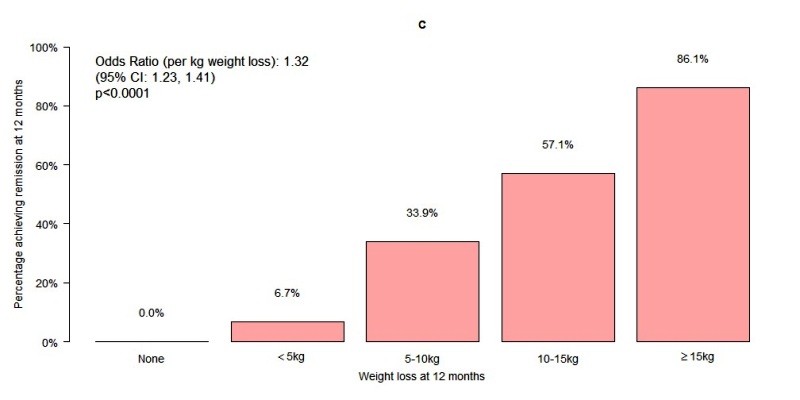

There were relatively few participants (n=157) and the trial is not yet finished, but early results are impressive. Of the cohort who managed to lose 15kg or more, irrespective of their starting weight, 86% achieved remission from their diabetes at 12 months, defined as normalised blood glucose results (there are ongoing discussions about the definition of remission). Results were better for younger participants, lower starting HbA1c results and when the duration of diabetes was shorter. Unfortunately this exactly defines the people I don't see - in secondary care we generally see people who have had Type 2 Diabetes for some time and whose medication regimes are escalating and/or who are starting to get complications.

The last presentation of the day was from the doctor who leads the Diabetes service at the hospital we visited over the summer, talking about interpreting the data that we are starting to see coming from all these technological wonder-gadgets. One key point: we often advise a minimum of 4 blood glucose tests a day, but the evidence suggests this can generally only get people down to an HbA1c of about 69mmol/mol (8.5%). The target is often 53mmol/mol (7%) which would take at least 8 fingerprick tests a day, and for anything lower than this you're looking at micro-management using a CGM and pump or artificial pancreas system.

It was an interesting and informative day, but I continue to remind myself that despite the worth of the ideas being presented, there is in reality a negligible chance of making any changes to the service we offer, given that nothing has changed even after the whole team's visit to London.

Wednesday, 31 August 2016

Long weekend

Pink flower
Krakow Botanic Garden, July 2016
Since the brief flurry of activity my social life has dwindled to its usual state, although I made an exception for Lola II and Mr M's garden party, which was lovely as always.

The long Bank Holiday weekend was extended even further for me given that I don't work on Tuesdays. I started on Friday night by shopping for the week, then making one of the Polish soups that Mr M gave me - chłodnik. It needed Google Translate to work out the extra ingredients needed and the cooking method. I finally finished watching Schindler's List, which took three sittings because of both its length and its intensity. There were a few locations that were recognisable as Krakow.

I had made a bit of progress on the patio weeds before the long weekend, but managed to strain the muscles in my legs and crippled myself for two days. The rest of the weekend contained much, much more work on the patio, which is now fully weeded without further damage to my legs, and the ivy is gone. I wouldn't bet on it being gone for good; it's been astonishingly resilient to everything I've thrown at it. Now I need to return to the wisteria.

I did some more Polish cooking (gołabki since you ask) and watched about three quarters of the opening ceremony from the London 2012 Olympics, only four years late. The only reason I've watched three quarters of it is because it doesn't all fit on one DVD - it goes as far as all the performances about British history and then all the teams coming into the arena, but not as far as the lighting of the Olympic flame. No wonder the Queen didn't look very amused; that will have been about five hours of her life she won't get back even if everyone did love that she agreed to be in the James Bond mini-movie.

There's been a lot of other stuff to do which isn't worth reporting, mostly online research about one financial commitment or another - a joint account, the best mobile phone contract, best buy ISA, hard wheeled case and stand for my baritone saxophone, how best to sell on ebay, and more. Mr M would be proud of me - I've started making use of different offers on various current accounts, but it's making my head hurt a bit.

At work I've presented the website I've created for the Very Low Carb Lifestyle to the relevant Dietitians. They have all been very complimentary about it, which is very pleasing. It can pretty much do without much attention now, except that I hope to put up a new recipe every week or so. This won't be sustainable, so it might have to be once a month to avoid raising expectations. Next will be to introduce it to the new Dietetic Manager and a few potential customers, to see what they think.

Wednesday, 17 August 2016

I have a social life

Yellow flower close up
Paris, April 2016
The trouble with socialising is that it makes me tired. That's pretty much the only disadvantage, so I'm trying to do it a bit more. Matters beyond my control meant that last week I had three evening events on three consecutive days, which was more than I would have liked, but I have survived.

First there was a delayed birthday party for two of us at work, held at the house of the other birthday girl which contains a fully equipped games room with pinball, pool, space invaders, a boxing machine and goodness knows what else. It isn't actually her house; it belongs to her daughter and son-in-law and their three children, but she and her husband live in the annexe. The rest of the family was away on holiday, so we used the games room, ate takeaway curry, and I even had a tour of the house. I can't begin to describe the contents - bling, glamour, expense, and Things Everywhere You Look. Artifacts. Pictures. Murals. It was enormous, extravagant, over-the-top. I can barely manage to maintain Lola Towers; thinking of all the work that would have to go into keeping this mansion in good condition made me slightly faint. It was extraordinary.

The second event was the badminton club BBQ which had been planned for about six months, but on the scheduled day everyone was on holiday or busy and only four players plus one partner were available. So we ditched the BBQ idea and the five of us played pool instead, which was actually great fun. I haven't played pool for many years, but I wasn't too bad at it. All but one of the games I played ended with a foul shot, so I wouldn't say any of us was particularly skillful.

Last was a birthday party held by old friends whom I hadn't seen for some time, with a pirate theme. For a change I put in a bit of effort to create a pirate costume. It was a good do, although I think they suffered from everyone being on holiday in the same way as we did for the BBQ. The live band was tremendous - as the third evening out in a row I would have left well before the end if it hadn't been for the music.

The LTRP has paused briefly, although I'm still trying to make the garden look a bit better. I ordered some perennials (6 random plants of 4 different types for £5) which turned out to be foxglove, lavender, aquilegia and echinacea. They came as tiny plugs and before they all died I've managed to pot them up, They're on the windowsill to see which survive, then they're going into the garden and if they die, they die. It's survival of the fittest out there. [Subsequent note - all the lavender plants seem to have died already.]

The other project I've embarked on is to try and manage the amount of food I'm eating, which has drifted into 'out of control' territory. I spend all day helping other people to manage their intake, coming up with all sorts of plans and ideas, but I can't seem to implement anything sensible for myself. I may or may not write more about this, but it will depend on how successful I am.

That reminds me - I've been working on a website to support people who want to cut their carbohydrate intake to almost nothing (less than 40g carb a day), and it's going really well so far. I've been lucky to have had a bit of time recently to spend on it (because everyone is away on holiday) but I've still got a few more ideas. A few people at work have seen it and they haven't ordered me to take it down, so that's good. There was talk of incorporating it into the main hospital website, but when I initially asked the IT department if they would help they said 'no' so I'm reluctant to relinquish control now that I've done all the work.

Brief car update - since the main dealer pronounced the air conditioning unit to be a terminal case due to stone chip damage, it has been working perfectly. I took it to my usual garage anyway as arranged, and they agreed with me. We concluded that the affair made no sense, commented in a British fashion on the relative uselessness of air conditioning with only one or two warm days a year (although that day happened to be one of them) and I took myself and the car off home.

Moûtiers town square, April 2016

Sunday, 26 June 2016

Exercise and Type 1 Diabetes: part 2

A gull standing on a sign indicating No Gulls
A picture I found on the Interwebs that amused me
In part 1 I tried to set out the problem of exercising with Type 1 Diabetes (T1D) - in brief, keeping blood glucose levels within reasonable bounds while hormones stimulated by activity are doing their best to frustrate your efforts. Here is part 2, which contains a few things that might help to manage the situation.

Managing blood glucose and insulin


Let’s start with the basic theory. Usually, with low or moderate intensity exercise and some active insulin on board, blood glucose will fall steadily and relatively predictably, and insulin will work more effectively. In order to avoid a hypo then, you would need either to reduce your mealtime insulin at the meal beforehand, or consume carbohydrate during the activity, or both. It is estimated that between 30g and 60g of carbohydrate is needed per hour to fuel moderate exercise.

So you could measure your blood glucose level before and after your activity and see how much it drops – say, from 11 to 6 mmol/L over 30 minutes fast walking 2 hours after a meal containing 60g carbohydrate for which you took half your usual dose of rapid insulin. If on another occasion your blood glucose was only 8 mmol/L before the same activity in the same circumstances, you could predict that carbohydrate would probably be needed to prevent a hypo.

To be able to reduce your rapid insulin dose at the previous meal, the activity needs to be planned or anticipated. Often activity is not planned, in which case there is no option but to eat or drink carbohydrate, unless your blood glucose happens to be high anyway. You can see that this makes it much more difficult to lose weight by exercising than for someone without diabetes. So another tactic that was suggested to help weight loss was to do the activity when insulin levels are at their lowest, usually first thing in the morning, although clearly this also requires an element of planning. But I can’t see how that would work if blood glucose is also at its lowest, because that’s just asking for a hypo, so maybe you’d have to reduce your overnight background insulin so that fasting blood glucose levels are a bit higher than usual. I’m not a fan of messing with background insulin on a day-to-day basis, which I will outline later on in this huge essay.

Blood glucose doesn’t always drop with exercise. If the activity is anaerobic (sprint, weight lifting, resistance exercise at the gym) then blood glucose tends to rise because those other hormones (especially adrenaline) stimulate the release of glucose and increase insulin resistance. In this situation extra insulin may be needed to take blood glucose levels down rather than extra carbohydrate to prevent hypos. A stressful or competitive situation like a football match where adrenaline is a factor may have a different impact on blood glucose compared with regular football training, and may need a different insulin dosing strategy.

This effect can be used to your advantage. If blood glucose before an exercise session is between 4 and 7 mmol/L, then starting with anaerobic or high intensity/stressful exercise may raise blood glucose enough to allow you to carry out some aerobic exercise without the need for insulin or carbohydrate adjustment ahead of time.

So we can start to imagine types and duration of activity and the likelihood of blood glucose rising and falling so that insulin and carbohydrate can be managed before and during exercise. Then comes the aftermath.

There are two effects of exercise on blood glucose after the activity is completed. The first is that glycogen stores in muscles and the liver have been depleted and need to be restocked, which makes blood glucose drop in the hours following the exercise. The other is that activity makes muscles more sensitive to insulin (less resistant) particularly in the period between 7 and 11 hours after exercise – the stress hormones released during activity induce insulin resistance for about 7 hours afterwards. For exercise in the afternoon or evening, this period of greatest hypo potential occurs during the night. Exercising first thing in the morning means the period of maximum hypo risk occurs during the day rather than overnight, which may be helpful.

Ways to manage this hypo risk after exercise include taking carbs on board immediately after exercising, and/or reducing the amount of insulin given for subsequent meals and corrections by about 50%, and possibly also reducing overnight basal insulin (but see below). Another option uses adrenaline to raise blood glucose levels by incorporating a 10-second sprint at maximum exertion level at the end of the period of exercise.

Blood glucose monitoring is the key to managing the amount of carb/insulin to maintain good control after exercise. Some experimentation is likely to be needed, while bearing in mind the poor reproducibility mentioned earlier. Perfection is unlikely to be achieved.

Background insulin adjustment


So far, all the insulin adjustment has been with the rapid insulin that works with carbohydrates that are eaten or drunk. But it is possible to adjust the background (basal) insulin too, and it was at this point that our practice and the recommendations within the study day diverged.

Background insulin works over long periods – from 12 to 72 hours depending on the type. Reducing the long-acting insulin will reduce the hypo risk overnight, so the advice on the course included routinely reducing this insulin both before and particularly after exercise. Doing this will certainly reduce the hypo risk, but on the other hand calculations of rapid insulin will be thrown out of kilter if background insulin is being adjusted day to day, especially if you exercise some days but not others. We didn’t reach any consensus on this point, so I suppose I’d have to look in the research literature to see if there’s anything relevant there.

I can, however, see the point of a basal adjustment for a short continuous period of daily exercise like an activity holiday – skiing, watersports or walking holidays being the most common examples. And I had not considered the pros and cons of different background insulins before – the newer, very long lasting insulins being less flexible if background insulin is to be adjusted. It’s also true that adopting a more active lifestyle will probably reduce the need for total background (and rapid) insulin, but injecting different amounts of long-acting insulin on a daily basis might be problematic.

What about insulin pumps?


So far all the discussion has been based on multiple daily injections of rapid-acting and long-acting insulin. Pumps are a bit different, because they only use rapid-acting insulin, and basal rates can be adjusted hour by hour. So with a pump there’s no problem about reducing background insulin as well as rapid mealtime insulin to avoid the need for extra carbs or to reduce the risk of hypos. This raises the chances of better control as well as being an advantage if weight loss is one of the aims of doing the activity. Reducing insulin is usually preferable to increasing carbohydrate for the ‘ordinary’ person. Proper athletes will want the carbohydrate, though.

The reduction suggested on the course was to set a temporary basal rate (TBR) of 50% for an hour before and up to an hour after aerobic exercise. If extra insulin is needed for anaerobic exercise, the course recommended raising the basal rate by only 10% starting 30 minutes before and lasting until 60 minutes after the activity. The TBR might be reduced again by 10% in that crucial period 7 to 12 hours after the exercise. There are more complicated formulae for calculating TBRs but I will leave those to the serious competitors.

The main downside to a pump is that it needs to be attached to you, and most types are not waterproof. So the pump would need to be disconnected completely for contact sports or watersports, which is really only safe to do for an hour or so. Some pumps can’t be disconnected temporarily, like the tubeless pumps which are actually attached to the skin. This type is usually waterproof for bathing or swimming up to an hour or so, although it clearly wouldn’t be suitable for scuba diving, and might be dislodged in a rugby scrum or during martial arts.

For situations where the pump has to be disconnected for longer than an hour, competitive athletes sometimes connect up with the pump from time to time to give themselves a quick bolus, or revert to the use of basal and bolus injections from a pen to maintain insulin levels on those occasions. When the pump is reconnected then there may be a need for a correction, which could take one of several forms. You could increase the basal rate by 50% for up to an hour, or give 50% of a correction bolus, or even work out how much basal insulin was missed and bolus half this amount. Then, of course, be a bit more rigorous about monitoring and correcting blood glucose levels.

What else?


There are a whole lot more factors that affect management of T1D with exercise, some of which I haven’t mentioned up to now because they are routine, like the need for fluids. Dehydration not only affects athletic performance but can make the blood glucose level appear higher than it really is.

Heat and cold also affect the uptake of insulin from the injection site as they do at any time. The location of the injection site matters because if you’ve injected near a muscle that will be used for the exercise (usually leg or buttock/lower back) then the insulin will reach your bloodstream faster than if you injected in a non-exercising part of the body.

Keen exercisers may use Continuous Glucose Monitoring (CGM) either standalone or in conjunction with an insulin pump. The main point to highlight with CGM is that there is a delay between the readings they give for the glucose in interstitial fluid and the level of blood glucose, which may not matter if you’re in an office and it’s coming up to lunchtime, but may be critical if you’re just reaching the summit of a mountain.

Carb intake: it has been established that the requirement for carbohydrate during moderate intensity exercise is around 1g per kg body weight per hour, i.e. for a 70kg person that would be around 70g per hour. It has also been established that the gut can only absorb dietary carbohydrates at the rate of 60g per hour, so there is no point trying to increase intake beyond this as it will just cause gastro-intestinal discomfort. The difference is made up by the use of stored glucose and fat as fuel.

All foods are not equal, but the question of which carbs to have at what time was not covered in the course. Of course hypos associated with exercise have to be treated with fast-acting carbohydrate as at any other time, and it would make sense to have slow-acting carbohydrate to sustain any prolonged period of activity. Beyond that, I suppose it has to be trial and error with plenty of blood glucose monitoring to find out which foods before, during and after exercise have the best effect on blood glucose levels. Aside from diabetes, the prevailing view is that a mixture of protein and carbohydrate such as cereal+milk, yogurt or meat/cheese sandwich is a good idea post-exercise to replenish glycogen stores and supply material for muscle regeneration and repair.

The overall message I took away from the study day was that exercising with Type 1 Diabetes is very, very complicated if you want to do anything more exciting than up to an hour of moderate intensity exercise in a regular controlled environment like road cycling, a run around the park or an hour in the gym. Competitive athletes need much more insight into their own physiology, but it is possible to compete at the highest level, and one of the diabetes pharmaceutical companies sponsors competitive cycling with the Team Novo Nordisk.

I have had a couple of patients asking me questions about serious exercise, and we have very quickly reached the limits of my knowledge. I don't see that changing much as a result of this course, but perhaps over time I will absorb more on this subject alongside my greater experience in diabetes as a whole.

Wednesday, 22 June 2016

Exercise and Type 1 Diabetes: part 1

London skyline including the London Eye and Big Ben
View from the conference centre, May 2016
The recent study day I attended was about exercise and Type 1 diabetes (T1D), which is a truly difficult topic to write about, and even more difficult to manage.

Many hormones are involved in keeping blood glucose levels stable with exercise, including insulin, glucagon, growth hormone, cortisol and adrenaline. For someone with T1D, insulin is delivered in a very non-physiological way via subcutaneous fat rather than into the hepatic bloodstream from the pancreas. It is also thought that glucagon production by the pancreas becomes less efficient over time following a diagnosis of T1D. Each of these hormones has multiple effects at different organs (brain, muscles, liver, pancreas etc.) and all interact with each other. This complex situation means that the tight regulation of blood glucose with exercise that happens automatically when the pancreas is working properly is almost impossible to achieve with a broken pancreas.

The study day


The course was a single day, but they packed a great deal into it. Speakers presented slides with graphs and evidence and whizzed through topics at such a pace that I could barely keep up let alone take comprehensible notes. The slides were supposed to be available after the event, but I don’t think they have appeared yet, a month later. My scribbled note “good slide explains this bit” will have to wait for interpretation later.

The first speaker talked about ‘normal’ exercise metabolism, the second introduced T1D into the metabolic picture, and the third session was presented by paediatric and adult Dietitians. After a break there was more detail about managing blood glucose before, during and after exercise. The workshops after lunch gave us the chance to think about case studies and individual scenarios.

Overall I think everything was included that needed to be included, but much too fast, and the main focus was on serious athletes and people who were going to be running or cycling or weight lifting or at least going to the gym regularly. There was very little about the unfit or overweight person who might be starting with walking up a flight of stairs rather than taking the lift, or trying to increase their level of activity for weight loss or fitness rather than competing for an Olympic medal. Gardening, DIY, housework and shopping are the more common types of activity that I encounter in my caseload.

I did a little brainstorm for this blog entry just listing all the issues that pertain to the subject – the list was 2 pages long. So what shall I include here? Of course, this particular blog post probably isn’t going to be of much interest to you unless you have Type 1 Diabetes and you want to know about managing your blood glucose while exercising, and I think I may have fewer than one reader in that particular category. No, this blog post is for me, to enable me to assemble my thoughts and produce a reference point for that future day when I might have to advise a patient on this subject.

Fuel for activity


So, first to recap the basics. Dietary carbohydrate is digested into glucose which moves into the blood to be transported around the body. Insulin allows blood glucose to be taken up by cells in the body where it is metabolised into energy or stored as glycogen in muscle and liver. Excess glucose is converted into fat in the form of triglycerides (a triplet of linked fatty acids) and stored in the liver, muscle and in fat cells. High levels of insulin promote this storage process and inhibit the release of glucose or fat into the blood from fat and liver cells.

When energy is needed for activity, the most accessible sources are muscle glycogen and blood glucose. The hormone glucagon prompts the liver to very quickly start converting its stored glycogen into glucose (glycolysis) and send it out into the blood. Triglycerides in the muscles are also easily accessible and are used as fuel (fat oxidation). It takes a bit longer for new glucose to be manufactured in the liver (gluconeogenesis) and for the liver to break down triglycerides into free fatty acids and send them out to be used as fuel (fat oxidation). Insulin levels need to be low for all these processes to work efficiently.

If exercise is more intense (anaerobic) there is more reliance on carbohydrate as fuel; if exercise is less intense but goes on for longer (aerobic) there is a shift towards fat as the main fuel. Obviously exercise drains glycogen stores in muscles and liver, and these are ‘topped up’ afterwards using dietary glucose (fat stores don’t need to be topped up!) Non-diabetic metabolism manages all the hormone levels so all this takes place with blood glucose maintained between 4 and 7 mmol/L at all times.

The main difference that makes things difficult for someone with T1D is that insulin cannot be regulated up and down in a physiological way. It is certainly possible to adjust insulin levels according to various ‘rules’, but adjustment is crude and doesn’t reflect the metabolic state minute by minute.

There are also a couple of scenarios when it is not advisable to exercise. If your blood glucose is high (over 14 mmol/L) then it is possible that you don’t have enough insulin on board, and the official advice is that you need to check for ketones. If blood glucose is high without ketones then a small correction dose of insulin might be all that is needed, but if ketones are present then the full correction dose should be given and exercise postponed until ketones have gone. The majority of people with T1D don't have a meter that will measure blood ketones, however, so this advice is moot.

The other situation when you might choose not to exercise is if you have had a hypo in the last 24 hours, because this makes a hypo with exercise even more likely. If it wasn’t a serious hypo needing third party assistance then you might go ahead bearing in mind the need to be extra vigilant. If the hypo was within an hour before planned activity you would be advised to wait for 45-60 minutes after your blood glucose level has stabilised before exercising.

Changes in blood glucose and insulin


The level of your blood glucose will fluctuate according to:
  • the duration, intensity and type of activity
  • the type and amount of food and snacks eaten or drunk before, during and after the exercise
  • the level of stress and competitiveness
  • your level of fitness or previous training
  • hydration status
  • the time of day
and probably more.

The level of your blood insulin will fluctuate according to:
  • the timing of insulin injections/infusion
  • the amount and type of insulin injected/infused
  • the site of the injection or cannula
  • the ambient and body temperature.

Poor ‘reproducibility’ was highlighted in the study day, meaning that the same exercise for different people or even for the same person on different days may have very different effects on blood glucose levels. With all these variables it’s not surprising that matching blood glucose levels and blood insulin levels in order to manage T1D and exercise is a minefield.

So this is the landscape we're working in, with different sources of fuel and the action of hormones all interacting, and we have to try to maintain blood glucose levels without going low or high using tools (carbohydrate and insulin) that are about as precise as trying to steer a car at full speed with just your elbows on the steering wheel. At some point you're probably going to crash.

So having set out the scale of the problem, how can it be managed? Look out for part 2 in the series, coming soon!

Friday, 20 November 2015

Study Day

Round, ivy-clad decorative brick tower
Part of Rugby School, May 2015. I really like the slanty windows
I have mentioned carbohydrates on here so many times - they are the mainstay of the British diet in the form of cereal, bread, potatoes, pasta, rice, pastry and flour as well as all the sweet and sugary food and drink, fruit, milk and yogurt. Carbohydrate is also the dietary component that raises blood glucose in people who have diabetes, which can cause poor health in the long term. For this reason, we are coming round to the idea that it makes no sense to encourage people with diabetes to eat lots of carbohydrates.

A reduction in consumption of sugary food and drink has always been advocated, and not just for people with diabetes. This is why the 'traffic light' labelling system on the front of some food packets includes the amount of sugar. But starchy carbohydrate and natural sugars in fruit and dairy products were not restricted in the past, despite the fact that they are also converted to blood glucose when they are digested. Glucose from starchy food, fruit, milk and yogurt enters the bloodstream a bit more slowly than glucose from sweet things, that's all. But if you don't have diabetes, you only really need to care about sugar.

So when people with diabetes come to see me, they always know that they're not supposed to have sugary foods, and they commonly mention that they have been told that brown, wholemeal or granary bread is good for you, as well as lots of fruit. Sometimes they say they can't have bananas or grapes. They have usually picked up this information from non-specialist Dietitians or nurses in their GP practice, or from friends and relations with diabetes.

It now seems to be accepted among Dietitians that limiting all types of dietary carbohydrate (not just sugars) is a valid and beneficial approach for people with diabetes, and very recently Diabetes UK seems to have accepted this idea and at last - at last! - the dietary advice on its website has changed. It used to recommend that carbohydrate foods should make up a third of your diet, or up to 14 portions of starchy carbohydrate a day. Now the same web page suggests you should 'try' to have some wholegrain carbohydrate every day, but acknowledges that you may be advised to reduce the amount of carbs that you eat.

Carbohydrate intake is only half the story; the other factor that leads to raised blood glucose in Type 2 diabetes is insulin resistance, which is often caused by excess weight around the waistline. Most people with Type 2 diabetes are overweight or obese, so I try to recommend that my patients replace the carbs with vegetables that are lower in calories than carbs, which should result in a calorie deficit and very welcome weight loss. Reducing carbohydrate intake reduces blood glucose levels on a day-to-day basis, and losing weight lowers blood glucose in the long term by reducing insulin resistance,

There are some who are not particularly overweight, and therefore cutting the calories from carbohydrates needs to be balanced by an increase in calories beyond what vegetables can provide. For these people we have up to now suggested protein and healthy unsaturated fats: monounsaturated (from olive and rapeseed), polyunsaturated (from sunflowers and corn) and omega 3 (from oily fish, nuts and seeds).

Diabetes Specialist Dietitians are generally a mild-mannered lot (as are most Dietitians). However, there is a militant faction of Dietitians who declare that not only is there no evidence of harm from saturated fats (derived from animal sources), but that these fats are positively beneficial. They promote a low carb high fat (LCHF) diet, and not just any fat, but saturated fats.

The difficulty is that these LCHF people are either deluded or they are visionaries, and we have no certain evidence to tell us which. On Friday I attended a study day where one of the highlights was a debate between a leading proponent of LCHF and a respected academic research Dietitian. Both argued their case admirably, although unfortunately the advocate of the LCHF diet was a little less articulate and let herself down with a couple of poor examples that weakened her case for me. In the end, the consensus is still that we believe saturated fat promotes cardiovascular disease, but there's a chance that it doesn't. Unfortunately it is impossible to conduct human trials that are sufficiently long-term, randomised or blinded to give us the evidence we need, especially as people eat food not nutrients.

The study day also included discussions about the pros and cons of weight reduction through surgery or extreme calorie restriction, the 5:2 fasting diet, a protocol for adjusting diabetes medication in a weight loss programme, and the AGM of the Diabetes Dietitians' Specialist Group.

The session about the 5:2 diet was presented by the Dietitian who invented it within the setting of breast cancer management, and she made the point that there are now three times as many books about the diet than there were participants in the trials that supported it. The diet she invented involved two consecutive days of very low calorie intake separated by five days of 'normal' eating, whereas the common version now in the public domain has separated these two fasting days. Evidence is scanty, trial participants were all women (breast cancer, remember), and the end message was that we have no long term evidence about either benefit or harm. It's pretty unlikely to do any damage (unless there is blood glucose lowering medication or insulin in the mix) so if it works and people lose weight then we're fine with that.

The other diet discussed was the 'Diabetes Reversal' diet pioneered in Newcastle, which involves restriction to 800 calories a day. The rationale for this was because people who have bariatric surgery for weight loss and who have Type 2 diabetes often experience sudden remission in their diabetes and normal blood glucose levels immediately post-surgery. The researchers wanted to investigate whether this outcome was due to extreme caloric restriction alone, or something else to do with the surgery.

Their original study put people on the diet for 8 weeks and required a portion of vegetables every day alongside meal replacement products, and it showed impressive results. They have followed this up with a bigger study - the biggest research grant ever awarded by Diabetes UK - which is for 12 weeks' restriction with meal replacements only. All the information about the original diet is in the public domain on their website, so anyone can try it, and a number of our patients have done so. We are now considering how to support our patients if they were to choose this option for weight loss.

The other sessions I attended at the study were interesting but not remarkable. Back at work, this blog comprises the main reflection I have carried out on the day's experiences. My colleagues are working on a way to offer people a choice of weight loss pathways and I'm planning to use their approach in my service, once they have ironed out the wrinkles.

Monday, 13 April 2015

Ten things

Outdoor tables and chairs under large umbrellas in the sunshine by the sea
Greece, June 2014
This post is pretty close to a rant. It's true that I have been feeling a bit stressed and the four-day weekend for Easter was very welcome. Normal service should be resumed very soon with calm, considered blogs of an informational and entertaining nature. I hope so, anyway.


1. Sensational media reports based on a flawed interpretation of a journal article or on something made up by a journalist or a celebrity

"Did you see the TV programme last week about how eating saturated fat is good for you? I've switched back to butter."

"I read in a magazine about how you will lose weight if you eat nothing at all after 5 p.m."

"I cut this article out of the newspaper about kale smoothies reversing diabetes."

"This website says that chia seeds will melt fat."

"The Daily Mail says that eating blackberries brings your blood glucose down."

"It says there's a new cure for diabetes."
FACT: It's all rubbish, ignore it. If you are overweight and want to reduce your blood glucose and improve your diabetes control, then eat less carbohydrate and lose weight. If you want to lose weight, you need to eat less, and ideally move more. The dietitian's job is to help you find a successful way to do all this, not spend half a consultation explaining how journalists are perfectly free to MAKE STUFF UP and are paid handsomely for it.

2. I can't possibly eat any less


The patient declares that there's no way they can eat any less than they already do. "I don't have any appetite," they say. "I eat like a bird. My two-year old grandson eats more than I do." The account they give of their daily diet consists of a small bowl of cereal for breakfast, half a tin of soup for lunch, and one slice of toast and a tin of sardines for supper. Between meals: black tea and coffee with sweetener. "I can't understand it," they say.

FACT: You are eating more than this, and you know it. Or maybe you don't know it. Either way, you're eating more than this or you wouldn't weigh 20 stone.

3. Artificial sweeteners

"Aren't they as bad as sugar? I read they cause cancer. They're full of chemicals, really bad for you. I wouldn't touch them."
FACT: Artificial sweeteners are safe. They're calorie-free. They're carb-free. THEY ARE FINE, STOP BEING STUPID.

4. Exercise

"I would lose all this weight if I could exercise, but I can't."

"I'd love to go out for a walk, but my back/hip/knees are too painful."

"My dog died and I put on 10 pounds."
FACT: exercise is incredibly good for us - it brings down high blood glucose levels, makes us feel good, strengthens muscles and helps stabilise joints - but the amount of calories burned by ordinary people who increase their activity level is about equivalent to a sandwich. If you're a typical overweight person you won't lose weight by exercise alone, and you'll probably reward yourself with more calories than you used up. But go out for a walk anyway, because the other benefits of activity are so worth it. And then start eating less.

5. Honey

"I've cut out all sugar, I don't have any now. I put honey in my tea and on my porridge instead."

"Honey's natural so it must be better than sugar."
FACT: Sugar is processed from plants by people; honey is processed from plants by bees and then people. Honey will have the same effect on your blood glucose and your waistline as sugar. Sorry to disappoint you, but YOU ARE DELUDING YOURSELF.

6. Fruit and fruit juice

"Fruit juice is healthy, isn't it? It's natural."

"I buy the fruit juice labelled 'no added sugar.'"

"I've stopped snacking on biscuits, and I'm having lots and lots of fruit instead."
FACT: fruit juice has more sugar in it than lemonade, and nearly as much as Coke or Pepsi. Why would a manufacturer need to add more sugar to a product that's already 10% sugar? Yes, whole fruit is better, but you're not helping your blood glucose levels if you have more than a handful at a time. And the 'five-a-day' message? Well, it's perfectly OK to have five portions of vegetables and no fruit at all.

7. 'Full of sugar'

"I stopped having ketchup on my chips - it's full of sugar."

"Those pasta sauces are full of sugar."

"I don't eat grapes or bananas any more; the nurse told me they are full of sugar."

"I have muesli now - cornflakes are full of sugar."
FACT: There's far more 'sugar' in your chips than in your dollop of ketchup, more in your large bowl of pasta than in the couple of tablespoons of pasta sauce, and no less in your bowl of muesli than there was in your cornflakes. It's all about the carbs. Grapes and bananas are fine, but have a handful of grapes or a small banana, not the whole punnet or a banana the size of a baseball bat.

8. The Menu Plan

"Just tell me what to eat."

"Can you just give me a menu plan?"
The lifestyle magazines are always printing "a menu plan for a week". We love them. I love them. If only we could just follow the plan to the letter, it would be so easy and we'd reap the promised benefit. But then we look through them - one muffin? Half a grapefruit? 300g kale? What do we do with the five other muffins that came in the pack of six, or the other half grapefruit, and I'm not allowed grapefruit anyway, and kale comes in 500g packs, and I don't like kale, and it's too expensive to eat all that fish, and I don't like fish except tinned tuna. What do I do in week 2 - just repeat week 1? My wife does all the cooking and we eat curry and chapatti not sausages and potatoes...

FACT: Menu plans are useless, and I don't have one for you. You'll have to work it out for yourself. Sorry.

9. "You're telling me I can't have..."

Honey. Rice. Sugar puffs. Fruit juice. Potatoes.

NO, I'M NOT TELLING YOU WHAT YOU CAN AND CAN'T HAVE. What I'm telling you is the effect that it will have on your weight, or your blood glucose. You can have whatever you like, whenever you like, because it isn't me that will put on weight or need to inject insulin, it's you. If you want to start the day with a Pepsi, that's fine, but if I were you, I wouldn't do it, like I wouldn't walk into the road without looking, or swim in the sea when there's a red flag flying. But if you want to, you go ahead.

9a. 'Good' and 'Bad' food

There is no such thing as good or bad food - nothing is forbidden. It's good to eat a lot of some foods and a little of others, and hey! it's bad to eat a lot of some foods and a little of others. Eat what you like, it's your decision and you will have to live with the consequences. My job includes making sure you are aware of what those consequences might be.

10. Low blood sugar

"I had to have a sandwich because my blood sugar was low."

"I can't sleep unless I have a glass of milk and a biscuit before bedtime."

"I need a snack to keep me going."
FACT: if you 'need' a regular snack then your insulin needs adjusting down. If you're not on insulin (or gliclazide or another insulin-stimulating medication) then you don't 'need' a snack, you just want one - you will never have low blood sugar. Grow up, you're not a toddler any more.

Thursday, 19 March 2015

PDR, VLC group and DUK PC

Tortoiseshell butterfly on pink flower head
Peckover House, August 2014
I haven't written much about work for a while, so here goes.

I had my annual Personal Development Review (PDR), I hosted our monthly Very Low Carbohydrate group, I went to the Diabetes UK Professional Conference in London, and of course there were the usual clinics.

It's going quite well, although I'm having rather too many good ideas. When I have good ideas I tend to get a bit obsessive, the ideas blossom and grow, they expand beyond the available space and instead of a tidy achievable project designed to meet defined goals I end up imagining the biggest, best, most complete and perfect solution to put an end to all conflict in the world. Then I realise it's totally unachievable and start to doubt whether I can do anything at all. I have a good deal of respect for people who can come up with a sensible and successful idea, put together a plan and then see it through into practice.

I'll give a small example - Carbs and Cals. This is a book, and much more. The author is a Diabetes Dietitian who got together with a photographer friend and took photographs of different portion sizes of various foods, then put them in a book with labels showing the amount of carbohydrate in grammes and the calories in each portion. It was the perfect solution to a problem faced by every person with Type 1 Diabetes and a lot of those with Type 2 - how much carbohydrate is in that portion? Carbs and Cals will show you.

The book was so successful that it has expanded to show Carbs, Cals, Protein, Fat and Fibre; there is a website, a phone app, flash cards, teaching resources and much more. One manufacturer in the diabetes world includes a copy of Carbs and Cals in the box with one of its blood glucose meters. Diabetes UK has lent its logo to the cover and sells the book via its online shop. I met the author at the conference last week. He is the nearest thing to an A-List celebrity in the diabetes world - every single person of the thousands in that conference centre would have heard of him and his book, but he seemed pretty modest and unassuming.

The point is, he came up with an idea and saw it through. He probably spent an immense amount of time and money on it, presumably found his own publisher, designer, editor, set up sales channels - and I can't tell you how much I admire and envy the talent and commitment he shows, because I think it is unlikely that he was given much time to do it at work - I don't know for certain, but I'm guessing he did it all in his spare time.

I want to create an online resource to support our patients who have taken on the very low carb lifestyle, and I am in the wild imagining stage. My idea has exploded to include more than a website: I am imagining a discussion forum, recipes, pictures, an app, published research papers, a blog, a secure section where people can record their blood results, live interaction with Dietitians, links to SMS text messages, Facebook, Twitter, Instagram, Pinterest, anything and everything. I need to scale back my ambition and make it achievable. At the moment I cannot access any of these elements from work, due to restrictions imposed by the IT department. Almost everything is blocked and my browser is so old that many ordinary websites can't be used properly.

This project is one of my PDR objectives, so at least I should be supported to do it in work time, although I expect I will have to put in a bit of extra effort if I want it to succeed. My other main PDR objective is to get more involved in pump clinics. Up to now I've concentrated on acquiring the basic knowledge that applies to the majority, but for a number of reasons, this is a good time to focus down on the minority who use CSII - continuous subcutaneous insulin infusion, or insulin pumps.

The number of pump users is increasing as more adults acquire them, and as those who were started on pumps as children transfer into the adult service. Every adult on a pump should be equipped with the skills to use the pump effectively, but it is not so clear cut with children. Anyway, because the general level of diabetes knowledge and skill in the adult population with pumps, I have rather left them alone and concentrated on less able people coming to clinics. But our pump service is set to expand, and there is quite a lot I could be doing to help and support pump users. More on this at a later date, I expect.

The conference. It turned out to be pretty difficult getting funding to attend the conference. I approached the dietetic and diabetes departments and every industry manufacturer and rep that came within two feet of me, which was bordering on humiliating and completely fruitless. In the end, a colleague managed to get a company to pay our attendance fee, but nobody would stump up for accommodation. We eventually had to apply for funding to the hospital's charitable funds, and I got an email 15 minutes before the end of my last working day before the conference letting me know the accommodation cost had been approved. I won't get any reimbursement for travel.

Apart from this, the conference experience was excellent. Being fairly new to diabetes I hadn't been to this event before, but in my old life I had staged a conference with my team and have been to many in this country and in the USA. This one had a lot more money spent on it by the Pharma companies exhibiting and sponsoring the talks than in the world of disability and visual impairment, which shouldn't really have been a surprise.

I saw too much to write about here, but the highlights included:
  • a heated 'debate' between one maverick Dietitian who is promoting a diet high in saturated fat, and the rest of the dietetic community who don't believe that the evidence is strong enough to support this approach
  • a session on exercise and Type 1 Diabetes (this is one of the most complicated areas I've encountered yet)
  • a very useful summary of pump usage given that I'm going to be focusing on this area, and 
  • links with various people who talked to me about whether and how their NHS employer allows them to use state of the art technologies.
So lastly, my low carbers. I started to worry that the group would fizzle out - a few people have left, either because they are successful or because they can't manage it any longer, which is why I'm so keen to create something online to help them. For this month's meeting I bought a cookbook of Low Carb Gluten Free Vegetarian recipes which source their protein mainly from eggs, cheese and tofu, and I reckoned the group probably hadn't cooked with tofu before. So I cooked one of the recipes (teriyaki tofu with broccoli), bought a few different types of tofu (firm, silken, marinated) for the group to taste, and printed a selection of tofu recipes. It was one of the most successful meetings so far. And they are all doing well, still losing weight and maintaining great blood glucose control.

Sunday, 18 January 2015

Nothing much to report

Pink flowers against a background of leaves
Peckover House, August 2014
Nothing much has been happening that I can blog about. There's been badminton, a trip to London, a visit from a builder to look at the damp patches on the hall walls, an attempt at running which was curtailed by a very welcome phone call from Lola II, a second visit from the builder to look at the same problem in daylight, delivering a two-part DESMOND course, more badminton, renewal of the house insurance and another run - a proper 5k Parkrun this time. It was very cold - frosty and icy - and I cobbled together an outfit that I thought would do the trick. Only my elbows were cold, so I consider that a success, given that it started to snow at one point.

Nothing else of any particular interest, although the trip to London produced all the highlights: an urban fox jumping over the fence within a couple of feet of the window we were looking through, my first ever sighting of a jay (although my second sighting came within a week in a completely different location), and participation in the Gulloebl Chinema.

Work is still good, very good. I am practising and learning and practising some more, and reflecting on my performance and receiving and giving feedback. Some patients do very well, in which case their success comes from their own efforts. Some don't do so well, in which case I try to find a different way to help them help themselves. We discuss changing long-established dietary habits. "You're not going to tell me what to do, are you?" said one patient. "That's right," I replied. "You have to decide for yourself what you're going to do, because I'm not going to be there when you're faced with a choice."

The very low carb group is thriving - at least, those who attend seem to be getting on very well. I have had a quick look over my past blog posts, and I don't think I've written about the group before. It comprises all those people who have adopted the very low carb lifestyle to help manage their diabetes, and since September we have been meeting once a month to chat about various aspects of the diet - sometimes someone brings some food they've made for people to taste, we swap recipes, and we had a speaker talking about retinal screening at one meeting. My Broccoli and Stilton Soup was very well received, as were the cheese biscuits that one of the group had made.

I have been recruiting patients to the group at a fairly slow rate, and about half of them decide after the introduction that they aren't going to carry on, but we have about ten regulars now. Everyone is weighed and has their blood pressure measured, and one of our nurses is available to consult about medication changes. They seem to enjoy the meetings and, more importantly, most are enjoying the diet, losing weight, reducing medication and are keen to continue. Only one has dropped out so far, but may return now that the festive season is over.

I participated in a small meeting to discuss our pump clinics. An increasing number of people with diabetes are using insulin pumps, and our existing provision is inadequate, leading to lengthening waiting lists for clinic appointments. There were just four of us: the main diabetes doctor who leads on pumps, our two nurses and me. At the end of the meeting I felt that things were clearer than they were at the beginning, and that is such a rare event nowadays. It looks as though we have found a way to expand the pump service, and I may have a part to play which will also increase my knowledge and skills, which is just what I like.

Monday, 14 July 2014

Diabetes services

Sunset over harbour and hills
Greek sunset, June 2014
I've got a half-written blog post that I've been trying to finish, but it's taking ages because it needs a bit of thinking time and I'm just not getting round to it. So I'll do some writing off the top of my head, just to keep things ticking over.

I'm still working five days a week, being paid for about five hours on that fifth day doing general dietetics on the wards, which means mostly nutrition support. The hospital is a small one with only six wards, and holds patients who are not acutely ill and/or who live in the area. They are generally old and not actually needing further treatment but cannot go home until some sort of provision is arranged to make sure they can cope (a 'Package of Care'). Nearly all those who need dietetic input are not eating or drinking well, usually because they have dementia. I absolutely hate it. I have two weeks to go before the Dietitian who has been off sick is due to return, and I shall do everything in my power after that to be completely unavailable for this type of work in future, although there will be a lot of moral pressure to 'help out' if a similar situation happens again.

My real job is still very interesting. I have managed to start two people on the very low carb plan, but unfortunately one did not return for the follow up appointment and wasn't answering the phone when I rang. My first Structured Education course for people with Type 1 Diabetes finished this week. This is designed to give people a lot of information and practical experience of how to best manage their diabetes, and we run it one day a week for four weeks. We had eight attendees, and all of them seemed to get a lot out of it. I found it a little stressful to have so much responsibility for delivering material that is so critical to the course.

At least half of the course is about carbohydrate counting. This is a skill that is fundamental to good control of Type 1 Diabetes for those who want to have the flexibility of eating what they like when they want to. Teaching carb counting is a core skill for a Diabetes Specialist Dietitian, and I would say I have reached an intermediate skill level - not too bad, but I've only been doing it in earnest for a few years. Nearly all of the people on the course have had diabetes for much longer than that.

Despite my nervousness, it went quite well, although I think I can improve with practice. We cover all sorts of ways of estimating the carbohydrate content of food - using food labels, weighing food and using reference tables, using apps, websites and pictures, and plain and simple educated guesswork. The part that makes me a little bit uncomfortable is that while my estimates are based on my experience with a number of different people as a day job, I don't actually act on the data and inject insulin, so I don't get any personal feedback about the accuracy of my estimates. When I get it wrong, it's someone else that suffers. I take this responsibility very seriously, so I often lose sleep worrying about whether someone I've seen in the day is going to end up with very high or very low blood glucose as a result of something I've said.

As well as the course and the individual consultations, there has been some discussion in the Trust and the Clinical Commissioning Group about funding to expand the very low carb programme that we offer. This has caused some controversy, because we haven't any solid evidence for its value in our service. We have lots of anecdotal evidence of patients who have found it life-changing (in a positive way), and we have a spreadsheet with lots of data, but the data hasn't been analysed and there's been no data collection from those who haven't found it helpful, nor have we sought views from anyone who may have experienced negative effects.

There are a number of healthcare professionals in our Diabetes service who are positively messianic about the plan, and they are all in favour of the expansion in funding because they have seen so many people find it beneficial. Having joined the service so recently I am more sceptical, and feel that we must carry out some analysis of our data to provide evidence of benefit and investigate any negative aspects properly. Our Team Leader has very sensibly defused the situation with an eminently rational proposal, including the view that we should be offering people choices rather than putting all our energies into selling the low carb idea.

Whenever I have met up with other Diabetes Dietitians, I have asked them their views on very low carb diets. So far I haven't met any that are offering anything like our plan, but they have all been very interested in hearing about what we do. I would like our next stage to be a proper audit of what we have, if not a research project culminating in a peer-reviewed publication, but I'm not volunteering for the job.

Saturday, 31 May 2014

Very low carb diet

Scrambled egg with dill, creme fraiche and tomato salad
Low carb breakfast
As planned, I started my very low carbohydrate regime after the wedding. In brief, this involves: no sugar or starchy carbohydrates at all - no bread, pasta, cereals, rice, potatoes or flour, no cakes, biscuits, sweets or full sugar drinks. Fruit is limited to 100g per day (about a handful) of berries (strawberries, raspberries, blueberries, blackberries etc.), pulses are limited to 30g cooked per day (about 1 tbsp), nuts and seeds are limited to a small handful, and you can have 3 portions of dairy produce (to provide calcium) but not flavoured or sweetened yogurt. A multivitamin is required because of the exclusion of a whole food group. Lots of low carb vegetables are encouraged, ground almonds and coconut flour can substitute for wheat or cornflour (up to a point), and monounsaturated oils are recommended. Unprocessed forms of protein are deemed better than processed due to the potential for inclusion of carbohydrate fillers.

It has been easier than I thought it would be. I like protein and vegetables, so evening meals have been fairly straightforward: meat or fish and vegetables or salad. Lighter lunch meals have incorporated leftovers, or I've had vegetable sticks and dips like salsa or guacamole, or vegetable soup with a swirl of plain yogurt sprinkled with seeds. I thought breakfast would be the most challenging, especially on a work day when there isn't a lot of time, but it turns out that I like plain yogurt with berries and flaked nuts more than I thought I would. When there's time, breakfasts are egg-based - poached, fried, scrambled or an omelette with one or more of tomatoes, mushrooms, bacon, smoked salmon, cream cheese or herbs.

I thought I would miss pasta and rice, and when Mr A has cooked them for himself they smell lovely but I haven't been tempted. Luckily there has only been one cake at work, and it wasn't very attractive so not hard to resist. I've snacked on unsalted nuts or vegetable sticks, and a couple of squares of 85% cocoa chocolate are allowed, as well as 'Atkins bars' which I have felt obliged to try, but don't really like much. They're expensive, too.

The key to success has been planning, because I can't just grab a piece of toast or bowl of cereal if I'm in a hurry. So I have my week's meals scheduled, and at each meal time I consult the sheet of paper to find out what is on the menu. Tonight we're having mozzarella, some antipasti from a jar, a tomato and basil salad and grilled courgettes and peppers. Tomorrow it's haddock provençale from the BBC Food website. Mr A bulks out his meal with the carbohydrate of his choice.

Side effects can include headache, nausea, fatigue and constipation, but are usually mild and short-lived. I felt absolutely fine until about 10 days in, when I had a niggling headache for a couple of days - but it may be just a coincidence. I've lost a little bit of weight, only 1 kg, and I suspect it's because of not being able to tuck into the usual amount of work-based cakes and biscuits, and the odd slice of bread between meals, plus all the running that I'm doing. But I'm not the target candidate for this diet, which is squarely for the benefit of overweight people with Type 2 diabetes, in order to help them reduce their blood glucose and curb their appetite. I still haven't recruited any patients to actually start the very low carb diet for real, but I have produced a poster and some flyers that will be given to likely candidates during clinics, to see if I can rustle up some trade.

We had a Diabetes Dietitians' meeting this week, where we discussed exactly how much pulses to allow, and whether we should tell people about low carb bread, and what exactly is the recipe for ground almond pancakes. There are some recipes that the other Dietitians have tried, for linseed bread and low carb cake, but I'm not sure I can be bothered because I don't mind not having bread and I didn't bake cakes even when I was eating carbs. I did try to make the ground almond pancakes, but they just tasted like gritty omelettes, hence the discussion about the exact recipe. It was all very interesting - four out of five of us are on the diet, with one doing it seriously and the other three dabbling. I'm adhering to it strictly for these three weeks up to our holiday, but we'll see what happens when we're away, and when we come back.

Leek and mushroom soup with yogurt and mixed seeds

Friday, 16 May 2014

Ketosis and ketoacidosis

Pink fluffy flowers
National Botanic Garden of Wales, May 2013
When I was visiting Mr M and Lola II recently, Mr M and I had a brief discussion about ketones which made me think harder about exactly what happens when carbohydrate is restricted in ketogenic diets. Here is what I think.

Without diabetes


The body's fuel of preference is glucose, and its main source is from the digestion of carbohydrate foods which delivers glucose into the blood. Insulin is secreted from the pancreas in response to rising blood glucose, so when carbohydrate is plentiful and blood glucose levels are high, levels of insulin in the blood are also high. Insulin has a number of functions in the body, two of which are facilitating the uptake of glucose from the blood into cells so that it can be used as fuel or stored as glycogen or fat, and also preventing the breakdown of glycogen or fat in the liver and adipose tissue. It makes sense: if you've got fuel coming into the system from food, there's no need to retrieve fuel from stores.

In a non-diabetic person, in the absence of dietary carbohydrate the blood glucose is low, consequently insulin levels are low, and the inhibiting effect of insulin on the liver is reduced. The liver sends its stores of glucose into the blood and just enough insulin is secreted to allow uptake by cells to use for energy. When liver stores of glycogen start to run out, fat starts to be broken down for fuel. One of the byproducts of burning fat is the production of 'ketone bodies' or 'ketones', which are used for energy in a metabolic state known as 'ketosis'. This is entirely normal, especially when someone is deliberately trying to lose weight, and is variously called 'physiological ketosis', 'dietary ketosis' or 'starvation ketosis'.

In this situation, low levels of ketones are detectable in the blood and urine, and blood glucose and insulin levels remain at the low end of normal. If the level of blood ketones rises then insulin production is triggered, which halts the breakdown of fat and the formation of ketones. Through this feedback loop the level of ketones is kept within normal physiological limits while at the same time the body is supplied with sufficient fuel for its needs.

Type 1 diabetes


The word 'ketone' is a danger signal for people with Type 1 diabetes, because they are taught to test for ketones when blood glucose is high. A high level of blood ketones can be life-threatening, but this is because of ketoacidosis rather than ketosis.

In Type 1 diabetes it is possible for the level of insulin in the blood to be insufficient irrespective of the level of blood glucose. This could be because insulin has not been injected, or the insulin has been denatured or spoiled, or because of illness*, or for a number of other reasons. If insulin is lacking then glucose remains in the blood and cannot be taken up by the cells of the body, which mimics a state of starvation. So the liver starts to break down glycogen and fat to be used for energy, increasing the level of useless blood glucose and leading to the production of ketone bodies. Because this can only happen if you have Type 1 diabetes (or a very advanced stage of Type 2 Diabetes where the pancreas cannot produce any insulin), it differs from 'physiological ketosis' and is called 'diabetic ketosis'. The way to tell the difference is that with physiological ketosis blood glucose levels are low, but in diabetic ketosis blood glucose is high.

Ketone bodies are acidic, so in prolonged diabetic ketosis the blood becomes more and more acidic, which is definitely a bad thing. Because insulin is missing, the feedback loop to keep ketones within physiological limits doesn't work. Unless sufficient insulin is given, diabetic ketosis progresses fairly quickly to diabetic ketoacidosis, or DKA. DKA is what people with diabetes used to die from before insulin was discovered and isolated. People with Type 1 diabetes receive grim warnings that if they detect blood or urinary ketones above a certain level and are unable to reduce their blood glucose by injecting insulin, then they are to waste no time in getting to a hospital emergency department, especially if they have stomach pain or vomiting.

Ketogenic diets


This type of diet severely restricts the intake of carbohydrates in order to induce physiological ketosis. Ketogenic diets have come in and out of fashion, having been used to treat epilepsy since the 1920's, and rising in popularity more recently in the form of the Atkins diet. The current evidence suggests that they are safe, don't increase risk of cardiovascular problems as long as the type of fat is predominantly unsaturated, and seem to be an effective route to weight loss although it is not really known exactly why. A ketogenic diet is increasingly popular in improving glycaemic control in people with Type 2 diabetes, and can also be useful in Type 1 diabetes but needs to be very carefully managed so as not to result in DKA.

This is the basis for the very low carbohydrate diets that we promote to our patients. I have had little luck in 'selling' them to my patients so far, so in an attempt to become more familiar with the practical aspects I am planning to adopt a very low carb diet myself. I will be starting after the weekend, and probably ending after about three weeks when we go away on holiday. I will let you know how it goes!

* Illness completely messes up glucose metabolism in Type 1 diabetes in a way that I am not confident to write about yet.

Wednesday, 16 April 2014

Carbohydrate

Gunnera
Groombridge Place, June 2013
After much deliberation, I decided to call the talk I gave at the weekend 'Carbohydrate'. It was part of a scheduled day of talks from healthcare professionals at a public awareness day organised by the local Diabetes UK voluntary group. Other speakers included doctors, podiatrists, eye specialists and a paediatric dietitian who was planning to talk about exercise (unfortunately I missed most of her talk because I was talking to someone about injection sites).

A colleague had sent me a presentation that she had recently delivered, so I based mine on hers and stole her case study. I started by reminding people that all types of Diabetes are characterised by blood glucose that is higher than it should be, and that the source of glucose in the blood is carbohydrate from the food we eat. As a Dietitian specialising in Diabetes, carbohydrate in food is my bread and butter (not so much butter, actually), and then posed the question: how do I decide what advice to give to patients about what they should eat?

This brought us on to the evidence-based nutritional guidelines published by Diabetes UK in 2011, and the changes that this document brought to the accepted picture of healthy eating for Diabetes. The trouble with the scientific method is that as more evidence is accumulated and new guidelines are researched and published, our total knowledge increases and conclusions can change from one day to the next.

The new guidelines advise that the primary nutritional strategy in Type 2 Diabetes should be weight loss above all else, and what's more, that there is no evidence to favour any one approach to weight loss over any other. Limiting energy intake overall is more important than where the calories come from. The document also says that low carbohydrate diets can be particularly effective at producing improved blood glucose control, especially when weight loss is achieved.

This is a drastic U-turn. Previously, guidelines suggested that a significant proportion of food eaten should be starchy carbohydrate - 50% or more of the total dietary intake. The potential consequences of restricting carbohydrate were perceived as deficiency of B vitamins, and increased fat intake leading to weight gain, higher blood cholesterol and an increased risk of cardiovascular disease. From one day to the next, our advice based on the best evidence goes from recommending fairly high carbohydrate portions to weight loss at all costs with a definite option of low carb. No wonder people are frustrated by reporting in the popular press, where advice seems to change every time a journalist sneezes.

One of my colleagues has thoroughly researched the low carb approach, and even converted her own diet to exclude carbs. She has converted the other Diabetes staff to the new low carb religion, and pioneered this method with her patients. We have two treatment groups increasing in numbers every month - a 'reducing carbs' cohort, and a 'very low carb' group.

'Reducing carbs' means limiting carbohydrate intake to 120g or less a day - 30g per meal and 30g for snacks. As an example, a slice of bread from a medium sliced loaf is 15g carbohydrate, as is a diet yogurt, or a portion of fruit. 30g carbohydrate equates to three tablespoons of cooked rice or pasta, or three egg-sized potatoes. Admittedly it usually involves a change in diet, but not necessarily a drastic change, and most people would find it manageable with a bit of forward planning.

'Very low carb' or VLC is a different kettle of fish, and this plan limits carbohydrate to just 40g or less per day. This means giving up all starchy carbohydrate - no bread, pasta, rice, cereal, potatoes or other starchy vegetables, with allowed carbs limited to a small amount of milk, berries and pulses and natural yogurt. Animal and vegetable protein features heavily, including nuts and seeds, along with less carb-heavy vegetables and salads. Saturated fats should be replaced with unsaturated as much as possible, and caffeine and artificial sweeteners should also be avoided.

The idea of both these diets is that the less carbohydrate you eat, the less glucose ends up in the blood. Consumption of lower calorie foods also increases, including vegetables and salad, so a very welcome by-product is weight loss. The VLC diet is also intended to change the body's metabolism from using carbohydrate to using fat as the main fuel for energy, which was once assumed to be a bad idea. It has now been shown not to have the undesirable effects that were once thought likely in the short term, although we still don't know the long-term consequences. Another very positive aspect of the change to fat metabolism is that it seems to have an appetite-suppressing effect.

For people with Type 2 Diabetes who are overweight, a VLC plan can bring about a miraculous transformation. High blood glucose levels start to drop straight away; medication can be reduced, appetite is reduced and weight starts to decrease. This allows medication to be reduced further, success reinforces motivation, and some people have even stopped taking the majority of their Diabetes medication, including insulin.

This is not to say it works for everyone. There are some who can't manage to construct an acceptable daily meal plan without carbohydrate, and others unable to tolerate the change to fat metabolism, which can result in headaches, constipation and fatigue over a transition period. Increasing emphasis on protein and vegetables can prove too expensive, although it is to be hoped that the reduction in total amount of food needed can offset the expense up to a point. Family circumstances are often the biggest barrier - it is not a suitable plan for children, other adults may not want to join in, and making separate meals can be impractical. I've thought about it for a while, and I'm not sure that I would be able to deal with the practicalities of this VLC option.

In between talking about the nutrition guidelines and explaining our low carb diets, I managed to include some audience participation, in the form of 'Find the Carbs'. I showed a selection of pictures of meals, and got people to tell me which components contained carbs, to illustrate how an acceptable diet might contain less carbohydrate than the traditional choices of toast, jam, cereal, fruit, yogurt and juice.

My talk seemed to go down well, and the whole event was very well attended. I met some more local Dietitians, which is always good to do, and the Diabetes UK local group committee and members actually talked to me a bit for a change. I still think I might not go to any more of their weird meetings, though.

Sunday, 17 November 2013

Gestational Diabetes

Statue of a bear looking over a ridged wall
Cardiff castle, May 2013
I started writing this post some considerable time ago, which is a little ironic. Not many posts have needed incubation.

Every week, I see a few patients who have just been diagnosed with Gestational Diabetes Mellitus (GDM). And when I say 'just diagnosed', sometimes it's been in the last hour or two. Some have had it before, some take it in their stride, and some are completely freaked out.

For each of these women, I aim to give them basic dietary information in 30 minutes, and then they can have lots more input the following week if they need it when they come back for a scan and a full check-up. When I started writing this post, the shortest time I had managed was about 40 minutes, and when I first started in the job it was more like an hour. Now I've got it down to a well-practised routine.

The diagnosis is made by screening women who have one of several risk factors, including pre-pregnancy BMI over 30 kg/m2, a previous baby that weighed 4.5 kg or more, previous gestational diabetes, a first degree relative who has diabetes, or one of several ethnic backgrounds that have a high prevalence of diabetes. Screening is usually done at around 26 weeks into the pregnancy. The fasting blood glucose is measured, then they are given a measured dose of glucose to drink, and after two hours their blood glucose is measured again. In our Trust, if the fasting level is greater than 5.4 mmol/L or the 2-hour level is greater than 7.7 mmol/L, then bingo - the diagnosis is Gestational Diabetes. Even if the fasting level is 5.5 or the 2-hour level is 7.8 mmol/L.

For most of the time when I see people in the general diabetes clinics, I have to respond to what the individual brings to the consultation. It could be anyone, with any type of problem, or no problem at all. For this ante-natal clinic, it's always a woman, it's always gestational diabetes, and the advice is always the same at this initial stage. So it's an opportunity for me to hone things over the weeks, to get the right messages delivered as well as I can do it.

My first inclination was to do a bit of research, to make sure that my advice is based on the best available evidence. Two documents were the obvious starting point: the NICE guidelines, and a Diabetes UK document, both from 2008. I also found a couple of academic papers.

There are two main reasons that diabetes in pregnancy needs to be addressed. High maternal blood glucose means that the baby will receive more glucose than necessary via the placenta, and will secrete higher levels of insulin to compensate. Any energy that isn't needed for growth will be laid down as fat, generally around the middle and the shoulders. This can complicate delivery, with a higher risk of the baby getting stuck (shoulder dystocia) and trauma to the mother. The other issue is that after the baby is born, its blood glucose will drop to normal levels, but it may still be producing a lot of insulin. Hence there is a risk of post-natal hypoglycaemia, to the extent that the baby might need a glucose drip for a day or two until it sorts itself out.

After delivery of their baby, mothers are offered a six-week follow up glucose tolerance test, and the good news is that for most mothers the diabetes will have gone away. According to the US National Diabetes Education Program, however, 5 to 10% are found to have diabetes at this point, usually Type 2. Those who don't have diabetes at this stage still have a seven times higher risk of developing Type 2 later in life than if they hadn't had GDM.

I work with a specialist midwife in the clinic, and we take it in turns to deliver our messages. She covers the clinical information, and provides a meter so that the mother can test her blood glucose seven times a day: before each meal, one hour after meals and once before bedtime. Seven times a day, every day until the end of the pregnancy. Some women have had to do this before, some women take it in their stride, some women... well, you can imagine.

So what is my dietary input? In 30 minutes, I cover the following:
  • An explanation of Gestational Diabetes, and how food affects blood glucose.
  • Reassurance that they haven't developed GDM through eating too much sugar or too many pies.
  • The treatments available (diet, tablets, insulin, in that order) and that if you progress to tablets and insulin it's not necessarily because you're doing anything wrong, but this is a progressive condition.
  • What is their 'normal' or 'typical' diet? [I love a good diet history, you find out such interesting things]
  • Foods that don't significantly affect blood glucose (protein, fat, vegetables/salad, diet drinks, sweeteners, vinegar, herbs, spices) and those that do (sugary and starchy carbohydrates, including fruit, milk and yogurt).
  • The difference between sugary and starchy carbohydrate in terms of their effect on blood glucose, and the difference between a lot and a little carbohydrate.
  • What a reasonable portion size of carbohydrate should be.
  • Check that they are aware of advice on food safety and hygiene, avoiding liver, pate, uncooked shellfish and eggs, blue, soft and unpasteurised cheese, limiting intake of certain fish (swordfish, marlin, tuna), and the suggested restriction on caffeine.
  • The benefit of activity on general health and particularly blood glucose control.
  • And... any questions, at which point I have an eye on the clock and hope that they are completely overwhelmed with the information so far and will keep their questions for another day.
One of the reasons for clock-watching so closely is that the only time the midwives can run this clinic is on a Friday afternoon, when up to four women are scheduled. Run over a few minutes on each, and we're not going home on time. I can fill an A4 sheet with drawings, graphs and lists of food in clear handwriting faster than you can imagine.

The evidence behind the dietary advice for GDM principally supports a focus on a healthy balanced diet containing low glycaemic index carbohydrate food that is digested quite slowly. I often use the analogy of a sink with a blocked drain, where the level of water in the sink is the blood glucose level. Turn the tap on full blast and the sink overflows; put in the same amount of water (carbs) at a slow trickle and the level will only rise a little. It is all meant to limit the period of time when blood glucose is above the optimum level.

Women often ask how much carbohydrate is enough, or whether cereal A or B is better. I can give a generic answer based on population studies and determination of glycaemic index and glycaemic load (which is the index multiplied by the amount of food). The easiest way to address this question, however, is to point out that they will be testing their blood glucose before and after meals, and after just a few days they will know what 'too much' looks like. 

My dietetic advice differs slightly from the usual 'healthy eating' messages, because short-term glycaemic control is much more important than long-term cholesterol levels, for example. So a high protein, low carb cooked breakfast isn't such a bad thing for the few final weeks of pregnancy, because eggs, bacon, sausage, mushrooms, tomatoes and baked beans hardly contain any carbs at all. Crisps are a comparatively good choice of snack compared with sweets, cake or chocolate, but nuts are even better (as long as there is no history of nut allergy in the family). Reduced fat houmous with vegetables is probably the best choice for a snack that I can think of - low in fat, high in fibre with minimal effect on blood glucose.

Follow up in clinic consists of reviewing the blood glucose numbers recorded, and seeing a) if there are any above the target levels and b) whether these are occasional and random or frequent and showing a pattern. The woman may want advice on better choices for a particular meal, or she may have been experimenting to find the best type and amount of cereal for breakfast. There has been only one woman I can remember who seemed to deliberately ignore dietary advice and who changed nothing. Most are prepared to put up with everything because it's usually for only three months, and it's clearly worth it for an easy delivery and a healthy baby.

Related Posts Plugin for WordPress, Blogger...