Monday, 16 July 2012

A couple of giraffes

By way of an addendum to Lola II's post, here are a couple of giraffes for your edification:

Steadily declining from 77 to 62 kg over 48 weeks
Lola II (courtesy of Mr M and Excel)

Unsteadily declining from 135 to 126 lb in 12 months
Lola I (courtesy of FitDay.com)

Saturday, 14 July 2012

Nearly 20% off? Bargain!

Hello, Lola II here.

Back in 2006 I had booked a New Year’s holiday to Lapland for a week. I would be doing snowshoe walks, husky sledging, cross-country skiing and more. When I told friends, they said “Oh, you’ve got to be really fit to do cross-country skiing". So to ensure that I got the most out of my holiday, I joined the gym at my place of work. The experience was not an awful lot of fun, although it did give me a chance to listen to the radio whilst pounding the cross-trainer, looking out of the 22nd floor window onto the London ants below.

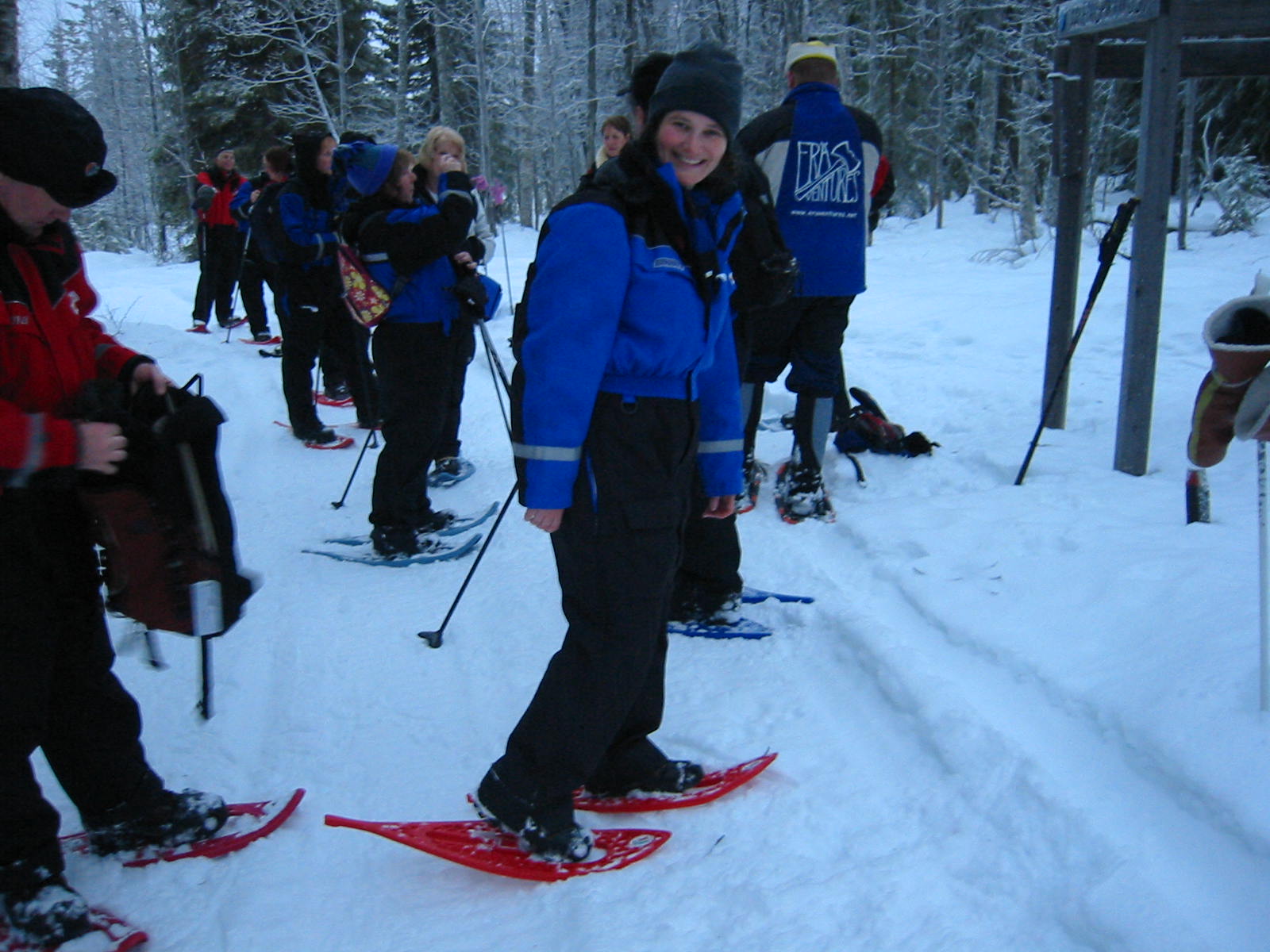
Lola II posing with her snow shoes in Lapland

I went on holiday, had a wonderful time, loved the cross-country skiing and also found I could fit into my clothes better, and I felt great. My exercise regime lasted until the work gym moved to a windowless concrete room in the basement that smelt of damp.

Five years later I visited my GP for a poorly wrist. When my appointment was approaching its end, what does the foolish Dr Lady do? She asks “is there anything else I can help with?”. Well, she was asking for trouble, wasn’t she?? In my view, you should never ask a question if you don’t want to hear the answer.

What was my answer? Well I remember that my rambling moan about my excessive weight was accompanied by a liberal sprinkling of crying, and generously handed to her with a hint of desperation. Dr Lady did exactly what I would do in the same situation; she ran out of the room.

She did come back, however, and when she did, I saw wings and a halo…. “Here are vouchers for your first twelve sessions at WeightWatchers”, she said. That day I emerged from my doctor’s surgery with a very handy wrist support and a booklet of hope.

Mr M and Lola II
Before...
My Body Mass Index (BMI) starting point was on the fine line between overweight and obese. Although I may have looked ‘cuddly’ on the outside, I think my internal organs were getting some heavy-duty hugging of their own from my excess, unnecessary and dangerous fat.


Lola II as she looks now
...and after
Eleven months later I’ve reached my goal of a healthy BMI [insert clapping and cheering here]! I've lost one fifth of my original weight (hence the blog title). That's almost a leg!

My experience of losing weight has almost been enjoyable. Sticking to the WeightWatchers' plan, and seeing it work, felt like a miracle most of the time. Lola I has certainly made it a lot nicer by being very enthusiastic at every turn, and seemingly delighted to discuss weight and all things associated with it at the drop of a hat (or pound).

I set myself some SMART goals at the start:
  • What was I aiming for? - to fit into my clothes comfortably, for there to be less weight on my knees, for my ankles to stop aching, and to like the way I look.
  • How would I know when I got there? – this goal went through a variety of ideas including being able to fit into Mr M’s clothes so that I would never have to shop for clothes again. I’m still not ruling that one out. I ended up deciding that I wanted to be able to fit into a dress I bought in Seattle eight years ago. It was a little tight when I bought it, and it would be great to finally wear the beauty.
  • What would I do when I got there? – this one was tough. My reward was not supposed to be food-related. My fantasy goal was a cheeseburger and chips. My real goal was to go clothes shopping. And guess what? I did both! One ended up giving me indigestion and a very uncomfortable night. The other gave me two pairs of trousers, two tops and a skirt. I know which one I’ll be repeating.
With thanks and love:-

Here’s my moment on the podium where I can publicly thank those who have helped me reach my goal. I would like to extend my thanks to:

Lola I - Lola, you’re my inspiration. You worked hard to lose all that weight, to the point where Mr M and I didn’t immediately recognise you the other weekend, you looked so smart, slim and younger. You’ve been supportive the whole time, saying just the right thing when I lost pounds, gained a few and, best of all, you celebrated with me one week when I lost just 200g. It never came to it but I feel sure, had I contemplated losing a limb in order to reach my goal weight, you would have come up with the perfect reason not to.

Mum & Dad – Your enthusiasm has been lovely, telling me how proud you are of me.

Mr M - When people have commented on how well you’ve been supporting me through all this, you say that you contributed to my weight at the start of this experience. Though that has a hint of truth about it, I defy anyone to be more supportive than you. For eleven months you have calculated the points in the food you’ve cooked for me, you’ve asked me if I want to share things (apparently I don't have to eat the entire plate of food!). You maintained the perfect balance of keeping all the chocolate and snacks away from me, with not commenting when I go and retrieve items when it's an emergency. You’ve been so supportive and helped me to reach my goal, I’m telling EVERYBODY!

Lola II hiding behind a lamp post, she's that thin!
Where is she? Hiding behind the lamp post!

Wednesday, 11 July 2012

Grand Round

Pale pink rose against a brick wall
Sissinghurst, Kent, June 2012
The Grand Round is the name for a series of lectures on Tuesday lunchtimes, where doctors have the opportunity to present an aspect of their work to other doctors, who can ask questions and generally expand their medical knowledge. All are welcome, and I went along after my outpatient clinic, because the host was one of the respiratory doctors, and a major part of my work is now on the respiratory wards. SOB, sputum and productive coughing, you remember.

[Note: I was hoping to win the Outpatient Clinic Award with a full house of nine patients in my morning clinic. When the first two didn't turn up and I only saw one patient in the first hour and a half it was clear there would be no medal for me. Then three patients arrived at exactly the same time...]

There are two parts to the Grand Round - a main presentation, and then a case study, which can be on a completely different subject. The main presentation on this occasion was about tuberculosis, and particularly its rise among the hospital population.

TB seems to be a condition that bears comparison with HIV infection in the 1980's. Sufferers are stigmatised, and the diagnosis is whispered rather than spoken out loud. Masks are worn in side rooms where patients are isolated for TB or suspected TB on my wards. During the recruitment process, there was great emphasis on ensuring that my TB immunity was up to date, and I had to have an additional blood test despite the clear evidence of the BCG vaccination scar.

It turns out, according to the doctor giving the presentation, that risks of infection on casual contact with an infected person are minimal, and rise only with prolonged close contact, in a family or workplace situation, for example. Perhaps this will be addressed one day in the same way that the status of HIV patients changed when Princess Diana shook hands with one without wearing gloves. Air travel is safe.

But there are risks, and the main issue with TB is drug resistance. The bacterium seems to be tricky to eliminate, and standard treatment with multiple antibiotics is unpleasant and prolonged, leading to low compliance and the emergence of resistant strains. Multiple drug resistance (MDR) is growing, and new categories of resistance have been defined. EDR TB is extensively drug resistant, where second line antibiotics have to be added on top of the first line treatment, and TDR TB is totally drug resistant to all first and second line treatments. Cases of TDR TB have been recorded in all countries that monitor cases of TB.

The 'good' news is that standard treatments for TB can take place in the community, with hospital admission only needed for MDR TB or where circumstances suggest that the patient will not comply fully with the six months of treatment required. Masks are only indicated where MDR TB is diagnosed or suspected, which is why I've had to grapple with how to put the blessed thing on - I'm pretty sure I've been wearing it upside down.

The main challenges include patient compliance with lengthy treatment. A few patients need Directly Observed Therapy to ensure that they complete the full course and don't contribute to the drug resistance problem by stopping the medications and allowing the more resistant strains of bacteria to survive. Observing patients taking their drugs is obviously entirely possible, but keeping a patient occupying a hospital bed purely to ensure compliance is an expensive way to manage a disease. Another challenging issue is how to deal with family and workplace contacts who may have the latent or overt disease. Clearly close family living in the same house should be investigated, but what about co-workers? Or the extended family who may have visited or hosted the infected person? Or fellow commuters who travel on the same bus or train every day?

And lastly, what are we to do with Total Drug Resistant TB? Even the specialists don't know. That session ended on a downbeat, with the answer to the question "Can TB be eradicated from the globe?" being an emphatic "No." It is a growing menace in some parts of the world, particularly the former states of the USSR and the Indian subcontinent.

It was an interesting talk, and given that it was non-technical I was able to follow the arguments pretty well, although details of the antibiotics used in treatment passed over my head. The case study that followed was a different story. It was about a man in his early 30's admitted to hospital with shortness of breath and little previous medical history to raise any specific concerns. It felt a bit like a pub quiz for doctors - "Name That Medical Condition Based on These Observations," especially as the presenter went through it bit by bit, pausing to ask the audience what they would have done at various stages. I think dad would have enjoyed it.

My all-time favourite doctor had come into the lecture theatre half-way through the first presentation. He's still the only consultant who has asked my name and background, has held an ordinary conversation with me on the wards, and acknowledges my existence when occasionally meeting in the hospital corridors. For that, he has my eternal gratitude, and come to think of it, my respect. Anyway, he sat next to me, and was one of the few to actually respond from the audience with some ideas about what the diagnosis might be for the patient in the case study. We'd got as far as presentation at A&E and a preliminary X-ray with some clouding in the lungs when the audience was first asked for its opinion, and at this early stage my favourite doctor offered up 'pulmonary embolism' (i.e. a blood clot in the lung).

The case study progressed, and I sank further and further out of my depth, with abbreviations, ECG plots, blood gas saturation figures and respiratory rates (and that's just the things I know the names of). The ECG was particularly amusing, as I sat there looking at some squiggly lines, presuming that everyone else in the room knew what on earth was meant when the presenter described some of their features. I did cotton on that when oxygen saturation of the blood decreased despite the patient being given oxygen, things were not going well. The key diagnostic that was eventually carried out was a CTPA (pulmonary angiogram = imaging of the blood vessels in the lung), which (apparently) revealed a load of blood clots in interesting places. I looked at the images on the screen, and had to take their word for it. Pulmonary embolism it was, thrombolysis ('clot-busting') drugs were administered, and the patient lived to tell the tale.

"A lucky guess," murmured my favourite doctor as we stood up to leave. But I like to think he's pretty smart really.

Saturday, 7 July 2012

Olympic torch relay

Crowds in front of the Town Hall
Can you see the Torch?
It's proving impossible to find enough time nowadays to blog as often as I'd like. Last weekend, instead of sitting inside mucking about on the computer like I usually do, we decided it was time to do something constructive around the house. Then there is the shopping and laundry and cooking and cleaning and washing up that I can't do during the week any more, and the Olympic torch went through Leamington town centre last Sunday. While I'm not particularly interested in the Olympic torch relay itself, I do like to see what's going on, so we walked into town. All the activities advertised in the Pump Room Gardens had packed up and gone except for a few lone stalls, but there were lots of people lining the torch route.

There it is!
What then happened went roughly like this:
  • policemen
  • motorbikes
  • motorbikes
  • big bus advertising something red that I couldn't quite see
  • motorbikes
  • a green bus advertising Lloyds TSB bank
  • an open top bus with some dancers on top and someone saying something into a microphone that I couldn't hear
  • a bus with blacked-out windows driven by a grumpy looking driver
  • motorbikes
  • a bus advertising Coca-Cola with some more dancers on top and another inaudible microphone
  • motorbikes
  • more motorbikes
  • some healthy-looking runners in grey outfits
  • some cyclists
  • someone on pogo stick legs who could bounce really high (I want some of those)
  • motorbikes
  • a big truck that turned out to be holding the BBC Torchcam
  • Olympic flame
  • runners in grey outfits
  • motorbikes
  • cyclists in costumes getting caught up in the dispersing crowds.
The whole spectacle took about 15 minutes to go past, with the actual torch occupying about 15 seconds, of which I managed a brief glimpse. Verdict: underwhelming. Unless you are particularly keen on police motorcycles. Or jumping stilts (£160. I just looked them up).

News from the garden: Mr A replaced one of the posts holding up the veranda while I tried to combat the annual patio weeds and deal with all the other overgrown plants. Sad to say, our ceanothus is a shadow of its former self following the frost damage, and although it had some new leaves and a few flowers, it isn't looking too good at the moment. The wisteria, on the other hand, is making a bid to take over the whole end bed - next year the whole garden, then the world, I imagine. I attempted to teach it some manners last weekend, and we'll see who is the winner. This weekend it is just too wet for gardening, and I need to get some admin done.

Two versions of the bird table
Before and after
 Mr A has also demonstrated some unashamed size prejudice with his birdwatching activity. He so much prefers our sparrows, robins and blackbirds compared to the magpies and pigeons that he has cut down the struts holding up the roof of our bird table to prevent the larger birds getting at the food. We are now frequently entertained by the double-decker effect of a small bird scoffing away on the table while a larger bird struts up and down on the roof looking over the edge but not managing to get in. He can't stop them picking up the seed that spills onto the grass below, so they aren't totally excluded.

I will try not to leave such a long pause between posts in future, but I can't promise anything. This full time job situation is so inconvenient sometimes...


Monday, 25 June 2012

Low potassium diet

Decorative balcony and two long sash windows
Leamington Spa, May 2012
My thanks to readers who went to the lengths of Googling following my last post, to reveal that SOL in the context of a head scan stands for Space Occupying Lesion (i.e. probable tumour or perhaps a bleed). I somehow don't trust Google to come up with accurate medical abbreviations, but in this case it seems plausible. And nice to know that people other than my immediate family are still reading. My stats last week show 80 unique visitors to this blog, while the previous (now defunct) blog still received 76 unique visitors in the same week. The difference is that the new blog had 55 returning visitors last week, while the old only has 5.

Further feedback from last time asked why I wasn't willing to provide information about a low potassium diet to a patient. This case led to the first proper contact I'd had with the renal Dietitians, who inhabit an adjacent room in the department. The hospital has a large specialist renal unit and is some sort of centre of excellence for kidney disease, so we have quite a few renal Dietitians. Sometimes I bump into them on my wards, if one of their patients develops a condition alongside their renal impairment, and is put in a bed somewhere other than the renal wards.

So here's the scenario: a patient on one of my wards has a raised blood potassium level (which may be harmful if it continues), and one of the doctors asks me to give the patient some advice on following a low potassium diet. They insist it is not a renal patient, otherwise I would have handed it over to a renal Dietitian straight away. But putting someone on a low potassium diet who isn't a renal patient is somewhat unusual to say the least, and one of the threads running through everything we do as Dietitians is to avoid unnecessary dietary restrictions that could put an individual at risk of a dietary deficiency. It might also alarm, confuse or distress them without commensurate benefit to their health.

Add to that uncertainty the fact that giving advice on a low potassium diet is something the renal Dietitians do all the time and I've never needed to do so far, so I needed to read up a bit on what's required and find the most appropriate information sheet from the files. Because we've got a whole load of renal Dietitians sitting in the next room, it made sense to ask them for advice on what I should do.

At this point, to their credit, they didn't just answer my questions, but asked a whole lot more of their own. What is the current potassium level, and what has the trend been in the past? What are the other U+E's like (blood urea and electrolytes), including creatinine (which can give an indication of the level of renal impairment)? What is the main presenting complaint? Is the patient diabetic, and if so, what is their blood sugar control like? What medications are being given, and have any been changed?

Of course I don't know the answers to any of these questions. All I'd been asked to do is provide information on a low potassium diet for someone who isn't a renal patient. So at this point, I started to learn a whole lot of new stuff about potassium metabolism and renal function.

We looked up the trends of blood results on the computer system, and the renal Dietitian pointed out the trends of high creatinine at certain points linked with higher potassium results, suggesting that these indicate times of acute kidney injury, plus the ratio to blood urea showed something else that I can't quite remember. Since the referral, recorded potassium levels had returned to the high end of the 'normal' range. The patient is diabetic, and blood sugar results were higher than one would wish. Insulin also helps to remove potassium from the bloodstream along with glucose, so poorly controlled diabetes will often mean higher levels of blood potassium. The renal Dietitian did a quick calculation that suggested that the patient's estimated kidney function was not impaired to a degree that would require dietary restriction.

I headed up to the ward armed with this information. I was still blindly following orders, and reviewing the medical notes I looked for specific medications that the renal Dietitian suggested might be there. There were also other features in the notes that I can't write about here, all of which suggested that limiting dietary potassium was actually not going to make a whole lot of difference. So I bleeped the doctor to try and discuss the case, but was told in no uncertain terms that I had been asked to provide advice on a low potassium diet, and they would be very grateful if I would do just that.

So I called in the cavalry, and the renal Dietitian came up to the ward, went through all the information we had gathered, and wrote her assessment in the medical notes, concluding that because the high potassium was not caused by dietary intake (and bearing in mind several other documented factors), it did not seem appropriate to offer dietary advice, and the medical steps being taken seemed to be working anyway. It was a masterly summary, which I hoped to copy along with lots of other information so I can document the technicalities of renal Dietetics that I've learned from this case, and add it to my CPD portfolio. But the patient has already been discharged, and I've no idea where the notes go when that happens.

Thursday, 21 June 2012

New wards

Yacht sailing in front of tower blocks
The Thames from the Woolwich Ferry, May 2012
My (not so) new wards are busy busy busy. Or at least one of them is, referring patients left right and centre via telephone, or face to face when I wander too close. I'm just about keeping up at the moment, mainly because clinic this week was, in contrast to last week, slow. Only three patients showed up. But it was still difficult - they weren't easy to deal with. I don't think I told one patient anything she didn't already know and she is frankly sceptical that it will work, another patient I doubt will take my advice at all, and the third may or may not follow my advice but it probably won't make a lot of difference to the (hereditary) medical condition that she has. But I still enjoy the clinic far more than working on the wards.

Anyway, the (not so) new wards have urology, respiratory and rheumatology patients. There are a whole load more new abbreviations to learn, and new medical conditions to encounter, and I have discovered that a 'productive cough' is a really, really unpleasant thing when you are having a conversation with a patient. There are still quite a few patients needing tube feeding, and often for swallowing difficulties, but I haven't yet worked out how come they feature so heavily on urology or rheumatology wards. Respiratory makes sense: many of the patients have neurological conditions that affect both breathing and swallowing.
  • Favourite abbreviations so far: 'TWOC' (Trial Without Catheter) and 'SOB' (Short of Breath). The latter is actually an abbreviation I've known for a long time and is still my all-time favourite. 
  • Second and third favourite abbreviations of all time are OTT (On The Throne [toilet]) and TTO (To Take 'Ome [Out]) for medications and supplements that need to be sent home with the patient.
  • Abbreviation that I've seen a number of times following CT scans of the head (I think) and still don't know what it stands for: 'SOL'
  • Least favourite words that feature heavily in medical notes: 'sputum', and 'productive cough'.
  • New word of the week: 'fasciculation', which is involuntary muscle twitching.
  • Word that I am most proud of remembering since I first learned it: 'kyphosis', which is curvature of the spine into a hunchback shape.

I have also had a run-in this week with a doctor about providing a patient with information about a low potassium diet. In the end I had to call in a grown-up, in the shape of one of the specialist renal Dietitians, to back me up and write in the medical notes about exactly why it wasn't appropriate to provide this information to that particular patient. Now I need to embed this information so that I understand better all the reasons why blood potassium may be raised, and by which dietary and non-dietary factors.

Monday, 18 June 2012

An excess of walking

White ducks following one another along a path
Ducks in Norfolk, July 2011
The annual Leamington Peace Festival was held at the weekend, but unlike the last couple of years, it poured with rain, albeit intermittently. I walked through the site on my way back from buying hoover bags in town because there's usually something interesting to see. This year I was in no way tempted to hang about, except that the band that was on at the time sounded pretty good. The stalls were exactly the same as ever, including the usual reiki nutters waving their hands about, and the punters sitting in front of them with their eyes closed imagining goodness knows what.

But I walked on without even taking a photo because it was raining very hard, and the site (in fact, the whole town) was swarming with young people forming large groups and getting in the way, squealing at each other, and wearing wholly unsuitable clothing that in no way protected them from the rain. Nobody at all was wearing a coat, and most had no more than a very damp T shirt. Young people, I don't know. When I was their age, we never did anything stupid, like gathering on the local golf course and lighting bonfires. I'm sure that if we did, we would have worn coats and sensible waterproof shoes. Definitely.

On Sunday, in contrast, I did a kind of sponsored walk backed by the local radio station, in aid of the hospital baby care unit. Although it was a sponsored walk I didn't really get round to doing anything about raising any money, I just gave them a contribution. Asking people to give you money for walking is quite tiresome, and I don't like being asked for such favours (although I often oblige), so I didn't bother.

I was suckered into the walk by colleagues at work who had signed up. In the end the one who had put the most pressure on me dropped out, but I carried on regardless. It was twelve miles from Warwick to Coventry, and three of us started out at around 10 o'clock. One of my colleagues is a 'power walker' who regularly goes out on ten-mile walks FOR FUN, so she hung around for about a mile before zooming off into the distance. My other colleague stuck with me, but still set a blistering pace - I kept up with her, even at the end when I started to wonder why I had agreed to such a stupid idea in the first place. We finished in about three and a half hours, which is a pretty good time, especially for an old-timer like me.

I am suffering now though, with my feet a little tender and hips aching quite a lot. Walking twelve miles at that speed certainly feels like an achievement, but it was not fun, and I am perfectly happy with using badminton as a leisure activity without spending hours at the weekend walking so fast for so long that it hurts afterwards. So I shall be keeping the 'medal' that was awarded, if only to remind myself never to do it again. Meanwhile, the colleague who set the pace for me is working towards a marathon in October. She's welcome to it.

Saturday, 16 June 2012

CAE and CPD

Brown hawk, yellow beak, on the fist
Henry the Harris Hawk, May 2012
Well, we have swapped wards, on the first day following the three-day week. During that previous week I worked all three full days, colleague #1 worked two days, and colleague #2 worked one and a half which included an outpatient clinic (and therefore she was not available for ward work for half a day). I handed over my patients all up to date and tidy, and received wards in return that contained all sorts of loose ends (and the wards in question have not stopped referring patients since Monday).

Then two specific things happened. Firstly, a Clinical Adverse Event (CAE) was recorded about a patient on one of my (new) wards who had not been seen despite having been referred and then chased. Secondly, it became clear that the referrals continued to come in at a rate of two new patients for every one I was able to actually see. Add the fact that my outpatient clinic on Tuesday was the biggest ever (full clinic, no gaps, ten patients! Only one DNA!) so there was much letter-writing to be done, and I had a day's professional development course all day Thursday when I wouldn't be able to see any patients at all.

At this point, I had to ask for help from our new clinical manager, who is covering for maternity leave and has been in post for less than a month. I have to say that she took the load of referrals away from me in a matter of minutes, and I was able to go for my CPD with a clear conscience. I did make the small mistake of looking in the referrals book before I went off on the course, and the relentless stream of new patients didn't seem to be diminishing at all. Of course the nature of referrals is that they do not necessarily come in at an ideal rate, sometimes too many and sometimes too few, but I know which I prefer.

By the way, I am not in the least concerned about the CAE. When I did go to see the patient, he was not in a particularly bad state, and I wouldn't have prioritised him over many of the other patients needing nutrition support. He had been looked after as I would have wished, offered snacks and supplements, and his intake (mostly) recorded along with his weight and other details that form the evidence base for my intervention. As this is a ward that is wholly unfamiliar to me, I can make no judgement about why the CAE was raised and by whom, but I hold no grudges - presumably someone thought that the poor nutritional state of a patient was important enough to complain about, and that is generally a good thing. I can't take it personally, given that nobody on the ward knows who I am yet.

The course I went on for a day was part of something called 'Preceptorship', which is supposed to provide a framework for supported ongoing learning within the first year post-qualification. The organised forums are mostly aimed at nurses, with a couple of session suitable for other healthcare professionals. This one was mostly about patient safety and brief behavioural interventions, and was much more relevant than I was expecting it to be, especially the session about Motivational Interviewing. This is an evidence-based technique for promoting behaviour change, which turns out to be the part of the job of a Dietitian that I like the best, although I'd never have guessed it before I started. I actually like weight management! Up until very recently indeed, I was claiming that this was an area of Dietetics that really didn't interest me.

I have also spent a short time with a Specialist Diabetes Dietitian, planning how I might gain an insight into what they do. This is for the enhancement of my CV, my professional development portfolio (which at the moment is rather in the nature of a virtual portfolio until I get round to actually writing things down and filing them) and for brandishing at a future job interview to show how interested in diabetes I am. Among the wealth of practice-related matters that I gleaned from this session, I also took away the abiding impression that all the Dietitians currently in the Diabetes service are young, committed, and unlikely to move away to leave any room for me in the near future. There are also many impediments to expanding the service, so it may be some time before any vacancies appear. The last Dietitian recruited into the Diabetes team had remained at my current level for seven years before the opportunity arose for her to move upwards. But you never know.

[I have also looked into volunteering at Diabetes UK weekend events, and the only thing currently putting me off applying is the need to express enthusiasm about working with and/or supporting children. Being a truthful person, I have yet to contrive a convincing response for this area of the form.]

The good news was that thanks to my manager I was able to leave at the end of Friday with most of the new referrals seen, although there are still a few that are having to wait until Monday. As for the type of interventions I'm seeing on the new wards, that will have to wait for a future blog post.

Tuesday, 12 June 2012

Feeds, food tasting and hand-washing

Huge busts of QEII and DoE with plants for hair on a trailer pulled by a van
On the M40, May 2012. No, I have no idea.
Back at work to a three day week after a ten day holiday was challenging last week, and demanded all the prioritisation skills I have. My colleagues dealt with the urgent referrals on my wards while I was away, but there were plenty of non-urgent cases, and other colleagues were away when I was back at work, and I had to reciprocate and cover their urgent referrals. Added to that, I had a food tasting session, a department meeting and compulsory training on hand-washing to squeeze into those three days.

So I prioritised the tube-fed people - those who can manage to eat just had to get along somehow until I could get round to them. And, of course, they were all slightly 'interesting' cases that needed extra time and attention, rather than the quick, straightforward, 'just calculate the total requirement and divide by the number of hours the feed is delivered' cases.

There was one whose feed rate had been reduced to a bare minimum because of unpleasant side effects, so I had to try and consider how to tweak the feed schedule to meet the patient's nutritional requirements. Another was a patient who was frail and elderly, and one of the reasons for admission was because he'd stopped eating - in this case, the purpose of artificial nutrition has to be clarified, because the patient was not suitable for a permanent PEG tube but wouldn't be able to go back to the nursing home with an NG tube. This is one of the worst possible situations - do we allow the patient to remain on the ward indefinitely just so that he can be fed? If not, what is the alternative? Ultimately it's the doctor's decision, but my job to raise the issue to try to ensure that a decision is made.

Another patient had received a trauma injury and had come from Intensive Care where they had placed an oro-gastric tube, which is an alternative when the naso-gastric route is not appropriate - but the tube had come out and nobody on the ward quite knew whether another oro-gastric tube was needed (which would have to be put in place by a doctor) or whether an NG tube would do (which could be placed by a suitably-qualified nurse). Then just as I thought it was all over, there seemed to be another new NG feed schedule needed, except when I got to the ward there was no NG tube in place and some confusion about whether one was needed or not. I didn't hang around to find out - if they'd decided to go ahead there were options they could implement for the weekend and I could re-visit the patient on Monday.

The food-tasting happens about four times a year, and had been scheduled by the hospital Catering department before the Bank Holiday had been moved. This is probably why it had ended up in a three-day week, and that was why only three of us turned up: me, the manager of the Dietetic service, and a member of the lay panel that represents the interests of patients. We were outnumbered by the catering staff hosting the tasting session.

There being no such thing as a free lunch, our job was to rate all the available foodstuffs by appearance, smell, texture, taste, temperature, and anything else we could think of. All the day's standard main course menu items were there, plus a few extras: a 'fork-mashable' option, two from the 'ethnic' menu, one of the 'Lite bites' that are available outside regular mealtimes, plus a couple of puddings. Served at the perfect temperature in this calm, controlled setting, all the meals were pretty good, with a couple of really outstanding options and a couple that were just OK. Served in the normal overworked ward environment, where they may have been heated up for too long or not long enough, and may take a little while to actually reach the patient, I imagine some options may in reality be less attractive.

The compulsory hand-washing training was fairly straightforward, except that I refused to have the UV-fluorescent liquid applied thanks to its paraben content. So the infection control nurse just watched me washing my hands. And he was delighted when it turned out that we had their missing UV light box, which had been loaned to our department and then forgotten about to the extent that they'd given it up as lost.

With my holiday just a dim and distant memory, so the week ended. Some time has passed without me managing to get this blog updated, and much has happened - Sister D celebrated her silver wedding anniversary, Mr A is spending three weeks on 'work experience' in Manchester, and all my wards were swapped for different ones. More to come as soon as I can manage it.

Monday, 4 June 2012

Solitary holiday

Colourful rhododendrons
Park in Royal Tunbridge Wells
I have been on what I have been calling my Solitary Holiday. I have gone away, on my own, to stay in a small rented apartment in Royal Tunbridge Wells, which is in Kent.

Of course I found the apartment on the Internet, and you can never tell what you're going to get in reality, but it is a lovely living space with almost everything one could want, the main exceptions being a cereal bowl and a sieve. They'd even stocked the fridge with milk, bread, biscuits and a bottle of wine ready for my arrival. I put the bread and biscuits out of harm's way, but kept the bottle of wine for emergencies.

I'd selected Internet access as essential with the booking, which is why you have been getting these blog posts, but I'd also brought books to read, a couple of jigsaws, some DVDs, podcasts, books and music on my iPod, and there was the town to explore - another Royal town to compare with Royal Leamington Spa. I'd planned the food to be fairly spartan in the flat so that there was little temptation to indulge (hence the hiding of the bread and biscuits), but planned to eat out at lunchtimes.

The weather at the start of the week was warm and beautiful, perfect for wandering through the town finding out what it's got to offer. I had a few specifics on my shopping list, including buying tops for work, socks and a pair of shorts if I could find one. Luckily, there are charity shops here too! And BHS and M&S, although this season's fashions are really not to my taste. But most importantly, I checked out Kitsu Sushi and Noodle Bar, and fortunately it was as good as the Interwebs had led me to believe. I planned my tourism around being able to go there most lunchtimes.

Monday was a hot day, so after I'd got back and prepared my salad for supper (but before I'd eaten it), I thought it would be a good time for a shower. The information folder told me it was a combi boiler and should provide hot water after a brief delay, but I'd stood in the shower for some time and there was no sign of heat. I phoned the number for the agent/caretaker who told me that the actual owner lived upstairs; I called at the upstairs door and she thought the pressure might have dropped and went to adjust the boiler. A few minutes later she turned up at the door with a bucket, and to cut a long story short I had no hot water that night but the plumber would be coming the next day. This seemed to fit the description of 'emergency', so I cracked open the wine...

The next day I walked into town again, finished all the clothes shopping that I was prepared to undertake in one holiday (hooray for M&S and charity shops), and paid another visit to Kitsu for lunch. The plumber did indeed turn up while I was at home in the afternoon - Keith, a very nice man, who reported serious damage in the boiler department, to the extent that the whole boiler needed to be replaced, but he would do his best to install one this week. This week! There were rats already nesting in my hair and it was only day 2! I haven't had to wash my hair in the sink since, well, I can't even remember. This seemed like another emergency, but I held back on the wine a) because it was only 3 o'clock in the afternoon, and b) because I was due to go out in the evening.

At a rough estimate, Royal Tunbridge Wells is three or four times bigger than Royal Leamington Spa, and I discovered that it gained its Royal status from King Edward VII in 1909 (Leamington got in first: Queen Victoria, in 1838). It has all the right sort of shops, a mix of big high street names and small eclectic boutiques, as many charity shops as I needed, and enough restaurants of many types (although the only one to see my custom is likely to be the above-mentioned Kitsu). There is an indoor mall, outdoor pedestrianised streets, and a quirky old town area with history, called the Pantiles. You can look it up if you want to know more, but I have to say it is very attractive in the sunshine of an unseasonably warm May day.

The Museum and Art Gallery are housed in the same building as the Library. I didn't manage to stop myself going into the library, but came to my senses very soon and headed upstairs. The Art Gallery was closed while an exhibition was being prepared, but I had a good look around the Museum. It wasn't very big (only four rooms), but had the usual excellent collection of random objects associated with the town, including hop cultivation, cricket ball manufacture, a particular type of biscuit that used to be made here, and an interesting display and explanation of Tunbridge Ware, which is a cross between marquetry and wooden mosaic. One of the highlights of this room was a stuffed dog in a decorated cabinet.

Other random objects included two cases of toy dolls, a small room with the usual stuffed animals (I am repeatedly astonished at the tiny size of the weasel every time I see one), some bits of Roman pottery, old glass bottles, a huge doll's house and a massive rocking horse. None of this came close to the majesty of the stuffed dog, who is called Minnie, and who the attendant told me has her own Facebook page. Nothing says 'Having a lovely time, wish you were here' like sending your loved ones a postcard of a dead dog. So I bought a postcard, and sent it to Lola II and Mr M.

Wednesday evening - the TV refused to accept that BBC1 existed, although Radio 4 was still there. Thursday morning, and I was woken by my phone ringing - it was Keith the plumber on his way. Apparently, the lady upstairs has now gone away on holiday, and there had been some discussion about the keys and how to get them, but it would be all right because I would be there to let him in. I had a nice chat with Keith while we were waiting for Dave the engineer, and mentioned my TV problem, and he told me that it might be because of analogue to digital switchover happening this week. He had thought I was a long-term tenant, and became a good deal more sympathetic to my plight when he realised I'm only here for a week, of which I would have been without hot water for about half the time, and now the telly's on the blink.

I left Keith and Dave to do their worst, and headed into town for the advertised Guided Tour run by the town's tourist office. When I got there, the staff apologised and told me that the tour would be running late, because the Earl and Countess of Wessex were visiting, as part of the Queen's 60th Jubilee 'Meet the Subjects' initiative. This meant that instead of sitting on a sunny park bench reading the book I'd brought with me until the tour started, I was able to watch the preparations for the Royal Visit, including the doling out of flags to everyone, the assembling of four sets of excitable schoolchildren, and the activity of some enormous suited security types who occasionally talked into their sleeves. Then I started to wonder if I'd got the right Royals - was it Edward and Sophie, or had I confused my Royals and it would be one of the others?

It was Edward and Sophie all right, although I wouldn't have recognised the Countess if I'd passed her on the street. She reminded me of Eva Peron (in her looks; I don't have any other criteria to judge her). Anyway, they did their job nicely, stopping to talk to the children and anyone who had a baby or a dog or a disability or all three. Rather them than me - it looked very tedious indeed. The Guided Tour eventually started once the furore had died down, but our guide was a little flustered, having just met the eminent personages, and even more flustered when she realised that the route of the tour was going to be disrupted by the personages being in the church she was supposed to be showing us.

The Chalybeate (iron-bearing) Spring that started the whole town's development was 'discovered' in 1606, much earlier than Leamington's which was only in 1784 (although Leamington as a settlement is much older, being mentioned in the Domesday Book. But I digress). We weren't allowed to taste the water due to drought conditions, but the costumed Dipper and the Town Crier were in attendance, although that might just have been because of the Royal Visitation. The tour was interesting and took about an hour, and when it was over I went back to find Dave still hard at work, but he assured me that all would be well by the end of the day, which it was. So on Thursday I had my first shower since Sunday.

On Friday I decided to get out of town for a while, so I drove over to Sissinghurst Castle, which isn't really a castle, it's the former home of Vita Sackville-West and Harold Nicholson, where they lived from 1930 to the end of their lives in the 1960's. It now belongs to the National Trust, and the main attraction is the garden, which is huge, and separated into different areas with characters of their own. There's also a tower that you are allowed to climb to get a great view. The weather was very hot and oppressive, although it didn't actually rain. I took a million photos - well, that's an exaggeration, it was probably no more than half a million.

Saturday, my last day, and I was looking forward to the Farmers' Market, what with Kent being the Garden of England and everything. It was rubbish. We have more stalls in Leamington Spa, which doesn't have an agricultural paradise on its doorstep. There were no more than two stalls selling fruit and veg, one with meat, one with cake, one with chocolate and the rest were jewellery, hats and trinkets. So I had a nice chat to the chocolate man, bought a cake and went home (via my lunchtime sushi spot).

It rained for the first time on Sunday, all the way home. I had planned to return via the falconry centre, but after watching one sodden display where the birds were about as miserable as the audience, I decided to pack it in. And so endeth the Solitary Holiday.

Related Posts Plugin for WordPress, Blogger...