Wednesday, 10 August 2016

I am absurdly delighted about a car in a garage

View of mansion across lake
Compton Verney, July 2016
A few events stand out over the past couple of weeks - my birthday has been and gone without too much fuss, although the presents I was given by Lola II and Mr M are outstanding. I received six different packets of Polish soup, four different nut butters, decaffeinated Darjeeling tea, the piano music for the song 'Let It Go' from the film 'Frozen', and a pack of letters that I wrote to my family in the early 1990's. I've read about half of them, and it's been quite a tense experience. I'm hoping that there might be some suitable material to reproduce in a blog post, but not so far.

Lola II came to visit (and to deliver my presents) and we wandered around Leamington and tried a new lunch venue - a pub called The Drawing Board recently taken over by the same manager who used to run the Red Lion at Hunningham. I'd go again. Lola II went to the optician and we browsed in various shops and ate large slabs of cake before coming back and watching a DVD.

On Sunday we visited Compton Verney Art Gallery and Park and enjoyed most of the collection. We were guided through the Folk Objects and Folk Art, which I think I liked the most - objects and art created by ordinary people rather than professional artists. I am most scornful of a 'sculpture' on the lawn entitled 'Untitled Boulder' which is... a boulder. It isn't even a very interesting-looking boulder. The most that the 'artist' contributed to this 'art' was to decide which way up it should go; he couldn't even be bothered to give it a name. But the rest of the visit was fine.

Room with collection of folk objects
Compton Verney Folk Objects collection
After Lola departed I mowed the lawn and chopped down even more of the garden, and managed to take some of the debris to the tip on Tuesday. And Olf (the garage man) finally completed the work on the garage! The door to the street now has a working lock, and I can now use it as a practical garage. In fact, I have now put the car in it! This is seriously exciting. There is a yellow sign that suggests the road is going to be dug up and resurfaced next week, so parking is likely to be disrupted and having a working garage may be handy.

Car in garage
I cannot begin to explain how exciting this is
Since that happened I've had a bit of a busy spell, not least when I forgot about some patient education I was supposed to be delivering and received a phone call asking where I was. Very embarrassing, and not an experience that I care to repeat. Entirely my fault, too, because it was clearly in my diary. I was only a quarter of an hour late, but still.

And then I went to Carlisle via Manchester where I visited H+B who are as well as can be expected (and thank you very much for lunch and hospitality). I was hosted in Carlisle by H+G whose converted barn is being re-thatched, so I have learned a bit about what that entails (4 weeks, 4 Polish workers, a LOT of money).

Thankfully the weekend weather was glorious, and we walked dogs and went into town to eat at a new Italian restaurant which had been recommended as 'authentic' by a number of people. It was not what we were expecting - in the basement of a converted church, it was a surprise to find it carpeted, with waitresses in smart black outfits and white gloves to deliver the food, which was very tasty. But still, white gloves? Then we danced the night away to Alabama 3 at the most sweaty gig I can remember - Carlisle not being known for its sultry summer weather, the venue really had no way of making things any cooler.

Me and Bill the dachshund asleep on a chair
We'd both walked quite a long way
Then back home via Tebay motorway services (the best in the country) where I bought far too much artisanal goods (meat pie, cheese, crackers, sausage, brownie) and then to Ikea to have a look at their kitchens. And finally on Tuesday a trip to the car dealership so they could diagnose the problem with the air conditioning in my car, which they declared to be terminal. I have made an appointment to get a second opinion from my local garage, but it's not looking good. Thank goodness we only get one or two hot days a year in this country.

Sunday, 31 July 2016

What I've been reading

Image of the book cover

Master and Commander
by Patrick O'Brian
"It is the dawn of the 19th century; Jack Aubrey, a young lieutenant in Nelson's navy, has been promoted to captain, and inherits command of HMS Sophie. A brave and gifted seaman, Aubrey's thirst for adventure and glory is satisfied as he embarks on thrilling battles with his crew."
A very good book that I must have read before, but don't remember at all. Of course I only understand a fraction of the sailing terminology but it doesn't seem to matter - a bit like Shakespeare, the sense of it comes across somehow. I've got some C. S. Forester waiting to be read, and it will be an interesting comparison.


Image of the book cover

The Leopard
by Giuseppe Tomasi di Lampedusa

narrated by David Horovitch
"The Leopard chronicles the turbulent transformation of the Risorgimento, in the period of Italian Unification. The waning feudal authority of the elegant and stately Prince of Salina is pitted against the materialistic cunning of Don Calogero, in Tomasi's magnificently descriptive memorial to a dying age."
This is one of the classic books I'm reading for my literary education. A bit like the Patrick O'Brian I only understand a fraction of it, but this time because it's all about 19th century Italy, or rather the period around the civil war which somehow united disparate regions into the country that is now Italy. I am now educated, but not much the wiser.


Image of the book cover

Sex & Bowls & Rock & Roll
by Alex Marsh
"Alex Marsh wanted to be a rock star - but it didn't work out. Instead he toiled away in the big city, only to give up his career, move to rural Norfolk and become a househusband. But he isn't a very good one."
The author is a writer whose blog I used to follow until he stopped updating it, presumably so he could write this book. The narrative is a bit difficult to follow because he skips back and forth between various parts of his life, but I rather like his turn of phrase and his utterly childish outlook. And I actually learned a couple of fairly unimportant things about the game of bowls.


Image of the book cover

Coming Up For Air
by George Orwell
"The First World War, eighteen years in insurance, and marriage to the joyless Hilda have been no more than death in life to George Bowling. This and fear of another war take his mind back to the peace of his childhood in a small country town, but his return journey to Lower Binfield brings complete disillusionment."
I read this in the time it took to have lunch in Wieliczka, catch a train to Krakow airport, wait for the plane and fly halfway back to the UK. So it's quite short, and very easy to read, and also rather sad in its depiction of an unhappy man anticipating war and trying but failing to make himself feel better about his unsatisfactory life.

Wednesday, 27 July 2016

Kraków

King Casimir the Great, carved from salt, July 2016
What a terrific holiday it was, one of the best I've had. Highlights:
  • Spending quality time with Lola II and Mr M
  • A Polish food tour
  • Trips to Auschwitz-Birkenau concentration camps and Wieliczka salt mine
  • Pretty good weather and some cracking thunderstorms
  • The botanic garden (if you like pictures of plants then you'll be happy with the blog header pictures for quite a while)
  • The food!
  • Learning the odd word in Polish. Dziękuję!
We signed up to the food tour first thing - for about £8 each we would be taken to various food outlets and given typical Polish food to sample. Mr M has kindly provided the following report on this section of the holiday.

Mr M here! On our first night, and as the only person who did any non-food related research before the trip, Lola I wisely suggested we should spend our first morning on a food tour.
The tour was run by the free walking tour company, although this was one of their 'paid-for' tours given that we would be trying 10 dishes along the way and, as Dora the guide explained, it would have been very fiddly collecting money at every stop!

Źurek
The first restaurant was Restauracja Samoobsługowa which was just round the corner from our hostel, and we were offered small cups of Polish cucumber soup (zupa ogórkowa) and a sour rye soup called żurek. Lola II had tried the żurek in a posh tourist place the previous night but this one was much thicker, and contained sausage and was amazing in comparison. We liked this place so much, we returned the next day for breakfast.


We then moved on to a bar the other side of the railway tracks to Pyzystanek Pierogarnia where we tried savoury (Russian) and sweet (blueberry) pierogi and some kompot - a popular Polish soft drink which Lola I & Lola II continued to order throughout the holiday but in my opinion was just like on of those fancy orange squash flavours like 'orange and grapefruit'. The pierogi were good but probably not the food of choice sitting in 30 degree sunshine!

Next was the market and the chance to try gherkins (ogórki kiszona), sauerkraut (kapusta kiszona), two cheeses, two sausages and two different sweets (fudge and chocolate). We were given 10 minutes to wander the food market, and noticed retail differences from the UK, for example Polish onions were sold without the brown skin.
Makowiec
Bigos, and the route of our tour
Next - two kinds of cake including poppy seed cake from patisserie Caiastkarnia Vanilla which we visited again several times. After a short walk we then went deep into the tourist part of the Jewish quarter and a basement of a brasserie (Wręga) for some Hunters Stew (bigos) and bread - and then on to our final stop, a vodka bar where we were forced (!) to try four vodkas: honey, elderflower, plain and quince, which rounded off the official tour (though in my mind, the food tour wasn't completed until we had tried at least four placki (aka latkes)! 

Thanks Mr M! In subsequent forays we consumed more classic Polish fare including cabbage rolls stuffed with barley and meat (gołąbki), buckwheat (kasza) and the potato pancakes (placki) which were Mr M's favourite. In terms of sweet things I tried kremówka, which is like a custard slice, and some more of Lola II's favourite poppyseed cake (makowiec) as well as more ice cream (lody) than I would usually eat in a year.

We ate in a couple of quite fancy places and a couple of basic canteen-style diners where I came perilously close to ordering tripe (flaczki) because it was quite a short word that I would probably be able to remember and reproduce at the till. Luckily someone produced an English menu at the last minute and I switched to something else. The posh meals weren't all that much better than the canteen meals, which cost in the region of £2.50. Our money went a long way.

It wasn't all eating, there was a lot of walking too, and some history. I learned quite a bit about Poland's past, from its founding in the 10th century through the reigns of some imaginatively named kings to its more recent and devastating past in the years 1939-1945, and more recently as it produced the first non-Italian pope for 450 years, and he even came from a communist country. As you walk around a medieval city that feels like many other western European cities, it is easy to forget that it only emerged from communism in 1989. Berlin puts much more of its divided past on show.

We joined walking tours of the old town and of Kraków's Jewish past - we were staying in a hostel on the main square in the Jewish Quarter (Kazimierz), and on the Jewish tour we crossed the river to the site of the Ghetto in Podgórze. There is a memorial consisting of sculptures of chairs in the square where selection took place for deportation and from where the trains set off for concentration and extermination camps. Oskar Schindler's factory is here and now contains a museum devoted to Kraków's history during the Second World War with only a very small exhibit about Schindler himself, who turns out to have been quite an unpleasant man. No matter, he saved lives and deserves credit for that.

The visit to Auschwitz made less of an impression on me than I was expecting. It was very orderly, highly choreographed, as I suppose it had to be given the number of visitors that are marshalled through the site. Our guide was a painfully thin young woman who recited her script with a suitably deadpan attitude, but she occasionally picked out one of the group and aimed her speech directly between their eyes. Mr M reported this as being very uncomfortable. I was mostly preoccupied with her obviously malnourished state and wondered distractedly throughout the tour whether this job of relating the worst atrocities imaginable on a daily basis was damaging her health.

Auschwitz is a small camp and now contains exhibits on different aspects of life in its restored brick buildings. Birkenau was built a year or two later as a concentration and extermination camp and contains the remains of gas chambers and crematoria, and is much bigger but has only been minimally restored. It was a hot day when we were there, and the whole trip felt unreal, like a visit to a film set. I remember being much more disturbed and moved by the Yad Vashem memorial in Jerusalem and another holocaust museum in Israel founded by survivors (Beit Lochamei HaGetaot/Ghetto Fighters' House). Whether the Israeli monuments were more skilled at manipulating emotion or did in fact have more of an impact factor I can't say, but I was also much younger and perhaps more impressionable.

One of the large halls inside the salt mine

Chandelier made from rock salt
I had about a day and a half on my own after Lola II and Mr M caught their flight home, so that's when I went to Kraków's botanic garden and the nearby salt mine, which dates back to the 13th century and is inconceivably enormous. Tours are taken round a teeny tiny fraction of the tunnels on three of the nine levels within the mine, and I noticed that they count visitors in and out very carefully. They only stopped extracting salt in 2007, but I'm sure the mine still pays for itself with the numbers of tourist visitors.

The abiding memory of the trip, apart from the culinary delights, was constantly being faced with the choices that were made during the dark days of the Second World War by the residents of Kraków, Jew and non-Jew. If we were faced with those dilemmas, the deprivation, the humiliation, the choice between death or dishonour, what would we have done? How would we have behaved? Would we have fought, hidden, surrendered, dissembled, betrayed others, been brave and strong or craven and weak? Would we have died of starvation, of violence, of disease, or perhaps survived? I think the conclusion that we arrived at was that there is no way of knowing unless it happens. And cling to the hope that we will never be forced to find out.


Sunday, 17 July 2016

My 250th blogaversary

Interesting variety of mushrooms
Borough Market, May 2016
Bless me, for I have sinned, It's been two weeks, but I can't help it. I was on holiday last week, and the week before that was all full of stuff and I didn't get my usual Tuesday off and I was getting ready to go on holiday and it was all a bit much. But this is my 250th post on this blog, and I'd like to make it a good one. (The other blog, Student Lola Life, had 531 in about the same length of time, but I had more time on my hands back then. And some of the posts were really short.)

Unfortunately, if I want to finish this before it's three weeks since my last post it will have to be pretty short because I really have a lot to do, unlike usually when I just have a lot to do. Although one of the things on my To Do list is to publish my 250th post on this blog.

In the week before holiday I went to badminton, meditation, work - I delivered one and a half lots of patient education as well as usual consultations. And got ready to go away, notably addressing the issue of taking hand luggage only, which I've never done before and wasn't sure if I'd be able to squeeze everything in that I needed. But it was fine, and it was a great holiday, and I have 147 photos, and I went to a botanical garden so there are rather a lot of pictures of plants which no doubt will appear on here for months.

Since coming back I have performed at our end-of-term concert playing the clarinet and the wonderful baritone saxophone - not well, but satisfactorily, even when my music blew away during our one baritone saxophone solo. And I'm regaining some skillz on the clarinet, unless that's just the contrast between the effort and bulkiness of the sax and the petite familiarity of the clarinet.

Much to celebrate then, in this 250th blog post, but I've really got to go and deal with the drains, and tackle all the letters and emails that have accumulated, and you should see the garden! They tell me it rained while I was away, but I could have guessed. You can hardly tell I'd pruned that blasted wisteria just a couple of weeks ago.

Saturday, 2 July 2016

Gradually getting older

Close up of purple daisy with yellow centr
June 2016
The narrative of my mundane existence has been interrupted with the academic treatise about exercise and Type 1 Diabetes, but rest assured there is still excitement going on behind the curtain. I'm breaking down the fourth wall for you, go ahead, take a peek at the state of my life, and don't forget to be thankful for your own.

I have recently been incredibly unenthusiastic about running and have thought seriously on more than one occasion how nice it would be to retire. Not that I dislike my job, I reckon by previous experience it will be another five years or so before I start getting bored and then I'll be closer to 60 than 50. When I was growing up, retirement age for women was 60 - although back then 60 was an incomprehensible age, and has only become solid and tangible in the last couple of years. State retirement age for people of my age is at least 66 now, and I expect it will be 70 by the time I get there. But I digress - I have just been a bit more tired than usual, less motivated to get moving. I hope it's a phase that will pass.

It's possible that some of the lower energy levels relate to the effort of the LTRP, which I have been shoving forward inch by reluctant inch. Olf returned to work on the garage and the roof is now done, but he had a lot more trouble with the lock, and has gone away again to think about it. Ilf also returned and did a couple more jobs, and now we have to wait for me to empty the loft so he can do the electric lights in the room below, and for him to find some suitable wood to make a little house for the outside tap to keep it insulated and warm in the winter.

I have spent a tiresome afternoon up a ladder in the garden trimming the wisteria, after watching Alan Titchmarsh and another fellow on YouTube showing me how to do it. As I reached the top of the ladder I discovered that my neglect over the past few years has resulted in the wisteria making a bid for freedom and heading off for at least 10 meters along the wall between the gardens behind mine. To think I used to worry about killing plants in my garden. I've probably got another two carloads of vegetation to take to the tip, and the grass badly needs mowing again, but the rain has been fairly persistent.

Purple foxglove
Surprise foxglove
I have had a lovely crop of unexpected plants this year, all self-seeded. I don't know what most of them are, but the cornflowers are doing well and a surprise foxglove has appeared. The rest are 'pink flower', 'yellow flower', 'blue flower' etc. Last year I had an aquilegia (I think) but I may have damaged it too much for it to reappear. There's actually a strawberry plant growing between bricks in the paved area, but I'm not prepared to spare the weedkiller even for a strawberry plant. I have also declared war on ivy. It will not be allowed to re-emerge in my garden ever again. Sometimes I think I would like to grow plants of my choosing, like poppies and hollyhocks, but it doesn't look like that will happen any time soon.

Some paving reappears
I have also escalated the LTRP by contacting two architectural designers - I think that's the kind of job title they use - to come and have a look at the kitchen, living room and stairs in order to recommend how things might be altered. The first one came one week and the second one came a week later. We talked about the kitchen, which was fairly straightforward, then we talked about the living room and stairs, which was rather problematic, and when we reached the subject of heating/insulation my head exploded. Too much, too complicated, couldn't cope. So it looks as though the kitchen redesign could happen, the stairs may have to stay as they are but may change, and there ain't nothin' goin' to happen 'bout the cold, cold house. At least not in the near future. Unless I wear a diving helmet for head protection while talking to the second architect.

The loft emptying project proceeds slowly with a couple of boxes of books at a time along with some of the redundant paperwork that has bafflingly been stored up there. I have also given away the trampoline. This was a bit more difficult emotionally, but I look back fondly on its value during exam revision and accept that I'm unlikely to erect it again. I advertised it on Streetlife (which I have mentioned before) and had a most intriguing selection of people who were interested. I sifted through them trying to evaluate who was most worthy, but my first choice of recipient very weirdly decided that if it was stored in the loft then it couldn't possibly be big enough for their child because if it were then it wouldn't fit through the hatch. I responded to say it's a kit and you have to assemble it, but they weren't having any of it, even when I said that you can get quite long poles through a loft hatch as long as you don't try to fit them through sideways. The second potential recipient didn't respond at all, but the third collected it as agreed and gave me a bunch of flowers, which made the transaction rather pleasant.

I have continued going to the Buddhist group, and I'm still enjoying the meditation and the tea break, but the discussions are more difficult. Actually, even the meditation was difficult when we had a guest leader who extended the duration to 40 minutes. Another inexperienced meditator agreed with me that this was pretty heavy going. The discussions focus on some aspect of Buddhist practice, and I struggle to translate the concepts into something I recognise and then struggle further to establish how the information might be helpful in any way. I'm just not cut out for abstract thought, let alone philosophy. But I quite like sitting quietly trying to extend goodwill to my fellow humans.

I have had an interesting time trying to arrange for my saxophones to be serviced - one independent chap was recommended so I sent an email, left a telephone message and sent a text and received no response whatsoever. So I phoned a shop and spoke to a delightful woman who thinks she might be able to service the tenor sax in a single day and have a look at the baritone as well. The downside is that I have to spend a day in Birmingham, but I'm sure I'll find plenty there to keep me busy.

Lastly, I went down to Bristol for a weekend because an old friend who plays in a band had a gig and another old friend who knows us both suggested we meet up there. I stayed in a lovely room courtesy of Airbnb, met the friends, went to the gig and came home via the falconry centre where despite the weather looking very promising the birds declined to put on much of a show.

I can't let this opportunity go by without mentioning the referendum. So there, I've mentioned it, let's move on and see what the future holds.

Foxglove close up

Sunday, 26 June 2016

Exercise and Type 1 Diabetes: part 2

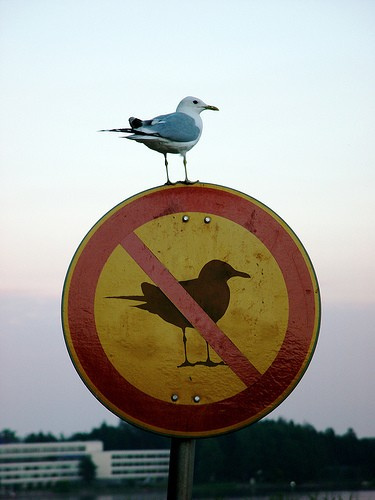
A gull standing on a sign indicating No Gulls
A picture I found on the Interwebs that amused me
In part 1 I tried to set out the problem of exercising with Type 1 Diabetes (T1D) - in brief, keeping blood glucose levels within reasonable bounds while hormones stimulated by activity are doing their best to frustrate your efforts. Here is part 2, which contains a few things that might help to manage the situation.

Managing blood glucose and insulin


Let’s start with the basic theory. Usually, with low or moderate intensity exercise and some active insulin on board, blood glucose will fall steadily and relatively predictably, and insulin will work more effectively. In order to avoid a hypo then, you would need either to reduce your mealtime insulin at the meal beforehand, or consume carbohydrate during the activity, or both. It is estimated that between 30g and 60g of carbohydrate is needed per hour to fuel moderate exercise.

So you could measure your blood glucose level before and after your activity and see how much it drops – say, from 11 to 6 mmol/L over 30 minutes fast walking 2 hours after a meal containing 60g carbohydrate for which you took half your usual dose of rapid insulin. If on another occasion your blood glucose was only 8 mmol/L before the same activity in the same circumstances, you could predict that carbohydrate would probably be needed to prevent a hypo.

To be able to reduce your rapid insulin dose at the previous meal, the activity needs to be planned or anticipated. Often activity is not planned, in which case there is no option but to eat or drink carbohydrate, unless your blood glucose happens to be high anyway. You can see that this makes it much more difficult to lose weight by exercising than for someone without diabetes. So another tactic that was suggested to help weight loss was to do the activity when insulin levels are at their lowest, usually first thing in the morning, although clearly this also requires an element of planning. But I can’t see how that would work if blood glucose is also at its lowest, because that’s just asking for a hypo, so maybe you’d have to reduce your overnight background insulin so that fasting blood glucose levels are a bit higher than usual. I’m not a fan of messing with background insulin on a day-to-day basis, which I will outline later on in this huge essay.

Blood glucose doesn’t always drop with exercise. If the activity is anaerobic (sprint, weight lifting, resistance exercise at the gym) then blood glucose tends to rise because those other hormones (especially adrenaline) stimulate the release of glucose and increase insulin resistance. In this situation extra insulin may be needed to take blood glucose levels down rather than extra carbohydrate to prevent hypos. A stressful or competitive situation like a football match where adrenaline is a factor may have a different impact on blood glucose compared with regular football training, and may need a different insulin dosing strategy.

This effect can be used to your advantage. If blood glucose before an exercise session is between 4 and 7 mmol/L, then starting with anaerobic or high intensity/stressful exercise may raise blood glucose enough to allow you to carry out some aerobic exercise without the need for insulin or carbohydrate adjustment ahead of time.

So we can start to imagine types and duration of activity and the likelihood of blood glucose rising and falling so that insulin and carbohydrate can be managed before and during exercise. Then comes the aftermath.

There are two effects of exercise on blood glucose after the activity is completed. The first is that glycogen stores in muscles and the liver have been depleted and need to be restocked, which makes blood glucose drop in the hours following the exercise. The other is that activity makes muscles more sensitive to insulin (less resistant) particularly in the period between 7 and 11 hours after exercise – the stress hormones released during activity induce insulin resistance for about 7 hours afterwards. For exercise in the afternoon or evening, this period of greatest hypo potential occurs during the night. Exercising first thing in the morning means the period of maximum hypo risk occurs during the day rather than overnight, which may be helpful.

Ways to manage this hypo risk after exercise include taking carbs on board immediately after exercising, and/or reducing the amount of insulin given for subsequent meals and corrections by about 50%, and possibly also reducing overnight basal insulin (but see below). Another option uses adrenaline to raise blood glucose levels by incorporating a 10-second sprint at maximum exertion level at the end of the period of exercise.

Blood glucose monitoring is the key to managing the amount of carb/insulin to maintain good control after exercise. Some experimentation is likely to be needed, while bearing in mind the poor reproducibility mentioned earlier. Perfection is unlikely to be achieved.

Background insulin adjustment


So far, all the insulin adjustment has been with the rapid insulin that works with carbohydrates that are eaten or drunk. But it is possible to adjust the background (basal) insulin too, and it was at this point that our practice and the recommendations within the study day diverged.

Background insulin works over long periods – from 12 to 72 hours depending on the type. Reducing the long-acting insulin will reduce the hypo risk overnight, so the advice on the course included routinely reducing this insulin both before and particularly after exercise. Doing this will certainly reduce the hypo risk, but on the other hand calculations of rapid insulin will be thrown out of kilter if background insulin is being adjusted day to day, especially if you exercise some days but not others. We didn’t reach any consensus on this point, so I suppose I’d have to look in the research literature to see if there’s anything relevant there.

I can, however, see the point of a basal adjustment for a short continuous period of daily exercise like an activity holiday – skiing, watersports or walking holidays being the most common examples. And I had not considered the pros and cons of different background insulins before – the newer, very long lasting insulins being less flexible if background insulin is to be adjusted. It’s also true that adopting a more active lifestyle will probably reduce the need for total background (and rapid) insulin, but injecting different amounts of long-acting insulin on a daily basis might be problematic.

What about insulin pumps?


So far all the discussion has been based on multiple daily injections of rapid-acting and long-acting insulin. Pumps are a bit different, because they only use rapid-acting insulin, and basal rates can be adjusted hour by hour. So with a pump there’s no problem about reducing background insulin as well as rapid mealtime insulin to avoid the need for extra carbs or to reduce the risk of hypos. This raises the chances of better control as well as being an advantage if weight loss is one of the aims of doing the activity. Reducing insulin is usually preferable to increasing carbohydrate for the ‘ordinary’ person. Proper athletes will want the carbohydrate, though.

The reduction suggested on the course was to set a temporary basal rate (TBR) of 50% for an hour before and up to an hour after aerobic exercise. If extra insulin is needed for anaerobic exercise, the course recommended raising the basal rate by only 10% starting 30 minutes before and lasting until 60 minutes after the activity. The TBR might be reduced again by 10% in that crucial period 7 to 12 hours after the exercise. There are more complicated formulae for calculating TBRs but I will leave those to the serious competitors.

The main downside to a pump is that it needs to be attached to you, and most types are not waterproof. So the pump would need to be disconnected completely for contact sports or watersports, which is really only safe to do for an hour or so. Some pumps can’t be disconnected temporarily, like the tubeless pumps which are actually attached to the skin. This type is usually waterproof for bathing or swimming up to an hour or so, although it clearly wouldn’t be suitable for scuba diving, and might be dislodged in a rugby scrum or during martial arts.

For situations where the pump has to be disconnected for longer than an hour, competitive athletes sometimes connect up with the pump from time to time to give themselves a quick bolus, or revert to the use of basal and bolus injections from a pen to maintain insulin levels on those occasions. When the pump is reconnected then there may be a need for a correction, which could take one of several forms. You could increase the basal rate by 50% for up to an hour, or give 50% of a correction bolus, or even work out how much basal insulin was missed and bolus half this amount. Then, of course, be a bit more rigorous about monitoring and correcting blood glucose levels.

What else?


There are a whole lot more factors that affect management of T1D with exercise, some of which I haven’t mentioned up to now because they are routine, like the need for fluids. Dehydration not only affects athletic performance but can make the blood glucose level appear higher than it really is.

Heat and cold also affect the uptake of insulin from the injection site as they do at any time. The location of the injection site matters because if you’ve injected near a muscle that will be used for the exercise (usually leg or buttock/lower back) then the insulin will reach your bloodstream faster than if you injected in a non-exercising part of the body.

Keen exercisers may use Continuous Glucose Monitoring (CGM) either standalone or in conjunction with an insulin pump. The main point to highlight with CGM is that there is a delay between the readings they give for the glucose in interstitial fluid and the level of blood glucose, which may not matter if you’re in an office and it’s coming up to lunchtime, but may be critical if you’re just reaching the summit of a mountain.

Carb intake: it has been established that the requirement for carbohydrate during moderate intensity exercise is around 1g per kg body weight per hour, i.e. for a 70kg person that would be around 70g per hour. It has also been established that the gut can only absorb dietary carbohydrates at the rate of 60g per hour, so there is no point trying to increase intake beyond this as it will just cause gastro-intestinal discomfort. The difference is made up by the use of stored glucose and fat as fuel.

All foods are not equal, but the question of which carbs to have at what time was not covered in the course. Of course hypos associated with exercise have to be treated with fast-acting carbohydrate as at any other time, and it would make sense to have slow-acting carbohydrate to sustain any prolonged period of activity. Beyond that, I suppose it has to be trial and error with plenty of blood glucose monitoring to find out which foods before, during and after exercise have the best effect on blood glucose levels. Aside from diabetes, the prevailing view is that a mixture of protein and carbohydrate such as cereal+milk, yogurt or meat/cheese sandwich is a good idea post-exercise to replenish glycogen stores and supply material for muscle regeneration and repair.

The overall message I took away from the study day was that exercising with Type 1 Diabetes is very, very complicated if you want to do anything more exciting than up to an hour of moderate intensity exercise in a regular controlled environment like road cycling, a run around the park or an hour in the gym. Competitive athletes need much more insight into their own physiology, but it is possible to compete at the highest level, and one of the diabetes pharmaceutical companies sponsors competitive cycling with the Team Novo Nordisk.

I have had a couple of patients asking me questions about serious exercise, and we have very quickly reached the limits of my knowledge. I don't see that changing much as a result of this course, but perhaps over time I will absorb more on this subject alongside my greater experience in diabetes as a whole.

Wednesday, 22 June 2016

Exercise and Type 1 Diabetes: part 1

London skyline including the London Eye and Big Ben
View from the conference centre, May 2016
The recent study day I attended was about exercise and Type 1 diabetes (T1D), which is a truly difficult topic to write about, and even more difficult to manage.

Many hormones are involved in keeping blood glucose levels stable with exercise, including insulin, glucagon, growth hormone, cortisol and adrenaline. For someone with T1D, insulin is delivered in a very non-physiological way via subcutaneous fat rather than into the hepatic bloodstream from the pancreas. It is also thought that glucagon production by the pancreas becomes less efficient over time following a diagnosis of T1D. Each of these hormones has multiple effects at different organs (brain, muscles, liver, pancreas etc.) and all interact with each other. This complex situation means that the tight regulation of blood glucose with exercise that happens automatically when the pancreas is working properly is almost impossible to achieve with a broken pancreas.

The study day


The course was a single day, but they packed a great deal into it. Speakers presented slides with graphs and evidence and whizzed through topics at such a pace that I could barely keep up let alone take comprehensible notes. The slides were supposed to be available after the event, but I don’t think they have appeared yet, a month later. My scribbled note “good slide explains this bit” will have to wait for interpretation later.

The first speaker talked about ‘normal’ exercise metabolism, the second introduced T1D into the metabolic picture, and the third session was presented by paediatric and adult Dietitians. After a break there was more detail about managing blood glucose before, during and after exercise. The workshops after lunch gave us the chance to think about case studies and individual scenarios.

Overall I think everything was included that needed to be included, but much too fast, and the main focus was on serious athletes and people who were going to be running or cycling or weight lifting or at least going to the gym regularly. There was very little about the unfit or overweight person who might be starting with walking up a flight of stairs rather than taking the lift, or trying to increase their level of activity for weight loss or fitness rather than competing for an Olympic medal. Gardening, DIY, housework and shopping are the more common types of activity that I encounter in my caseload.

I did a little brainstorm for this blog entry just listing all the issues that pertain to the subject – the list was 2 pages long. So what shall I include here? Of course, this particular blog post probably isn’t going to be of much interest to you unless you have Type 1 Diabetes and you want to know about managing your blood glucose while exercising, and I think I may have fewer than one reader in that particular category. No, this blog post is for me, to enable me to assemble my thoughts and produce a reference point for that future day when I might have to advise a patient on this subject.

Fuel for activity


So, first to recap the basics. Dietary carbohydrate is digested into glucose which moves into the blood to be transported around the body. Insulin allows blood glucose to be taken up by cells in the body where it is metabolised into energy or stored as glycogen in muscle and liver. Excess glucose is converted into fat in the form of triglycerides (a triplet of linked fatty acids) and stored in the liver, muscle and in fat cells. High levels of insulin promote this storage process and inhibit the release of glucose or fat into the blood from fat and liver cells.

When energy is needed for activity, the most accessible sources are muscle glycogen and blood glucose. The hormone glucagon prompts the liver to very quickly start converting its stored glycogen into glucose (glycolysis) and send it out into the blood. Triglycerides in the muscles are also easily accessible and are used as fuel (fat oxidation). It takes a bit longer for new glucose to be manufactured in the liver (gluconeogenesis) and for the liver to break down triglycerides into free fatty acids and send them out to be used as fuel (fat oxidation). Insulin levels need to be low for all these processes to work efficiently.

If exercise is more intense (anaerobic) there is more reliance on carbohydrate as fuel; if exercise is less intense but goes on for longer (aerobic) there is a shift towards fat as the main fuel. Obviously exercise drains glycogen stores in muscles and liver, and these are ‘topped up’ afterwards using dietary glucose (fat stores don’t need to be topped up!) Non-diabetic metabolism manages all the hormone levels so all this takes place with blood glucose maintained between 4 and 7 mmol/L at all times.

The main difference that makes things difficult for someone with T1D is that insulin cannot be regulated up and down in a physiological way. It is certainly possible to adjust insulin levels according to various ‘rules’, but adjustment is crude and doesn’t reflect the metabolic state minute by minute.

There are also a couple of scenarios when it is not advisable to exercise. If your blood glucose is high (over 14 mmol/L) then it is possible that you don’t have enough insulin on board, and the official advice is that you need to check for ketones. If blood glucose is high without ketones then a small correction dose of insulin might be all that is needed, but if ketones are present then the full correction dose should be given and exercise postponed until ketones have gone. The majority of people with T1D don't have a meter that will measure blood ketones, however, so this advice is moot.

The other situation when you might choose not to exercise is if you have had a hypo in the last 24 hours, because this makes a hypo with exercise even more likely. If it wasn’t a serious hypo needing third party assistance then you might go ahead bearing in mind the need to be extra vigilant. If the hypo was within an hour before planned activity you would be advised to wait for 45-60 minutes after your blood glucose level has stabilised before exercising.

Changes in blood glucose and insulin


The level of your blood glucose will fluctuate according to:
  • the duration, intensity and type of activity
  • the type and amount of food and snacks eaten or drunk before, during and after the exercise
  • the level of stress and competitiveness
  • your level of fitness or previous training
  • hydration status
  • the time of day
and probably more.

The level of your blood insulin will fluctuate according to:
  • the timing of insulin injections/infusion
  • the amount and type of insulin injected/infused
  • the site of the injection or cannula
  • the ambient and body temperature.

Poor ‘reproducibility’ was highlighted in the study day, meaning that the same exercise for different people or even for the same person on different days may have very different effects on blood glucose levels. With all these variables it’s not surprising that matching blood glucose levels and blood insulin levels in order to manage T1D and exercise is a minefield.

So this is the landscape we're working in, with different sources of fuel and the action of hormones all interacting, and we have to try to maintain blood glucose levels without going low or high using tools (carbohydrate and insulin) that are about as precise as trying to steer a car at full speed with just your elbows on the steering wheel. At some point you're probably going to crash.

So having set out the scale of the problem, how can it be managed? Look out for part 2 in the series, coming soon!

Friday, 17 June 2016

What I've been reading

Image of the book cover

Non-Stop
by Brian Aldiss

narrated by David Thorpe
"Curiosity was discouraged in the Greene tribe. Its members lived out their lives in cramped Quarters, hacking away at the encroaching ponics. As to where they were - that was forgotten. Roy Complain decides to find out."
The first book by Brian Aldiss, and it does a good job of describing the unfamiliar world where humans live among outsiders, giants and other tribes as well as intelligent rats, mind-reading moths and other creatures. Perhaps a few too many strands to the tale, and the rats are never fully explained, but the final chapter solves most of the conundrums. The story ends without letting on what finally happens, which in this case isn't frustrating but allowed me to think on about the different possibilities.


Image of the book cover

Invitation to the Waltz
by Rosamond Lehmann

narrated by Joanna Lumley
"Olivia Curtis wakes to her seventeenth birthday and her presents: a roll of flame-coloured silk for her first evening dress, a diary for her innermost thoughts, a china ornament, and a ten shilling note."
This is a calm, reflective and descriptive book that takes us from Olivia's birthday up to her attendance at her first ball, plus a tiny bit of the aftermath. It contained some memorable scenes: the dress had to be made, and it wasn't made all that well. The scene between Olivia and the itinerant lace saleswoman was excruciating in its reality. Olivia's older sister and younger brother were beautifully brought to life. The characters at the ball were all so different, and so nicely described. It wasn't a thrilling read, but I did enjoy living the early twentieth century life for a little while.


Image of the book cover

The Disappearing Spoon
by Sam Kean
"The fascinating tales in The Disappearing Spoon follow carbon, neon, silicon, gold and every single element on the table as they play out their parts in human history, finance, mythology, conflict, the arts, medicine and the lives of the (frequently) mad scientists who discovered them."
At last, back to the type of book I once used to read for pleasure. I discovered I had a lot of money tied up in book tokens so I treated myself to a trip to a real world high street bookshop. Such indulgence! And it's a good book, no doubt of that - I read it all and enjoyed it, but none of it was memorable. I only finished reading it yesterday but if you were to ask me for a nugget of information I wouldn't be able to remember anything worth telling.


Image of the book cover

The Return
by Victoria Hislop

narrated by Jane Wymark
"Beneath the majestic towers of the Alhambra, Granada's cobbled streets resonate with music and secrets. Sonia Cameron knows nothing of the city's shocking past; she is here to dance. But in a quiet café, a chance conversation and an intriguing collection of old photographs draw her into the extraordinary tale of Spain's devastating civil war."
I've read two others by this author, and I liked the first one best, and this one least. The use of a story within a story was clunky, but it did provide a flavour of the Spanish Civil War in the context of one family's experience. The resolution was obvious a mile off. The very worst thing about it was the narrator's Spanish accent, which was about as good as mine.


Image of the book cover

News of Paul Temple
by Francis Durbridge
"Leading lady Iris Archer pulls out shortly before the play is due to open and declares that she is heading for France. However, shortly after her disappearance Paul Temple receives a guest at his Scottish holiday home – none other than Iris Archer."
The last of the Paul Temple books I lifted from the 'free books' basket, and just as bad as the other two, except in this one absolutely all the bad guys are murdered or meet some other sticky end along with several innocent bystanders. The headcount is ridiculous for a 200-page book; there must have been at least ten deaths.

Saturday, 11 June 2016

Difficult decisions

Impressive hotel frontage with fountain and sweeping driveway
Art deco hotel, Borovetz, February 2016
I don't want to write much about last week because it's been dominated by family stuff that's not particularly suitable for public airing. I haven't felt like doing much in the evenings, which is unlike me. On Thursday I decided to go for a run anyway, but two thirds of the way round my usual route I decided to stop because I just wasn't enjoying it. I haven't even started sorting the stamps and envelope collection.

I have started to clear the loft and took a couple of boxes of books to Oxfam. There's a load of old papers from the loft in the downstairs hall that need to be sorted and shredded or recycled, which will leave quite a few ring binders and suspension files that I can't bring myself to throw out, so I'll have to find a good home for those. I also responded to a conversation on the local website Streetlife, offering the trampoline to a good home, so now I need to get that down from the loft too.

Getting the tenor sax serviced was on the list as a priority for this week. I was given contact details for a local chap who came highly recommended, and so far I have sent an email, left a voice message and sent a text without any form of response. I think this suggests either he isn't that interested in the work or is on holiday. There is an alternative but it's in the centre of Birmingham, so nowhere near as convenient.

At work there's been an interesting discussion about my job. I trained to deliver the 'DESMOND' education for people with Type 2 diabetes when there was a huge waiting list in the neighbouring city, and got some extra paid hours to help clear the backlog, and since then I've continued to deliver a course there about every two months. However, in the town where I actually work the course is delivered by two nurses once a month and a waiting list has now built up there, so we enquired about whether I could be paid to help them clear the backlog too.

This has opened a can of worms. It has exposed my ignorance of how the whole edifice of NHS funding operates. I find it very frustrating, but I had pretty much come to terms with the fact that there seems to be no way to find out, let alone understand, how our diabetes services are paid for, apart from the fact that ultimately the funding is allocated by the Clinical Commissioning Group. But are we paid per consultation? Do they give us a fixed amount for all we do in a year? How is my salary allocated between the Dietetic department, the Diabetes department, the hospital where I work and the Trust that employs me? Does the Diabetes service pay the Dietetic department for my support, and if so, what exactly am I supposed to be doing? What exactly are my responsibilities within the Diabetes service? Should I be delivering DESMOND at all, and if so, how often, and where?

This is further complicated by the fact that I am aware there are circumstances where I shouldn't see someone - if they are referred by their GP to a Dietitian but not to a Consultant then it ought to be a Dietitian from a different service, despite the fact that the Nurses in the same building can accept these referrals. And recently one of our Diabetes Consultants asked me to see someone for dietary input who doesn't actually have diabetes - should I accept that referral? Apparently I shouldn't, but what if I do? What difference will it make? Who will care?

Our Diabetes service is going to be reviewed, and I don't want it to appear as though I'm not fully occupied simply because I've been recording my activity wrongly. I'm not in the least bit interested in any of this but it looks as though I'm going to have to ask some more questions. The NHS is a wonderful institution, but it is mind-bogglingly complex.

Thursday, 2 June 2016

Philharmonia and philately

Various varieties of attractive mushrooms in baskets
Borough Market, May 2016
There has been a long weekend, which in my case extended to Tuesday due to my habitual day off, and it feels as though I have packed in several weekends' worth of excitement. Things that happened: I did not buy a tenor saxophone mouthpiece, I met a man who struck up a conversation (and this in London, mind) and who then offered to sell me a baritone saxophone, I bought said baritone saxophone, I met a lot of fans of the football club Sheffield Wednesday, I met two people I last worked with in 1988 (and one of whom I had not seen since then), people who weren't Lola II and Mr M came round to my house and stayed overnight and I think I managed to behave as a welcoming host rather than a reclusive hermit, two other people who still weren't Lola II and Mr M came round to my house and had a play with the baritone saxophone and were almost as excited as me, and I went to an organ recital. And this doesn't include regular ordinary things like cleaning, cooking, food shopping and running. And I went to my physiotherapy appointment about my painful shoulder.

The previous week-and-a-bit was also full of mysteries and wonders which did include Lola II and Mr M as well as the rest of my UK-based family and a little bit of non-UK-based family. Things that happened: I attended a Study Day about Type 1 diabetes and exercise (a blog post on that subject is a complex scholarly work and still in the pipeline), stayed with Lola II and Mr M, went to Borough Market and the Museum of London with Lola II, attended the UK-based family event, had lunch at a nice garden centre in Little Venice, didn't attend the non-UK-based family event (but neither did the non-UK-based family so that was all right), and spent a day with mum and a Postal Mechanisation Man sorting through dad's collection of philatelic material. I'm using the word 'philatelic' loosely to mean anything relating to the postal service.

I think I should stop complaining about being busy because this now seems to be my normal state. Since I bought the Fitbit there have only been two days when I haven't walked more than 10,000 steps without any extra effort - I thought I would have to try much harder.

I shall pick a few highlights from all the things that have been happening.

The non-UK-based family event involved a cousin who had been in touch to see if he could catch up with us on his way through London. We very nearly put mum and dad in a taxi for an hour and me in a car for even longer in order to meet at Lola II's house but in the end, for various reasons, we didn't. This was a good thing, because the meeting that the cousin was attending between flights took up all the intervening time and he didn't make it to Lola II's house either.

Dad's philatelic collection is big, very big. We have been trying to whittle it down now that he is not actively collecting it any more. One large chunk is all about Postal Mechanisation - in basic terms, the use of machines rather than people to sort mail. Just to prove that for any human interest there is an interest group, there exists a Postal Mechanisation Study Circle (PMSC), whose newsletter led me to contact its Secretary to see if they could provide any support in disposing of dad's collection in a more constructive way than through the medium of a bonfire.

Having spent four hours in his company, I can say that the Secretary of the PMSC is a lovely man. He extended a trip to London with a Tube journey out to mum and dad's house and went through the entire postal mechanisation collection with enthusiasm and excitement. He took a small proportion away with him for auction, and left the rest in piles representing valuable material, stuff that might sell on eBay, and a disappointingly small amount that could be thrown out. There is still much work to do - this collection is perhaps a quarter of the stuff that's still in boxes and cupboards - but I can't manage any more at the moment, especially with the LTRP and the new saxophone-related activity.

The new saxophone-related activity started with a proposal to meet up with people who were kibbutz volunteers at the same time as me back in 1987-88. The proposed venue was Baker Street, and there is a shop nearby that had been recommended as somewhere that would allow me to try out different saxophone mouthpieces, because I had been told that the difficulties I had with the low notes on my tenor sax might be resolved with a different mouthpiece. The tenor sax is extremely heavy, and usually when I go to London it is to the outer fringes where my family lives, so this was a perfect opportunity to get the sax to the shop without a great deal of messing about on the Tube.

So I arrived at the shop with my tenor saxophone and they duly provided me with different mouthpieces to try. It became very clear that the problem was between the mouthpiece and the chair - or possibly the saxophone itself. None of the different mouthpieces solved the problem, so I sat in front of the cafe next door (it was a lovely morning) with a cup of tea and pondered my options. This is when conversation started with the chap at the next table about saxophones and he offered me the baritone sax which was to be found in the basement of his shop across the road. A friend had recently managed to borrow one of these and told me it was worth more than his car, so the £100 price tag seemed like a bargain, especially as it played much better than my tenor sax.

This left me in London with two large saxophones and a meeting in the Baker Street pub - it is a large pub but none of us anticipated that it would be entirely full of football supporters due to an event known as a 'play-off' (I had to ask) which would allow either Sheffield Wednesday or Hull City to be promoted to the Premier League. This pub was restricted to the Sheffield supporters - Hull fans were refused entry and directed to a different pub to avoid any trouble. Unfortunately kick-off was not until 5pm so the pub would be full to bursting for several more hours. Which meant that I and my two large saxophones were not ideally suited to a quiet pint and a chat with ex-volunteers. We eventually decamped to an alternative location and had a lovely time.

There was a lot more activity to come within the long, long weekend, but I shall jump to the physio appointment I had on Tuesday to see if anything could be done about my painful shoulder. This was damaged during ski holiday #2 and has been giving me some trouble for two months but only in certain movements: applying the car handbrake, removing tight clothing over my head, carrying heavy luggage up steep stairs. I wasn't optimistic that physiotherapy would achieve anything, but in fact it achieved a diagnosis of inflammation in the joint between the top of the humerus and the acromion process of the shoulder blade causing some 'impingement'. Three treatments were suggested - a stretching exercise I should do a few times a day, anti-inflammatory gel and ice. It should get better slowly, but I have the option to contact the physio again within a month if I think I need to.

Related Posts Plugin for WordPress, Blogger...